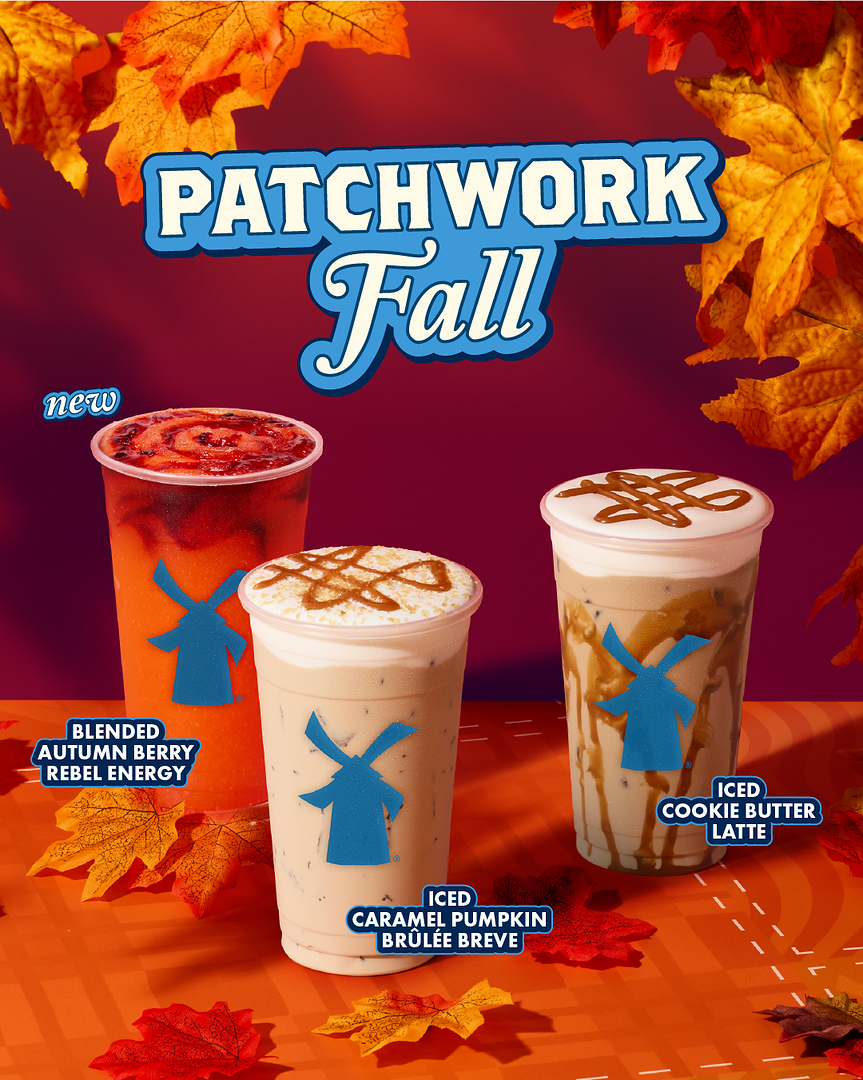
Dutch Bros Coffee activated its fall seasonal menu on August 21 across all 1,225+ drive-thru locations, bringing back two returning favorites — Caramel Pumpkin Brûlée and Cookie Butter — alongside a new entry, Autumn Berry. The rollout is simultaneous and chain-wide, with no phased market test, which tells you something about how Dutch Bros treats its seasonal calendar: as a proven traffic lever, not an experiment.
For operators benchmarking limited-time offer strategy, the move is worth studying on two levels — execution speed and SKU architecture.
The LTO Architecture
All three items are format-flexible, meaning each flavor can be ordered across multiple beverage platforms: espresso-based lattes, breves, chais, Freeze blended drinks, Rebel energy drinks, or the Myst Energy Refresher line. That modularity isn't accidental. It reduces incremental training burden on bar staff while multiplying attachment opportunities across different customer segments — the morning espresso buyer and the afternoon energy-drink consumer can both engage the same seasonal flavor. For operators running multi-daypart beverage programs, this is the design principle worth borrowing.
The two returning SKUs — Caramel Pumpkin Brûlée and Cookie Butter — carry proven demand signals. Dutch Bros CMO Tana Davila confirmed customer appetite drove the decision to bring them back, making this less a trend-chase and more a data-confirmed replay. Autumn Berry, the new addition, combines pomegranate, orange, and peach with a mixed berry topping, positioned as a lighter seasonal option that doesn't compete directly with the warm-spice pumpkin lane.
What This Signals for Operators
The broader intelligence here is about fall seasonal timing. Dutch Bros is launching fall flavors on August 21 — well ahead of the calendar turn. That's a deliberate move to capture early-autumn consumer sentiment before competitors flood the channel with pumpkin spice messaging. QSR beverage chains, coffee independents, and hotel F&B outlets that wait for September to activate fall menus are consistently late to the demand curve.
From a brand launch and menu strategy standpoint, the Dutch Bros model also illustrates how a franchise-scale operation can maintain brand cohesion across a large footprint by anchoring LTOs to a recognizable house element — in this case, the Soft Top whipped topping — rather than introducing entirely new platforms. That anchoring reduces supply-chain complexity while reinforcing brand identity at the cup level.
For suppliers and beverage program consultants, the Autumn Berry introduction also flags a continued operator appetite for non-coffee, fruit-forward refreshers. Energy-drink-based SKUs with seasonal flavor layering are outperforming traditional coffee LTOs in several QSR daypart windows, particularly afternoon and early evening. Operators building or refreshing beverage menus for 2026's Q4 push should be evaluating berry, pomegranate, and citrus profiles alongside the standard pumpkin and apple cadence.
Finally, the chain-wide simultaneous launch — no regional rollout, no test market — reflects the growth-marketing confidence that comes from a loyalty app infrastructure capable of driving awareness and trial at scale. Dutch Bros' app-linked rewards program means the brand can measure redemption velocity on new SKUs within days of launch, giving its marketing team real-time signal on whether Autumn Berry earns a permanent slot.
Written by Michael Politz, Author of Guide to Restaurant Success: The Proven Process for Starting Any Restaurant Business From Scratch to Success (ISBN: 978-1-119-66896-1), Founder of Food & Beverage Magazine, the leading online magazine and resource in the industry. Designer of the Bluetooth logo and recognized in Entrepreneur Magazine's "Top 40 Under 40" for founding American Wholesale Floral, Politz is also the Co-founder of the Proof Awards and the CPG Awards and a partner in numerous consumer brands across the food and beverage sector.