The Retail Milestone
Everyday Dose crossed 5,000 retail doors in under a year after its brick-and-mortar debut, adding 300-plus Sam's Club locations to an existing footprint that already spans Target, Sprouts Farmers Market, Publix, and The Vitamin Shoppe. The pace is notable: most emerging CPG brands treat mass-club placement as a Year 3 or Year 4 objective. Everyday Dose is doing it in Year 1.
The Austin-based brand — ranked No. 144 overall and No. 7 in Food & Beverage on the 2026 Inc. 5000 — has also built a direct-to-consumer subscriber base of more than 250,000 customers and holds the Best Seller badge on Amazon in the Mushrooms Herbal Supplements category. That omnichannel data stack matters for buyers: club buyers in particular want to see proof of repeat-purchase behavior before committing shelf space, and a 250,000-subscriber list is a credible signal.
Leadership and Channel Strategy
Alongside the Sam's Club announcement, Everyday Dose appointed Kyle Thibaut as chief executive officer. Thibaut's background — senior roles at Robinhood, Credit Karma, and TrueCar — is a tech-sector profile rather than a classic CPG résumé, which is a deliberate signal. Founder Jack Savage moves to chairman, retaining influence over innovation and category positioning.
Bringing in a growth-and-operations executive with fintech and marketplace experience suggests the brand is prioritizing subscription retention, data infrastructure, and commercial scaling over product development for the near term. That's a rational allocation of leadership capacity when a brand is simultaneously managing a nine-figure revenue line, a live DTC subscription engine, and a multi-retailer retail rollout.
What Operators and Vendors Should Track
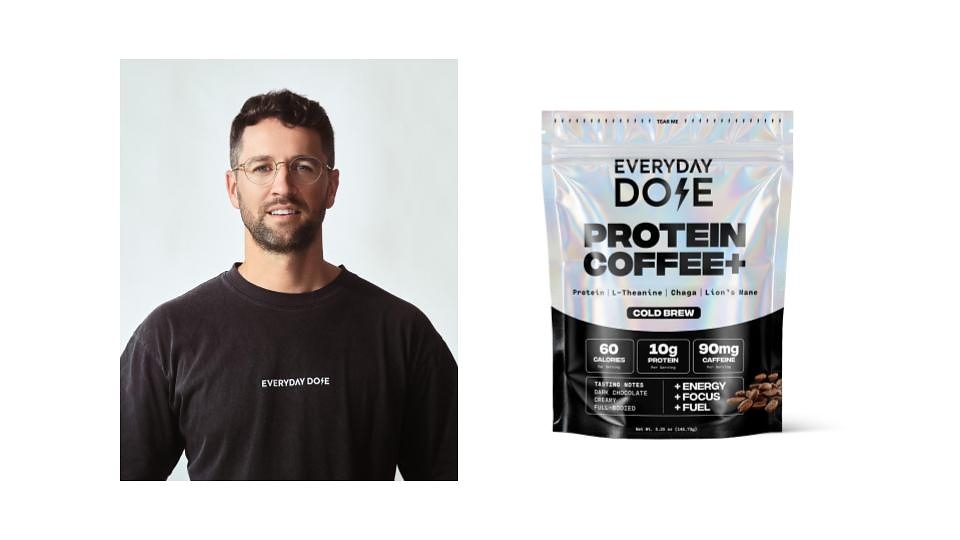
For foodservice and hospitality operators watching the functional beverage space, Everyday Dose's trajectory offers two practical data points. First, the product format — Coffee+ combines 100% Arabica with collagen peptides, Lion's Mane, Chaga, and L-theanine — maps directly onto what hotel breakfast programs, café operators, and wellness-forward food halls are sourcing right now. The recently launched Protein Coffee+ extends that into the protein-forward daypart trend that is reshaping grab-and-go menus.
Second, the speed of the retail ramp confirms what distributor and broker intelligence has tracked across functional beverages: brands that anchor on a high-repurchase DTC subscriber base can negotiate club and mass placement earlier than historical norms because they arrive at the buyer meeting with purchase-frequency data, not just awareness metrics. Operators evaluating supplier relationships in the functional coffee or adaptogen category should note that brands operating at this velocity — and with this retail density — are capable partners for co-branded or private-label conversations.
For brand-launch and retail-readiness practitioners, the Everyday Dose playbook is worth benchmarking: build a subscriber list that proves loyalty, achieve an Amazon bestseller ranking that signals search demand, then present that package to a club buyer. It is a replicable framework, though execution quality varies sharply. Brands entering the functional beverage category for the first time should pressure-test their retail-readiness fundamentals before approaching a mass buyer.
Written by Michael Politz, Author of Guide to Restaurant Success: The Proven Process for Starting Any Restaurant Business From Scratch to Success (ISBN: 978-1-119-66896-1), Founder of Food & Beverage Magazine, the leading online magazine and resource in the industry. Designer of the Bluetooth logo and recognized in Entrepreneur Magazine's "Top 40 Under 40" for founding American Wholesale Floral, Politz is also the Co-founder of the Proof Awards and the CPG Awards and a partner in numerous consumer brands across the food and beverage sector.