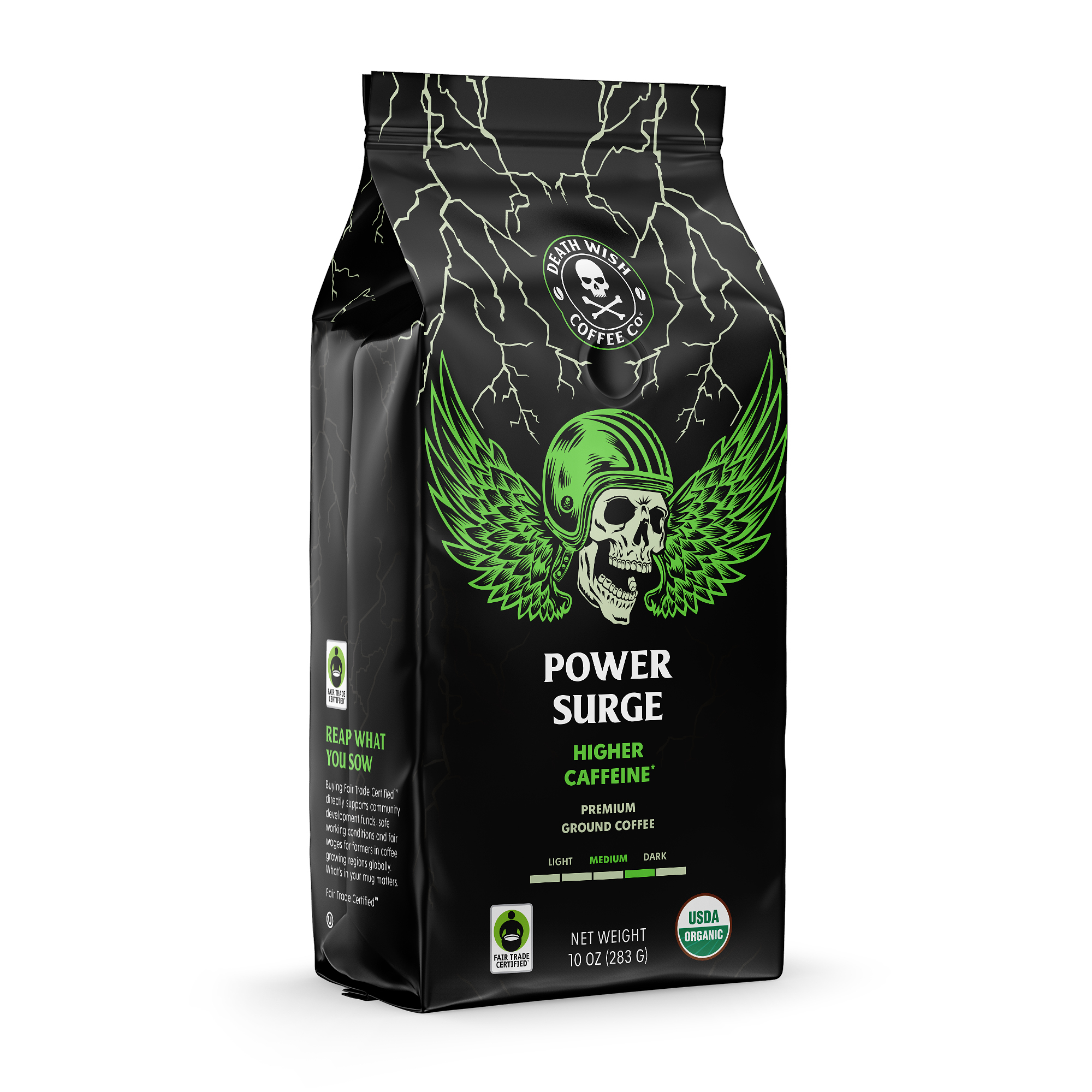
Death Wish Coffee Co. is adding Power Surge to its lineup — a new roast delivering more than 200 mg of caffeine per serving, roughly 20% above the brand's original Dark Roast. The lift comes from a higher ratio of organic Robusta beans rather than additives, keeping the SKU inside the brand's USDA Organic and Certified Fair Trade certifications. It launches on Amazon and deathwishcoffee.com, the two channels that built the brand's direct relationship with its core buyer. For operators sourcing premium private-label coffee or building a branded beverage program, this move is worth watching closely.
The brand is explicit about the data behind the decision: industry research showing high-caffeine claims are driving a 39.0% purchase-intent rate, a figure that is outpacing general coffee category growth. That kind of intent data is exactly what a retail buyer or category manager wants to see in a pitch deck. It also signals that consumers are no longer treating caffeine content as a commodity spec — they are actively filtering by it. For foodservice operators building grab-and-go programs or hotel F&B directors refreshing amenity coffee, a differentiated functional claim is now a merchandising lever, not just a product attribute.
Death Wish has positioned Power Surge as a response to "messy, stacked, and unpredictable days" — language that deliberately broadens the use occasion beyond morning. That framing matters for distribution. A SKU repositioned as all-day functional energy competes differently on an endcap, in a hotel pantry, or inside a DTC subscription bundle than a traditional breakfast roast does. For brands watching this launch, the lesson is that occasion-based positioning, backed by purchase-intent data, is becoming the standard for premium coffee SKU justification — not just roast profile or origin story. Operators sourcing coffee for catering or office programs should expect suppliers to bring similar data to RFP conversations. For more on how purchase-intent intelligence is reshaping procurement conversations, see our AI procurement coverage and how brands are packaging that data for buyers.
On the retail and DTC side, launching simultaneously on Amazon and owned DTC is the current baseline for a CPG brand with Death Wish's footprint. The real watch item is whether Power Surge earns a brick-and-mortar placement in specialty, natural, or convenience within the next two quarters. That expansion path — DTC validation, then retail pitch — is a playbook operators and brand-launch consultants are replicating across functional beverage categories right now. If your brand is preparing a retail buyer deck or sampling campaign in the better-for-you coffee or energy space, this launch is a useful benchmark. Our Brand Launch Department coverage tracks how emerging CPG brands are sequencing DTC proof before wholesale expansion.
Written by Michael Politz, Author of Guide to Restaurant Success: The Proven Process for Starting Any Restaurant Business From Scratch to Success (ISBN: 978-1-119-66896-1), Founder of Food & Beverage Magazine, the leading online magazine and resource in the industry. Designer of the Bluetooth logo and recognized in Entrepreneur Magazine's "Top 40 Under 40" for founding American Wholesale Floral, Politz is also the Co-founder of the Proof Awards and the CPG Awards and a partner in numerous consumer brands across the food and beverage sector.