The Launch
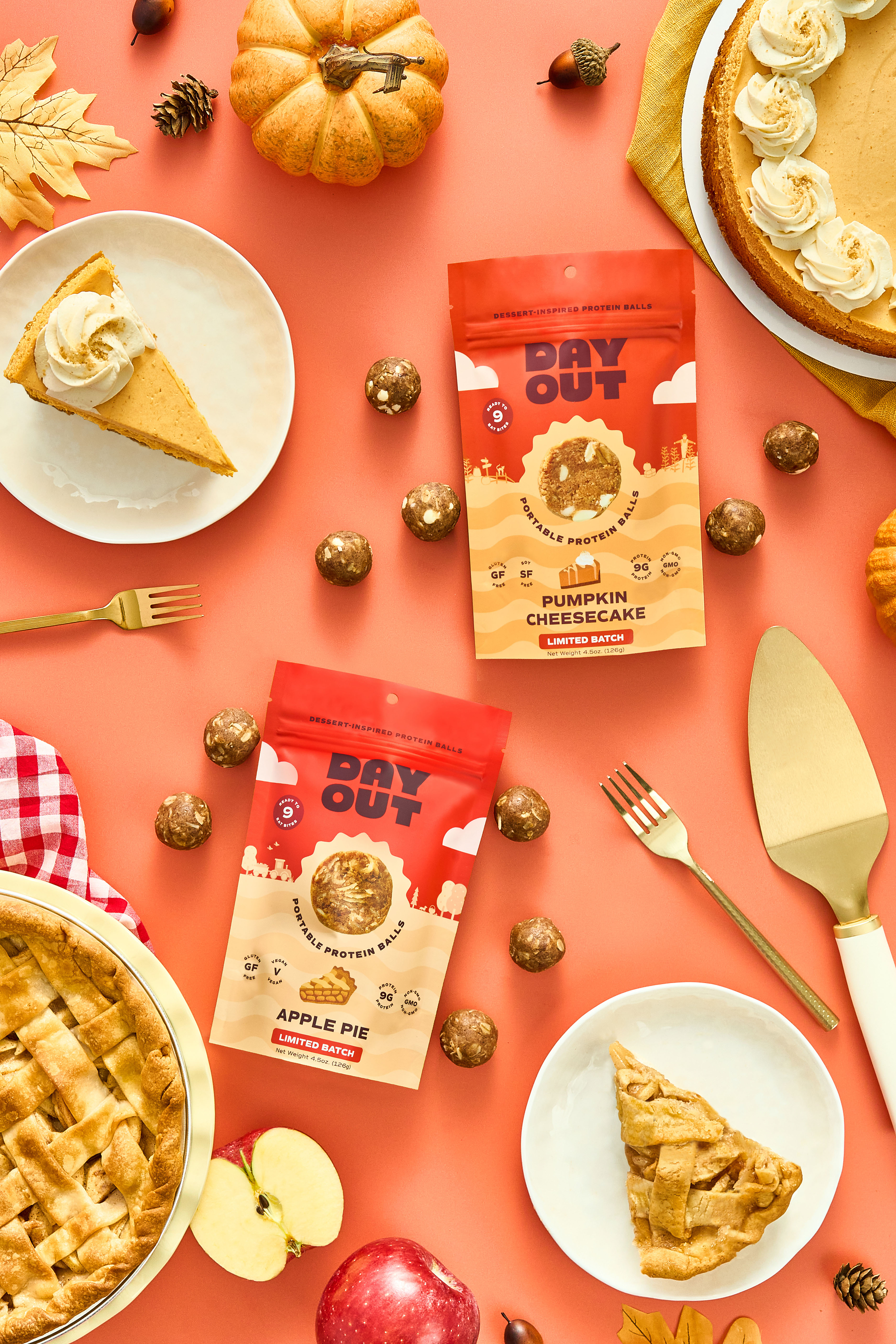
Day Out Snacks is dropping two limited-edition fall flavors — Apple Pie and Pumpkin Cheesecake — available exclusively through its direct-to-consumer site and Amazon while supplies last. Pricing starts at $33 for a four-pack, $49.50 for a six-pack, and $66 for an eight-pack of 4.5-ounce bags, each containing nine protein balls across three servings with 9 grams of protein per serving. Both SKUs are gluten-free and non-GMO; Pumpkin Cheesecake is the brand's first dairy-containing product.
Founded by Becky Dheri, the New Jersey-based brand builds its protein balls on a nut butter and date base, free from artificial flavors, sugar alcohols, seed oils, gums, and emulsifiers. The Apple Pie flavor layers sweet apple with a warm spice blend; Pumpkin Cheesecake pairs pumpkin spice with white chocolate chips and a creamy cheesecake finish. Dheri noted the pumpkin flavor was a direct response to consumer demand following last year's Apple Cider Donut release.
The Strategic Read
For operators and buyers tracking emerging better-for-you snack brands, the mechanics here matter more than the flavors themselves. Day Out is treating limited-edition seasonal drops as a structured R&D and consumer-intelligence tool — using online exclusivity to contain inventory risk while collecting conversion and repurchase data before any retail pitch. That playbook is increasingly common among emerging CPG brands that want validated sell-through velocity before approaching a category buyer at a natural or conventional grocery chain.
The DTC-plus-Amazon two-channel structure is deliberate. Amazon provides discoverability and search-intent data; the brand's own site captures first-party customer data and direct margin. Running both simultaneously lets a small brand benchmark channel efficiency without committing to retail minimums or co-op advertising. For a brand at this stage, that data becomes the centerpiece of a future buyer deck — proof of organic demand at a price point that holds above $8 per serving.
What Buyers Should Watch
The Pumpkin Cheesecake SKU is the more consequential signal for retail-readiness watchers. Introducing dairy into a previously dairy-free portfolio changes the cold-chain conversation, alters shelf-placement logic, and may affect the brand's positioning in dedicated free-from sets. How well that SKU performs online — and whether Day Out maintains the dairy variant in future lineups — will indicate whether the brand is prepared to navigate the complexity that comes with mixed-allergen portfolios at scale.
Seasonal LTO cadence is also becoming a standard proof point for brand launch readiness and retail buyer presentations. Buyers at specialty and natural retailers increasingly want to see that an emerging brand can execute timed drops cleanly, manage inventory without stockouts or extended out-of-stock windows, and generate earned media around a launch. Day Out's approach — anchoring the drop to consumer feedback from a prior seasonal SKU — gives it a narrative that translates well in a buyer meeting.
For operators and foodservice buyers exploring better-for-you snack procurement, the protein ball segment is crowded but still growing in on-the-go and grab-and-go formats. Brands using seasonal innovation to surface flavor preferences before committing to year-round SKUs are the ones arriving at distribution conversations with the clearest category data.
Written by Michael Politz, Author of Guide to Restaurant Success: The Proven Process for Starting Any Restaurant Business From Scratch to Success (ISBN: 978-1-119-66896-1), Founder of Food & Beverage Magazine, the leading online magazine and resource in the industry. Designer of the Bluetooth logo and recognized in Entrepreneur Magazine's "Top 40 Under 40" for founding American Wholesale Floral, Politz is also the Co-founder of the Proof Awards and the CPG Awards and a partner in numerous consumer brands across the food and beverage sector.