Datassential has rolled out two AI-driven products that move its foodservice intelligence platform well beyond the North American market: Global Menu Analysis, a search-and-filter tool for worldwide operator menus, and the Datassential AI Agent, which pipes verified operator data directly into enterprise AI platforms like Claude, ChatGPT, and Microsoft Copilot. For food and beverage suppliers, distributors, and innovation teams operating across borders, the dual launch changes the kind of question you can answer before a sales call or product development review.
What the Platform Does Now
Since January 2026, Datassential has more than tripled its global menu database to 1.4 million restaurant and bar menus, adding coverage in 20+ new countries across six continents. The expanded footprint now spans 80+ countries, and every menu entry links back to an operator profile in the core database of 13 million-plus foodservice locations worldwide.
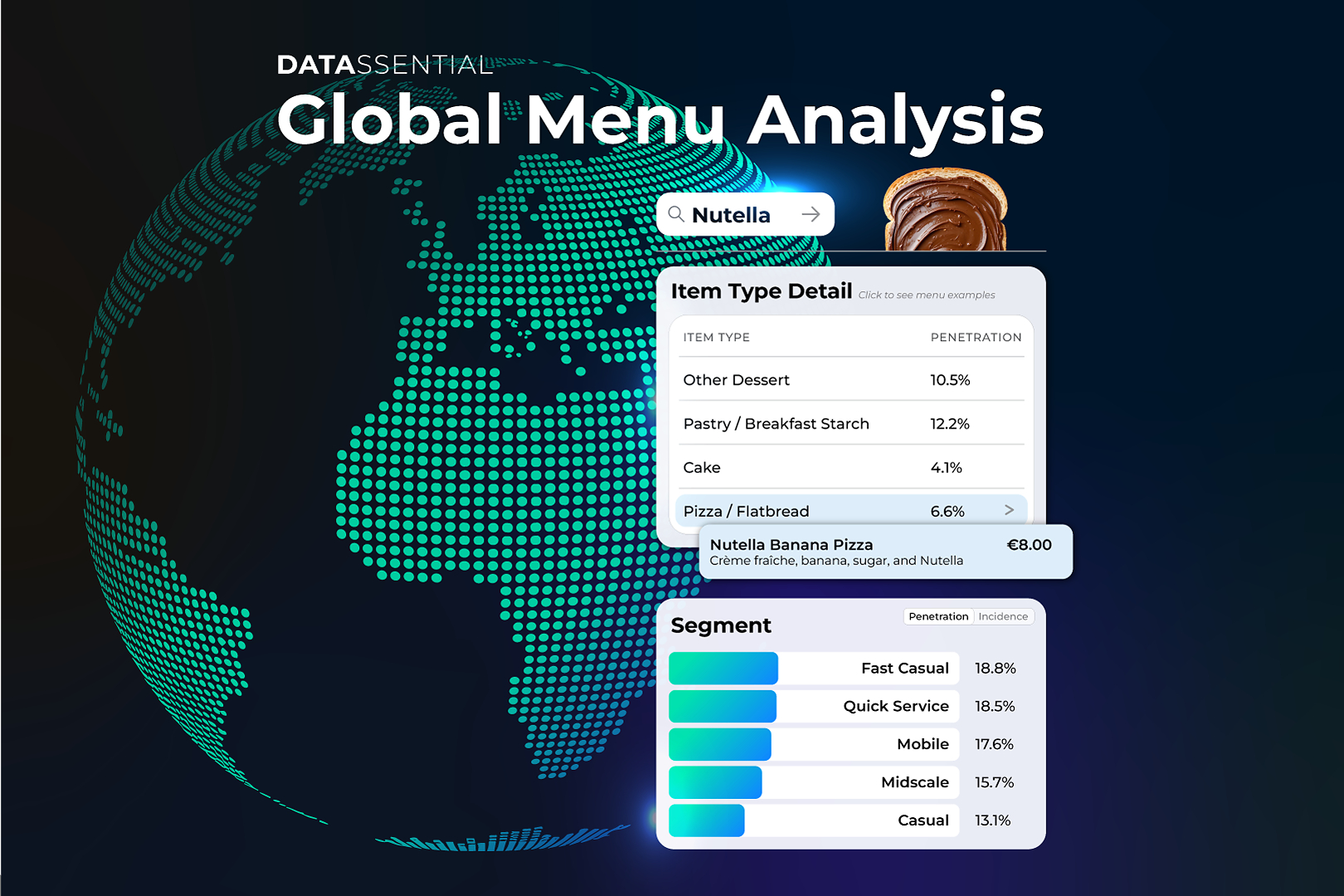
Global Menu Analysis lets users search any flavor, ingredient, or dish and see how widely it appears on menus, which segments and cuisine types carry it most, what operators charge for it, and which cities or regions index highest. Sales teams can pull real menu examples and pricing into client conversations or build prospect lists of operators already featuring a target ingredient. Innovation teams can use the same data to validate demand before committing to production runs or distribution negotiations — a meaningful check against internal assumptions about where a product will land.
The AI Agent takes a different route into the same dataset. Built on Model Context Protocol (MCP), it connects Datassential's operator database to whatever AI workspace a team already uses. A user can type a plain-language query — "find me high-volume independents serving birria tacos in Amsterdam" — and receive a structured answer drawn from verified data rather than a generative hallucination. The connection is read-only and scoped to Datassential's data, which keeps it appropriate for enterprise security reviews. Teams can pair the agent with their own CRM or internal sales data to size markets, identify whitespace, and prepare account briefs without switching platforms.
What This Signals for Operators and Vendors
The launch follows a broader industry shift toward AI-ready procurement and sales intelligence, where the value of a data platform is increasingly measured by how cleanly it plugs into the tools a team already operates rather than requiring users to log into a separate dashboard. Datassential's MCP implementation is a direct response to that pressure — the same architectural pattern that AI procurement and sales enablement vendors are adopting across hospitality and foodservice.
For suppliers and distributors pitching into international markets, the more immediate payoff is on the sales intelligence side. The ability to benchmark menu prices by segment across a specific city — not just a country — compresses the research cycle that typically precedes a regional launch or distributor conversation. Pascal Hartwig, General Manager of EMEA at Datassential, framed the product's intent directly: "Global Menu Analysis gives food and beverage teams a direct line from what's happening on the menu to the operator serving it, so they can stop guessing and start acting."
Datassential CEO Jim Emling described the expansion as "one of the biggest investments we've made," noting that bringing menu data and AI together in new markets was a deliberate choice rather than a retrofit. The company's flagship Menu Adoption Cycle (MAC) trend-stage scoring is slated to roll out market-by-market in coming months, which will add the trend-velocity layer that category managers and brand launch teams typically need before greenlit spending in a new geography.
For operators and vendors evaluating intelligence tools, the practical question is whether a platform's global coverage is deep enough to be actionable at the city level — not just directionally interesting at the country level. That distinction matters most when you're building a prospect list for a regional sales push or validating whether a trending ingredient in one market has real menu penetration in another.
Written by Michael Politz, Author of Guide to Restaurant Success: The Proven Process for Starting Any Restaurant Business From Scratch to Success (ISBN: 978-1-119-66896-1), Founder of Food & Beverage Magazine, the leading online magazine and resource in the industry. Designer of the Bluetooth logo and recognized in Entrepreneur Magazine's "Top 40 Under 40" for founding American Wholesale Floral, Politz is also the Co-founder of the Proof Awards and the CPG Awards and a partner in numerous consumer brands across the food and beverage sector.