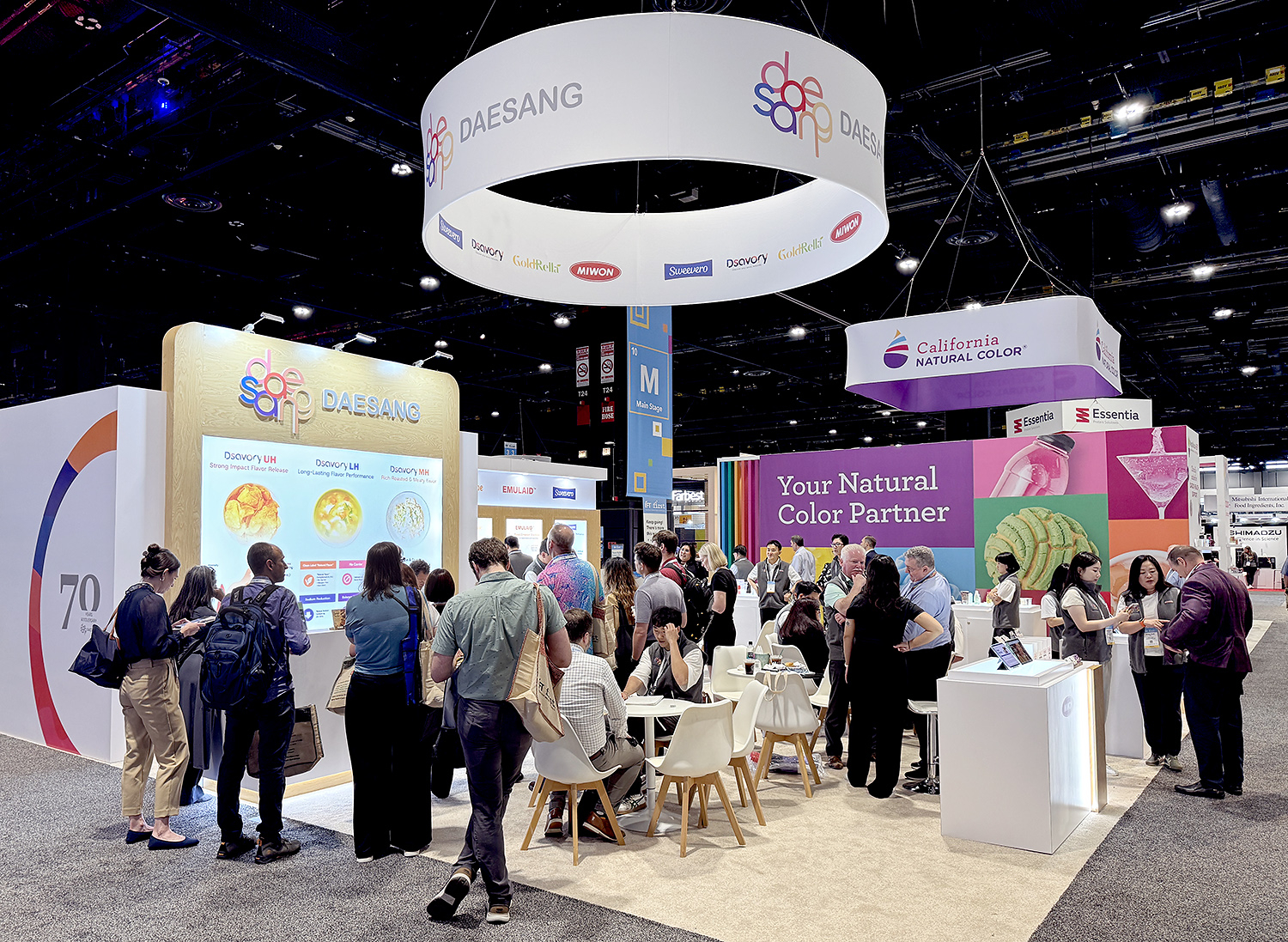
Daesang Corporation stepped onto the floor at IFT FIRST 2026 — held July 13–15 at McCormick Place in Chicago — to advance its case as a global-scale ingredient supplier, centering its booth around allulose and its proprietary Capsulaid™ encapsulation platform. For operators and procurement teams sourcing next-generation sweeteners or functional ingredients, the Korean conglomerate's presence at the world's largest food science expo signals that supply options in the allulose category are expanding beyond the handful of suppliers currently on most approved-vendor lists.
What Daesang Is Bringing
Allulose has moved from specialty positioning into mainstream consideration over the past two years, driven by menu-labeling pressure, GLP-1 adjacency narratives, and consumer demand for reduced-sugar without artificial aftertaste. Daesang's 70-year fermentation and bioprocessing heritage gives it a credible manufacturing foundation — the same core competency that built its dominance in amino acids and starch derivatives. Capsulaid™, its microencapsulation technology, targets applications where ingredient stability, flavor masking, or controlled release add functional value: think fortified beverages, plant-based proteins, or low-sodium seasoning blends where sodium reduction requires compensating flavor delivery.
For foodservice buyers and R&D teams at mid-to-large restaurant groups, both pillars map directly to active reformulation projects. Clean-label pressure hasn't eased; if anything, the retail channel is pulling foodservice operators toward ingredient transparency faster than most procurement calendars anticipated. A supplier with industrial-scale allulose capacity and an encapsulation tool in the same catalog reduces vendor complexity.
What It Signals for Procurement
Daesang's IFT activation is less about a single product launch and more about category signaling. When a major Korean ingredient group invests in a flagship U.S. trade-show presence, it is typically preparing to accelerate distribution agreements, pilot programs with domestic co-manufacturers, or direct outreach to large foodservice and CPG accounts. Operators currently mid-cycle on sweetener or sodium-reduction RFPs should add Daesang to the competitive-quote pool — if only to pressure incumbent suppliers on pricing and lead times.
The low-sodium angle deserves specific attention. Regulatory momentum around sodium targets in institutional foodservice — school nutrition, healthcare dining, and chain-restaurant menu labeling — is creating a procurement window for suppliers who can deliver flavor-forward reduced-sodium solutions at scale. Capsulaid™'s controlled-release mechanism is a legitimate technical answer to that problem, not just a marketing claim.
For operators benchmarking their ingredient sourcing and vendor landscape, the takeaway is straightforward: the allulose supply chain is getting more competitive, and suppliers with integrated encapsulation capabilities are positioning to capture the value-added tier of that market. Teams sourcing for clean-label menu reformulation or brand launch projects should request samples and technical data sheets before the next contract cycle.
Written by Michael Politz, Author of Guide to Restaurant Success: The Proven Process for Starting Any Restaurant Business From Scratch to Success (ISBN: 978-1-119-66896-1), Founder of Food & Beverage Magazine, the leading online magazine and resource in the industry. Designer of the Bluetooth logo and recognized in Entrepreneur Magazine's "Top 40 Under 40" for founding American Wholesale Floral, Politz is also the Co-founder of the Proof Awards and the CPG Awards and a partner in numerous consumer brands across the food and beverage sector.