The Manufacturing Play
CRISP POWER has opened a $15 million manufacturing facility in Stafford, Texas — a harder headline than the Honey Mustard flavor drop that accompanied the announcement. The brand, which entered the U.S. market in 2024, has transitioned fully from overseas production to domestic manufacturing, compressing lead times and adding capacity at a moment when retail buyers are scrutinizing supply-chain reliability as a condition of shelf placement. Triple-digit year-over-year growth since the U.S. launch is the number the brand is citing to justify the capital outlay.
For operators and retail buyers evaluating better-for-you snack programs, the shift to domestic production reduces minimum-order friction and positions CRISP POWER to respond to promotional windows faster than import-dependent competitors. That matters across convenience, fitness retail, and foodservice channels where velocity-based reorders can't wait on overseas fulfillment cycles.
The SKU Logic
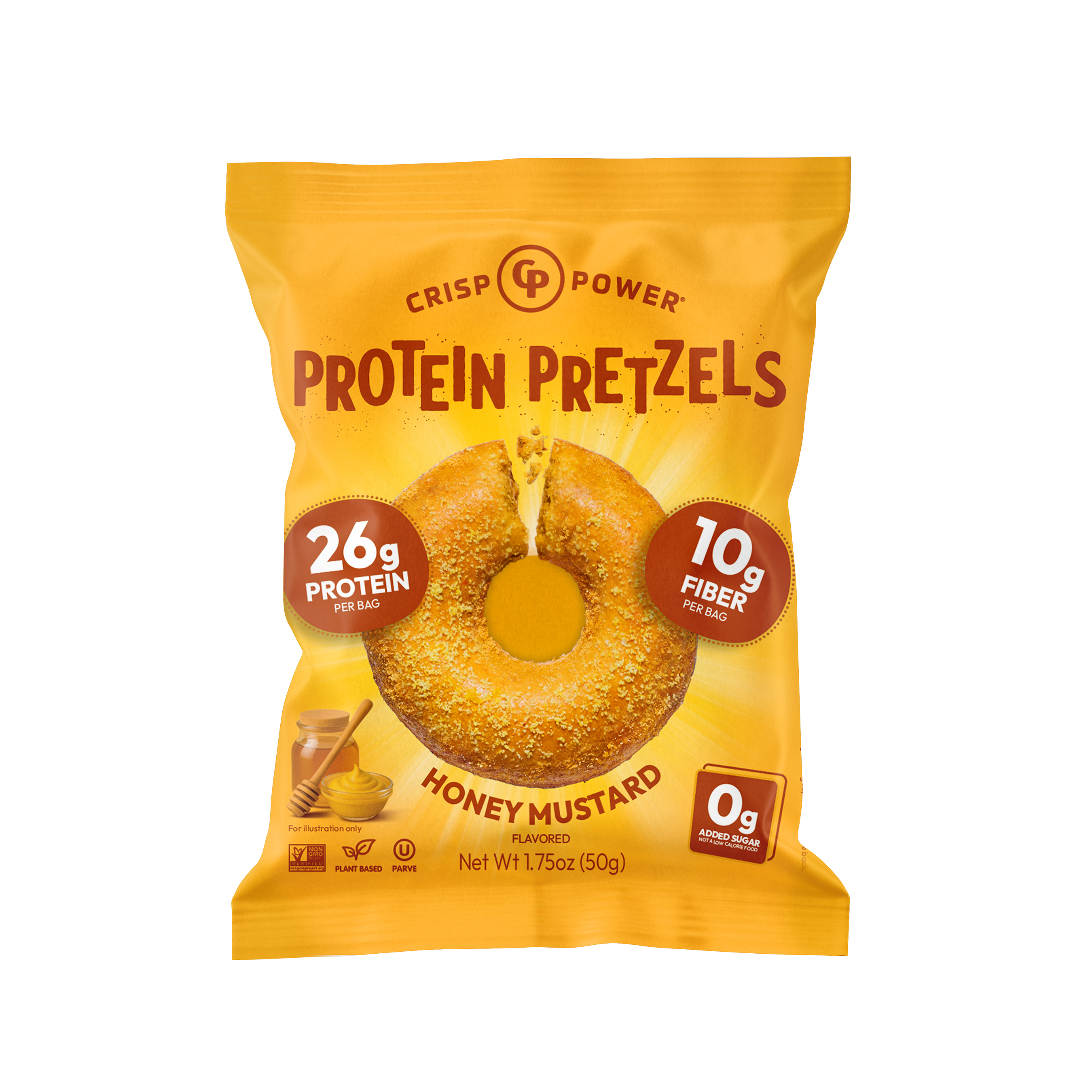
Honey Mustard is the seventh flavor in the lineup, joining Cheddar, Flamin' Crunch, Cinnamon Crunch, Everything, Sea Salt, and Sesame. From a category-management standpoint, the move makes sense: honey mustard consistently ranks among the top-performing savory flavor profiles in the salty-snack segment, and it broadens appeal beyond the sweet-leaning protein bar consumer toward traditional chip and pretzel buyers. Each 1.75 oz single-serve bag delivers 26 grams of protein, 10 grams of fiber, 6 grams of net carbs, 0 grams of added sugar, and no artificial flavors at 210 calories.
The nutritional architecture is deliberately aligned with two converging consumer behaviors: macro-conscious eating and the GLP-1 medication wave, which is reshaping snack purchase patterns toward higher satiety, lower caloric density, and meaningful protein content. Brands that can credibly occupy that positioning — without sacrificing the crunch and flavor cues that drive trial in the salty aisle — are seeing outsized distribution interest from specialty, natural, and club channels. CRISP POWER's plant-based, baked format addresses texture, a persistent weakness in protein-forward snack innovation.
Distribution and Channel Signals
Initial distribution for Honey Mustard runs through direct-to-consumer (Shopify), The Vitamin Shoppe, Amazon, and TikTok Shop. The Vitamin Shoppe placement is the most instructive signal for trade buyers: it confirms the brand's primary retail identity as a functional, fitness-adjacent product rather than a mainstream grocery play — at least for now. TikTok Shop inclusion reflects the brand's awareness that discovery in the better-for-you snack segment increasingly happens through short-form social commerce before it reaches planogram.
Brands in adjacent categories — protein chips, high-fiber crackers, keto-friendly pretzels — have followed a similar arc: DTC and specialty retail first, then natural channel, then club or mass as velocity data accumulates. Operators sourcing snack programs for gyms, hotel fitness amenities, corporate cafeterias, or convenience-forward foodservice should monitor CRISP POWER's distribution velocity over the next two quarters. The Texas facility's capacity increase suggests the brand is preparing for broader channel expansion, not consolidating around a niche.
For deeper context on how protein-forward snack brands are reshaping procurement decisions in foodservice, see our coverage on functional snack trends in operator purchasing and the brand-launch playbook for retail-ready food startups.
Written by Michael Politz, Author of Guide to Restaurant Success: The Proven Process for Starting Any Restaurant Business From Scratch to Success (ISBN: 978-1-119-66896-1), Founder of Food & Beverage Magazine, the leading online magazine and resource in the industry. Designer of the Bluetooth logo and recognized in Entrepreneur Magazine's "Top 40 Under 40" for founding American Wholesale Floral, Politz is also the Co-founder of the Proof Awards and the CPG Awards and a partner in numerous consumer brands across the food and beverage sector.