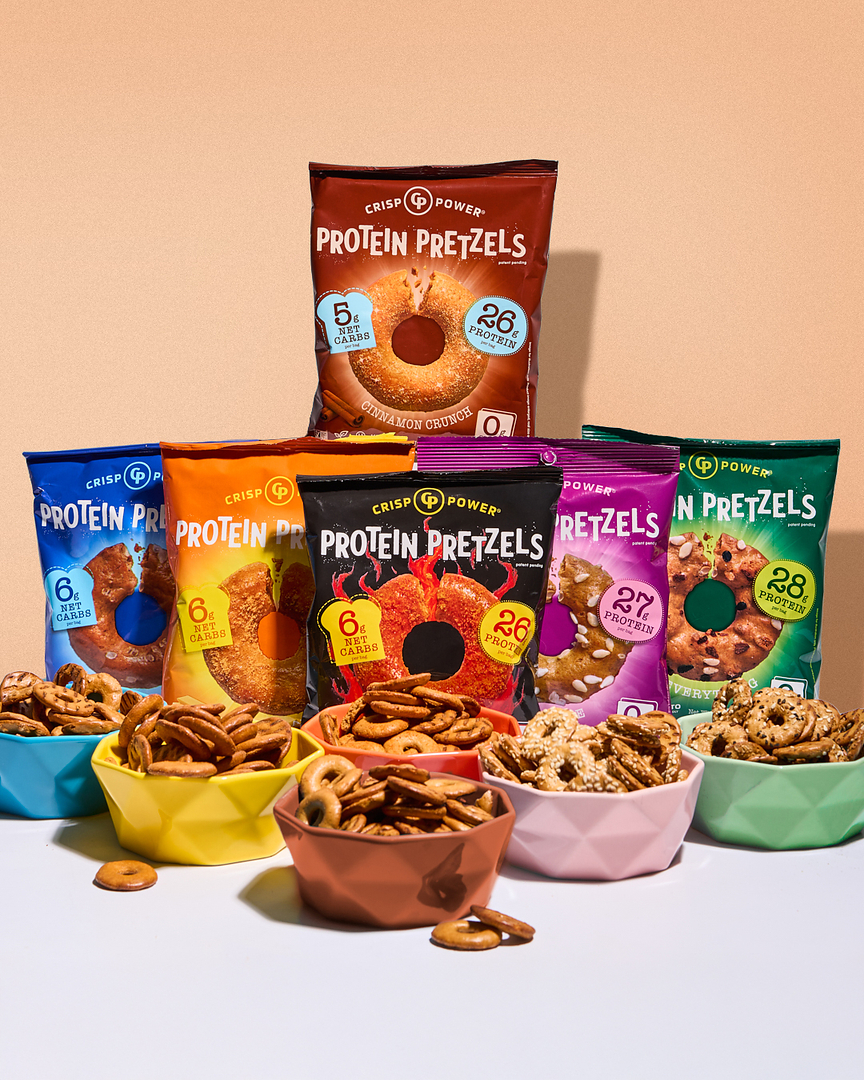
CRISP POWER Protein Pretzels has committed $15 million to a production facility in Stafford, Texas — a meaningful capital move that takes the high-protein, low-carb pretzel brand from an import-dependent supply chain to fully domestic manufacturing. For operators and retail buyers tracking the better-for-you snack segment, this is the kind of infrastructure bet that separates brands building for national shelf presence from those running on marketing alone.
The shift matters beyond the headline number. Import-based production models carry meaningful exposure to port delays, tariff volatility, and minimum-order constraints that squeeze emerging brands at exactly the wrong moments — during retailer reviews and chain-wide rollouts. Domestic manufacturing addresses all three, and in the current trade environment, it is increasingly a threshold requirement rather than a differentiator. Buyers at regional and national grocery chains have made no secret of preferring suppliers who can guarantee fulfillment velocity and unit-cost predictability, both of which a domestic hub enables. Operators sourcing private-label or co-branded snack programs for hotel minibars, stadium concessions, or foodservice retail sets should take note of how supply-chain positioning is becoming part of the brand pitch itself — a theme covered in depth in our Brand Launch Department coverage of retail-ready packaging and buyer deck strategy.
For the branded snack segment more broadly, CRISP POWER's Texas investment is a data point in a recognizable pattern: functional food brands that scaled on e-commerce and specialty retail are now industrializing to compete for conventional grocery space. The protein snack category continues to outperform center-store averages, and shelf real estate is increasingly allocated to brands that can demonstrate not just consumer demand but supply-chain reliability. A $15 million facility commitment communicates both. Distribution brokers and category managers will read this as a signal that CRISP POWER is prepared to negotiate at volume — and that the brand's next funding conversation likely centers on marketing and velocity, not production capacity.
From a procurement and operator-intelligence perspective, brands making this kind of domestic manufacturing pivot typically follow with accelerated foodservice channel development. Hotel grab-and-go programs, airline and travel-retail snack sets, and sports-venue better-for-you concessions are logical next targets for a brand with improved unit economics and shortened replenishment cycles. Operators evaluating snack suppliers for those channels should be requesting updated lead-time commitments and minimum-order thresholds now — the post-facility landscape will look different than the import-era terms. For more on how functional snack brands are entering the foodservice channel, see our Operator Intelligence report on better-for-you procurement shifts.
The bottom line: CRISP POWER has made a credible infrastructure commitment that positions the brand for serious retail and foodservice conversations. Operators and buyers should treat this as a procurement trigger — not a press release.
Written by Michael Politz, Author of Guide to Restaurant Success: The Proven Process for Starting Any Restaurant Business From Scratch to Success (ISBN: 978-1-119-66896-1), Founder of Food & Beverage Magazine, the leading online magazine and resource in the industry. Designer of the Bluetooth logo and recognized in Entrepreneur Magazine's "Top 40 Under 40" for founding American Wholesale Floral, Politz is also the Co-founder of the Proof Awards and the CPG Awards and a partner in numerous consumer brands across the food and beverage sector.