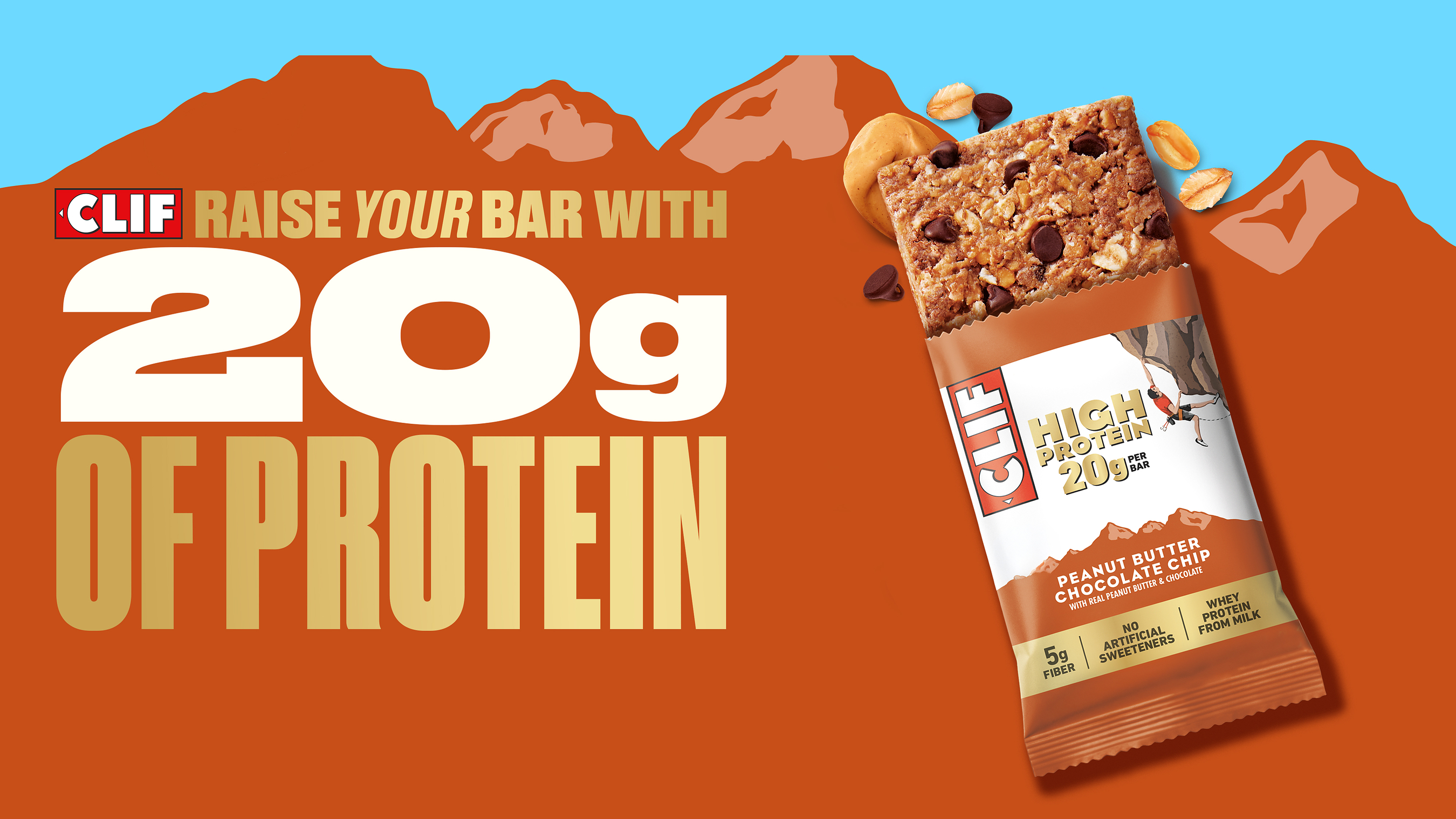
Mondelēz International's CLIF brand is entering the high-protein bar segment for the first time with a SKU built around a familiar real-food ingredient deck — rolled oats, nut butters, almonds, and a soy-and-whey protein blend — delivering 20 grams of protein and 5 grams of fiber per bar. Two flavors, Peanut Butter Chocolate Chip and Cinnamon French Toast, will hit retailers nationwide beginning August 2026 at a suggested retail price of $7.49 per 4-count box. The move is notable less for the product specs than for what it signals: one of the world's largest snack portfolios is formally staking a claim in a category it previously watched from the sidelines.
Why Operators Should Care
For foodservice and retail operators curating grab-and-go snack sets, protein density has become the primary purchase driver across dayparts. The CLIF entry does something most protein bars don't — it leans on an energy-bar equity position (oats, carbohydrates, active lifestyle) while hitting the 20g protein threshold that triggers placement consideration in fitness-adjacent and health-forward retail environments. That dual positioning — protein and sustained energy — is a direct response to shelf feedback showing that shoppers are increasingly unwilling to trade one benefit for the other. Joe Pellingra, Senior Director of CLIF and LUNA brands at Mondelēz International, confirmed the formulation was driven by consumer research and validated through taste testing, suggesting the SKU was built to scale, not to experiment.
What This Signals for Buyers
Mondelēz's $36.4 billion revenue base and distribution infrastructure means CLIF High Protein will reach mainstream grocery, club, and convenience channels quickly — a different trajectory than challenger brands that build the category from specialty retail outward. Buyers evaluating their protein bar fixture in Q4 2026 should expect aggressive placement proposals and promotional support from the Mondelēz sales organization. The $7.49 / 4-count price point ($1.87 per bar at SRP) positions the product at the accessible end of the premium protein tier, below many whey-forward specialty bars but above mass-market options — a deliberate slot that broadens the addressable consumer base without cannibalizing CLIF BAR's core energy positioning.
For hotel grab-and-go programs, corporate cafeterias, and healthcare foodservice operators, the CLIF brand name carries existing consumer trust that reduces the friction of introducing a new protein SKU. Operators sourcing for snack and beverage programs should note that established brand equity is increasingly a procurement criterion in non-commercial foodservice, where staff turnover makes consumer education at point-of-sale difficult. A recognizable name on the wrapper does part of the merchandising work.
The competitive read is equally important. Quest, RxBar, KIND Protein, and ONE Bar have held the protein bar fixture for years. CLIF's entry — backed by Mondelēz's trade marketing resources — will pressure those brands on shelf placement and promotional frequency. Brands and distributors in the better-for-you snack launch space should factor this into 2026 and 2027 buyer deck strategies; incremental shelf space in the protein set is about to get materially harder to win.
Written by Michael Politz, Author of Guide to Restaurant Success: The Proven Process for Starting Any Restaurant Business From Scratch to Success (ISBN: 978-1-119-66896-1), Founder of Food & Beverage Magazine, the leading online magazine and resource in the industry. Designer of the Bluetooth logo and recognized in Entrepreneur Magazine's "Top 40 Under 40" for founding American Wholesale Floral, Politz is also the Co-founder of the Proof Awards and the CPG Awards and a partner in numerous consumer brands across the food and beverage sector.