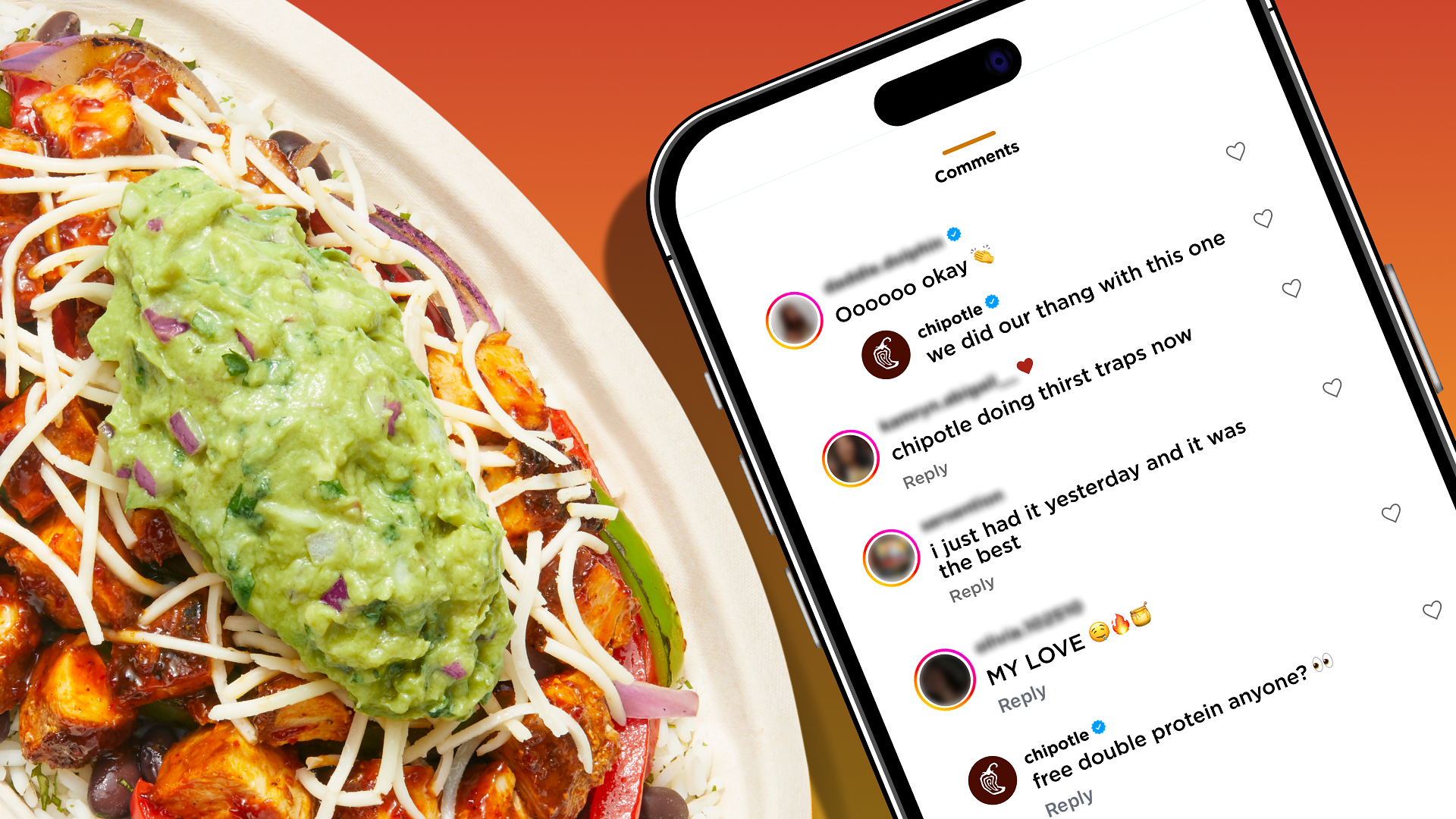
A free double-protein promotion tied to a promo code — valid only through Chipotle's own app and website — is the chain's closing move for its Honey Chicken limited-time offering. On August 27, guests in the U.S. and Canada can use code PROTEIN at checkout to receive a free double portion of any meat or Sofritas on a full-priced burrito, bowl, or salad. The offer is not available via third-party delivery platforms or in-restaurant ordering, a deliberate channel restriction that concentrates the traffic spike where Chipotle captures the most data and margin.
For operators at any scale, the mechanic is worth dissecting. The chain is not discounting the LTO itself — it is layering a protein upgrade onto the existing ticket, keeping check averages intact while manufacturing urgency around a product that is days from rotation. That is a fundamentally different math than a blanket discount or a BOGO offer, and it protects the brand's value anchor on the core menu.
Digital Channel Discipline
The app-and-web exclusivity here is not incidental. With over 4,200 locations across the U.S., Canada, and Europe, Chipotle has the footprint to generate meaningful volume from even a low redemption rate — but the real prize is first-party transaction data. Every PROTEIN code redemption is a trackable signal: which daypart, which market, which protein preference, and whether that guest was already a loyalty member or a new app download. Operators using third-party platforms for promotions like this sacrifice that intelligence entirely. The Growth Department case for owning your own promo channel has never been cleaner.
The promo also sidesteps the margin compression that comes with delivery-platform promotions. Third-party fees — often ranging from 15.0% to 30.0% of the ticket — would erode most of the goodwill the double-protein offer generates. By restricting redemption to owned digital channels, Chipotle keeps the cost of the promotion contained and the customer relationship direct.
What This Signals for LTO Strategy
Chipotle's Honey Chicken run is notable because it generated enough consumer response to warrant a farewell promotion — that is a signal about how the chain is thinking about its limited-time menu architecture going forward. Senior Vice President of Brand Marketing Stephanie Perdue noted the brand intends additional menu innovation this fall, including new flavors and expanded customization options, which suggests the LTO cadence is accelerating rather than tapering.
For foodservice operators and multi-unit brands watching from the sidelines, this is an applied lesson in LTO lifecycle management: build demand, create a vault narrative, then use the exit moment as a digital acquisition event. The promotion rewards existing app users while giving fence-sitters a concrete reason to download and transact. Operators managing their own limited-time beverage or menu programs — especially those building brand launch momentum around seasonal items — can adapt this exit-week promo structure without needing Chipotle's scale to make it work.
Takeaways for Operators
Written by Michael Politz, Author of Guide to Restaurant Success: The Proven Process for Starting Any Restaurant Business From Scratch to Success (ISBN: 978-1-119-66896-1), Founder of Food & Beverage Magazine, the leading online magazine and resource in the industry. Designer of the Bluetooth logo and recognized in Entrepreneur Magazine's "Top 40 Under 40" for founding American Wholesale Floral, Politz is also the Co-founder of the Proof Awards and the CPG Awards and a partner in numerous consumer brands across the food and beverage sector.