
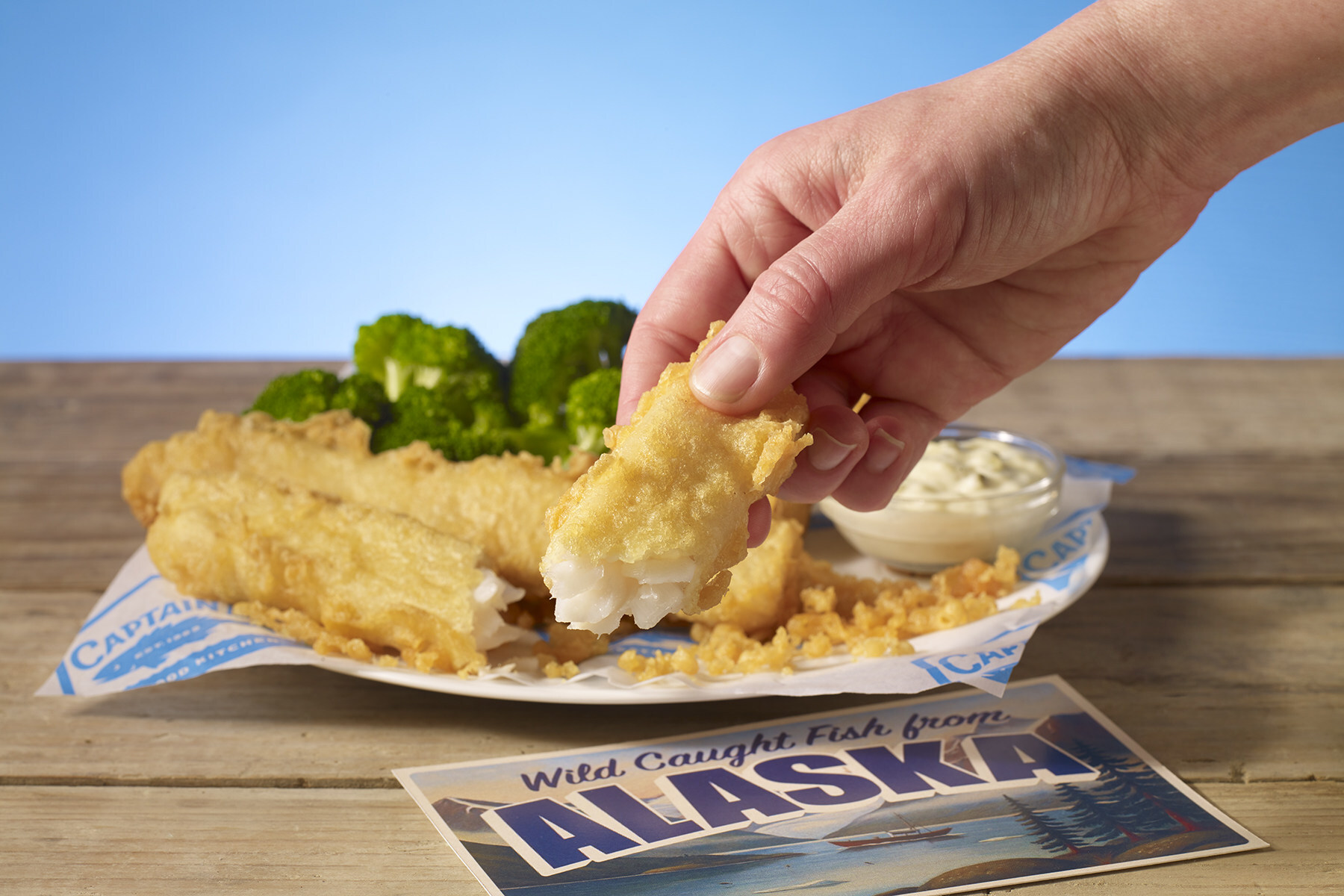
Captain D's rolled out its Wild Caught Batter Dipped Fish sourced from Alaska across all domestic locations on June 1, 2026. The move is a deliberate brand-positioning decision as much as a menu update: the chain is anchoring quality claims to a verifiable domestic origin story at a time when seafood supply chains are under margin pressure and diners are reading sourcing labels more carefully than ever.
For fast-casual operators watching segment dynamics, this matters. Wild-caught Alaskan whitefish — primarily pollock — remains one of the most traceable, MSC-certified protein sources available at commercial scale, and Captain D's is now using that traceability as a marketing asset rather than just a procurement checkbox. Competitors in the seafood QSR space have largely relied on commodity imports to hold price points; Captain D's is betting that domestic origin premiumization can coexist with accessible pricing, a tension that will be worth tracking through Q3 and Q4 same-store data.
From a brand-launch and operator-intelligence standpoint, this rollout signals a broader shift in how chains are sequencing their sourcing stories. Rather than launching premium tiers at a price premium, Captain D's is threading the needle by keeping the item within its core value architecture while upgrading the narrative. That approach has downstream implications for suppliers, brokers, and menu consultants: the expectation is no longer that responsibly sourced equals higher ticket — it's that responsible sourcing is the floor, not a line-extension strategy. Operators evaluating seafood suppliers or renegotiating protein contracts this cycle should weigh domestic traceability claims as a marketing deliverable, not just a compliance requirement. For guidance on how sourcing stories translate into menu and media strategy, see our coverage in brand launch positioning and operator intelligence on protein procurement.
The practical takeaway for multi-unit operators and emerging seafood concepts is direct: Captain D's is raising the sourcing baseline in a category that has historically competed on batter, price, and convenience alone. If your seafood program still leads with vague "premium fish" language and no origin story, you are now behind the category leader — and that gap will show up in guest perception scores before it shows up in your comp sales.
Written by Michael Politz, Author of Guide to Restaurant Success: The Proven Process for Starting Any Restaurant Business From Scratch to Success (ISBN: 978-1-119-66896-1), Founder of Food & Beverage Magazine, the leading online magazine and resource in the industry. Designer of the Bluetooth logo and recognized in Entrepreneur Magazine's "Top 40 Under 40" for founding American Wholesale Floral, Politz is also the Co-founder of the Proof Awards and the CPG Awards and a partner in numerous consumer brands across the food and beverage sector.

