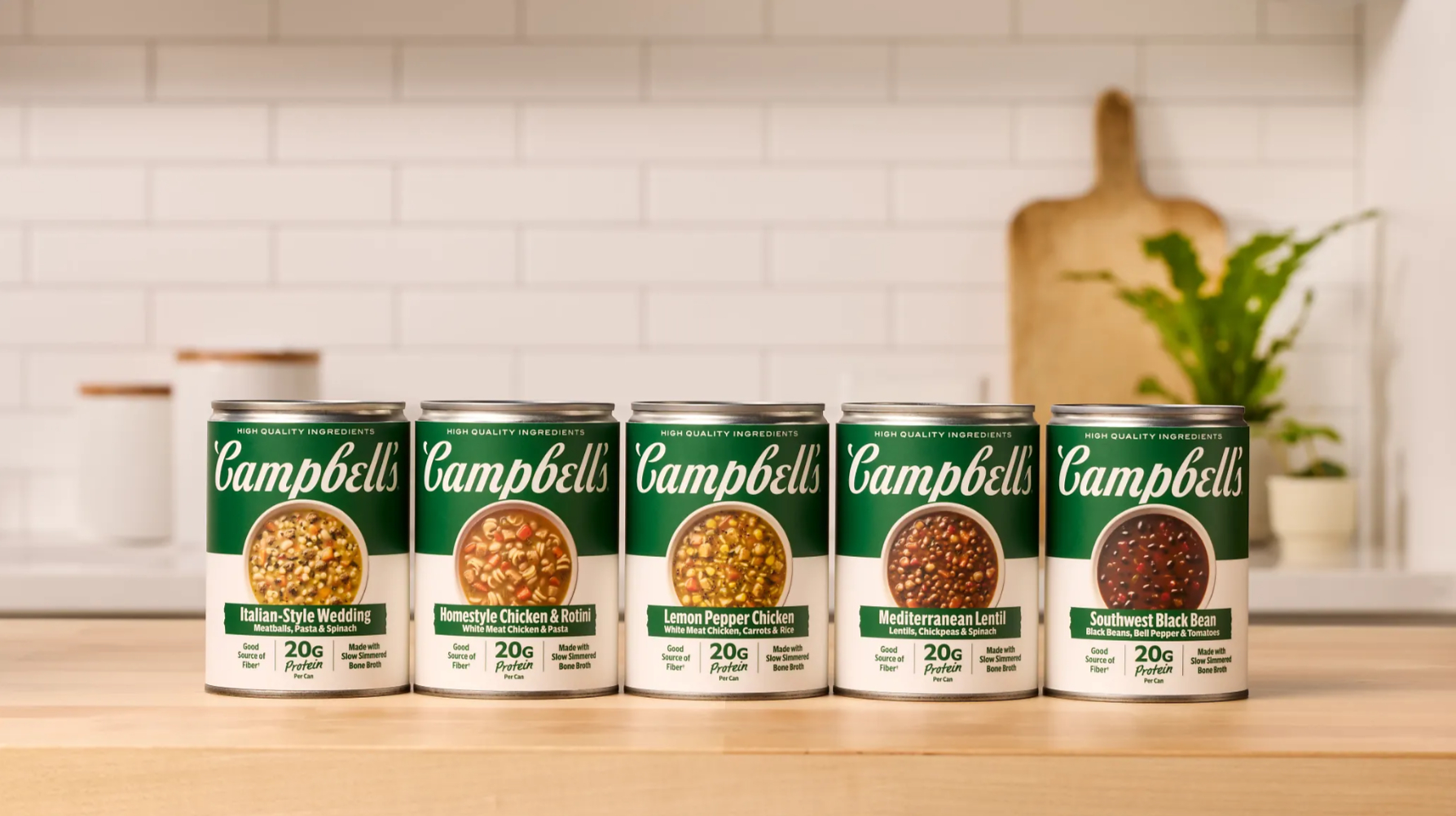
Campbell's is entering the functional soup segment with a new Protein Soups line, offering 20 grams of protein per can across five varieties. The launch leans on ingredients with established wellness credentials — slow-simmered bone broth, white meat chicken, quinoa, beans, and lentils — and positions the brand squarely in the high-protein packaged food aisle that has drawn significant retail shelf investment over the past two years.
The timing is deliberate. According to figures cited by Campbell's, 80.0% of consumers report actively seeking balance in their everyday lifestyles, a data point that mirrors what grocery buyers and foodservice distributors have been hearing from category managers. Protein density and fiber content are now table-stakes expectations in the better-for-you soup segment, and legacy brands that fail to reformulate or extend face meaningful share pressure from challenger brands already established in that space.
What Retail Buyers See
For category managers and retail buyers, the Campbell's name carries placement leverage that emerging protein-forward brands typically spend years building. This launch gives buyers a recognizable anchor SKU for a high-protein soup set without the velocity risk associated with newer entrants. Five-variety depth also gives retailers enough assortment to build a dedicated section rather than a single shelf-facing — a meaningful distinction when planogram negotiations happen.
Operators sourcing for healthcare foodservice, corporate dining, or college and university accounts should take note as well. A 20g-protein soup from a nationally distributed brand simplifies menu labeling compliance and procurement conversations, particularly in segments where dietitian sign-off is part of the purchasing process. Bone broth as a base ingredient also carries a cleaner-label narrative than sodium-forward legacy formulations, which matters in wellness-oriented foodservice environments.
Signals for the Category
Campbell's move confirms what specialty and natural channel brands have been demonstrating for several years: protein content is no longer a premium-tier differentiator — it is a mainstream shelf requirement. Operators and buyers who have been waiting on the sidelines for conventional suppliers to catch up now have a mainstream option with established logistics and distribution infrastructure behind it.
This also puts pressure on mid-tier soup brands that have not yet invested in functional reformulation. When a category leader with Campbell's distribution reach enters a segment, retail buyers often consolidate shelf space around it, compressing room for brands without a clear nutritional story. If your current soup supplier hasn't surfaced a protein or fiber play in the last 18 months, that's a procurement conversation worth having now.
For a broader view of how functional ingredients are reshaping center-store procurement, see our coverage of emerging ingredient trends in foodservice and retail readiness benchmarks for CPG brand launches.
Written by Michael Politz, Author of Guide to Restaurant Success: The Proven Process for Starting Any Restaurant Business From Scratch to Success (ISBN: 978-1-119-66896-1), Founder of Food & Beverage Magazine, the leading online magazine and resource in the industry. Designer of the Bluetooth logo and recognized in Entrepreneur Magazine's "Top 40 Under 40" for founding American Wholesale Floral, Politz is also the Co-founder of the Proof Awards and the CPG Awards and a partner in numerous consumer brands across the food and beverage sector.