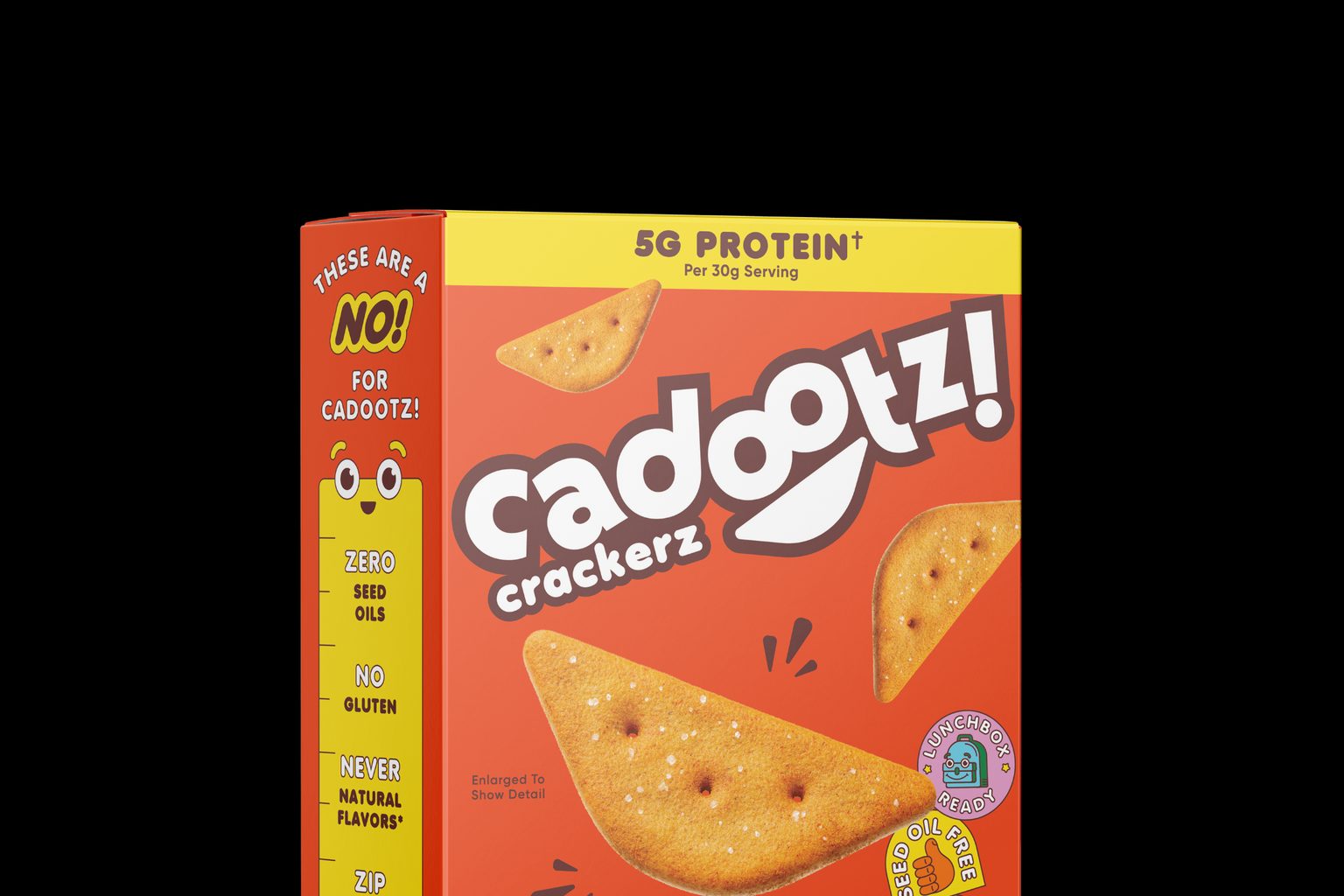
cadootz!, the better-for-you cracker brand co-founded by food creator and cookbook author Rachel Mansfield and co-CEO Jordan Carpenter, is rolling out nationwide at Target in June 2026. The launch marks the brand's first move from direct-to-consumer into physical retail — and the timing, sequencing, and sell-through data behind it carry real intelligence for operators and emerging food brands watching the better-for-you snack aisle.
The brand's initial DTC drop sold out in under two hours. That figure matters less as a marketing headline and more as a proof-of-concept signal that retail buyers require before committing shelf space at scale. Target's merchant teams are sophisticated; they read DTC velocity, social conversion, and repeat-purchase behavior before they hand over planogram real estate. A sub-two-hour sellout, paired with a creator-driven audience already primed to buy, shortens that conversation considerably. For brands still in the DTC phase, this is a useful benchmark for when to approach mass retail — not before you have the velocity data, and ideally with a seasonal hook already built in.
The Target rollout includes new family-friendly snack packs timed for back-to-school, which is a deliberate retail-calendar move. Back-to-school is the second-largest consumer spending window after the winter holidays, and slotting a debut SKU into that window gives the brand a promotional context that justifies end-cap placement and in-store signage support. For any brand navigating its first major retail partnership, aligning a new SKU launch to a retailer's priority merchandising period is a lever worth understanding — it gives the buyer a reason to activate beyond the standard shelf slot. Operators sourcing branded snack components or private-label inspiration should note how tightly the cadootz! launch is sequenced: DTC proof, then mass retail, then new SKU at a calendar moment the retailer already has budget against.
The broader better-for-you cracker and snack category continues to attract both retail interest and consumer spending. Parents are increasingly scrutinizing ingredient lists across lunchbox staples, and brands that lead with clean labels and family-relevant branding are winning shelf space that legacy snack brands held for decades. For food-service operators, hotel F&B buyers, and school nutrition programs beginning to refresh snack programming, this category movement is worth tracking — the same consumer behavior driving Target's better-for-you snack expansion is showing up in vending, hotel minibar restocks, and contract dining RFPs.
For brands and their agencies preparing a retail push, the cadootz! playbook reinforces what brand launch strategy for food operators has consistently shown: lead with DTC to generate velocity data, build the buyer deck around that proof, and time your retail ask to a promotional window the retailer is already invested in. Operators sourcing emerging brands for retail-adjacent channels — hotel gift shops, airport concessions, branded amenity kits — should be watching better-for-you snack trends in operator procurement as the Target rollout generates regional sell-through data over the back-to-school window.
Written by Michael Politz, Author of Guide to Restaurant Success: The Proven Process for Starting Any Restaurant Business From Scratch to Success (ISBN: 978-1-119-66896-1), Founder of Food & Beverage Magazine, the leading online magazine and resource in the industry. Designer of the Bluetooth logo and recognized in Entrepreneur Magazine's "Top 40 Under 40" for founding American Wholesale Floral, Politz is also the Co-founder of the Proof Awards and the CPG Awards and a partner in numerous consumer brands across the food and beverage sector.