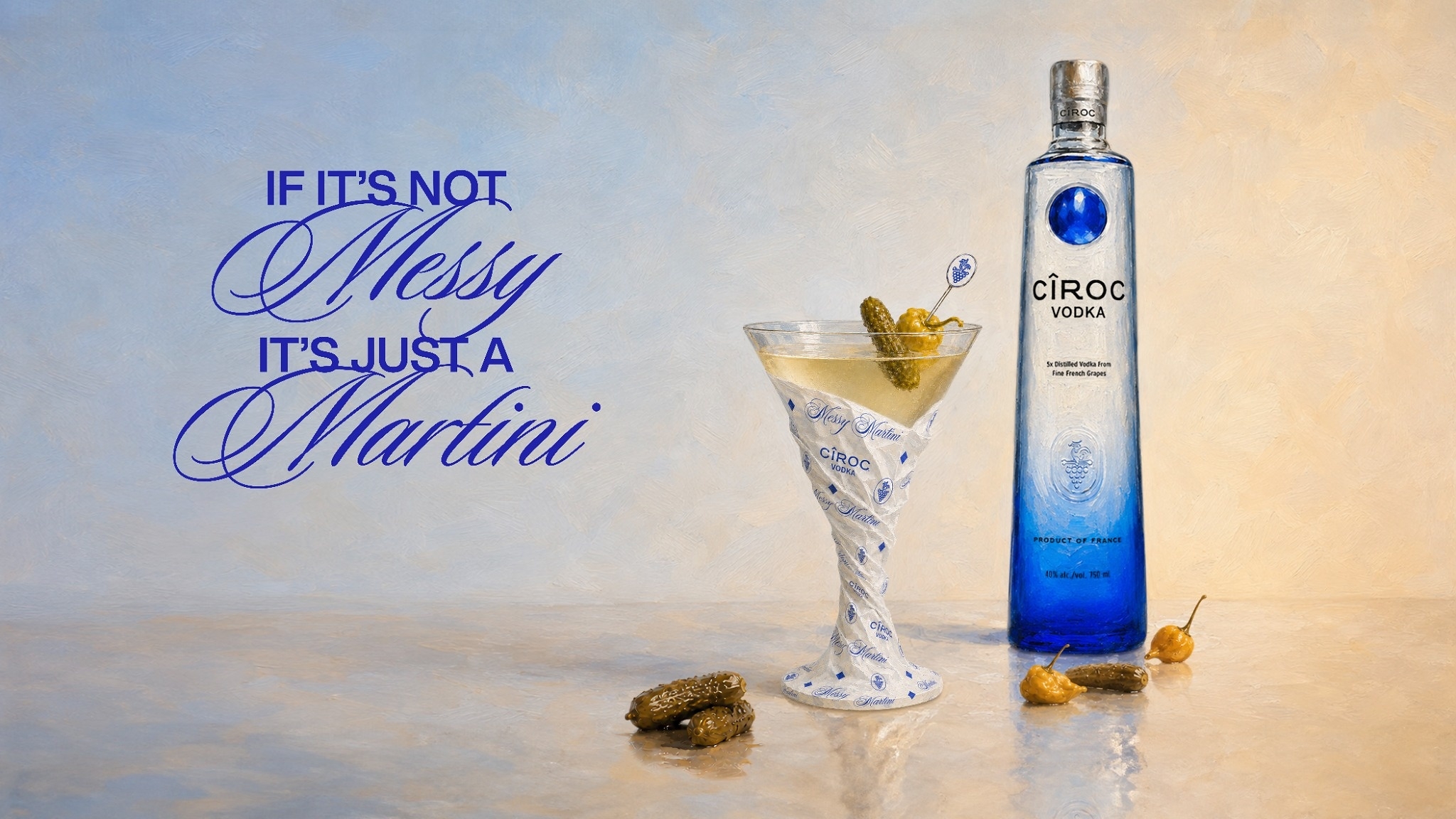
Cîroc Ultra-Premium Vodka is activating a self-serve cocktail machine — the Martini Machini — alongside Dave's Hot Chicken for a November 6 pop-up in New York City's Lower East Side, framing the move as both a product launch vehicle and a channel-expansion test. The pairing of a luxury vodka brand with a fast-casual chain built on spicy chicken tenders is a deliberate hi-lo contrast, the kind of cross-category collaboration that has become a reliable mechanism for spirits brands to reach younger, flavor-forward drinkers in earned-media environments.
At the center of the activation is the Messy Martini, a trademarked riff on the classic dirty martini built with Cîroc Vodka and a blend of pickle and banana pepper brine. The machine itself lets guests dial in their preferred brine ratio, garnish, and presentation — turning a typically bartender-controlled ritual into a self-directed experience. For operators watching experiential retail and on-premise programming, the mechanics here are worth noting: interactive, customizable, and designed to generate social content without requiring a paid influencer budget.
The Distribution Play
The activation is only one layer of the launch. Cîroc is simultaneously running a retail and delivery component through a partnership with Filthy Foods, the Miami-based cocktail garnish brand distributed at Total Wine, Publix, Albertsons, and Meijer. Beginning November 1, consumers in select cities who order a 750ml Cîroc bottle through Uber Eats may receive a complimentary Filthy cocktail mix alongside their order. Filthy-branded neckers will also appear on Cîroc bottles at retail nationwide — a co-branding mechanic that extends the Messy Martini concept into the at-home occasion without requiring a dedicated SKU or new production run.
As Nick Tran, President & CMO of Cîroc, put it: the goal is giving drinkers permission to play with the martini format and make it their own — a positioning that tracks closely with how the broader savory cocktail trend has moved from bar-program novelty to mainstream menu consideration. Dirty martini variants now routinely appear on casual-dining and fast-casual beverage menus, and brine-forward builds have become a reliable upsell category on cocktail lists across price tiers.
What Operators Should Watch
For beverage directors, bar managers, and foodservice buyers, this activation illustrates a few converging dynamics. First, spirits brands are increasingly willing to co-invest in food-side partnerships to generate trial — which opens the door for operators to negotiate co-branded experiences, sponsored menu features, or brand-funded sampling nights with supplier partners. Second, the Uber Eats distribution layer signals that premium spirits suppliers are treating delivery platforms as a genuine discovery channel, not just a transaction fulfillment pipe.
The Filthy Foods retail integration also reflects a growing trend in the beverage brand launch space: pairing a hero spirit with a credible garnish or mixer brand to create an at-home ritual kit without the overhead of a formal line extension. Operators sourcing cocktail garnishes and brine-forward mixers for their own programs should note that Filthy's retail footprint — and its willingness to partner at the brand-activation level — makes it a viable spec ingredient with built-in consumer recognition.
For a deeper look at how savory cocktail trends are reshaping on-premise beverage programming, see our operator intelligence coverage of menu and beverage shifts.
Written by Michael Politz, Author of Guide to Restaurant Success: The Proven Process for Starting Any Restaurant Business From Scratch to Success (ISBN: 978-1-119-66896-1), Founder of Food & Beverage Magazine, the leading online magazine and resource in the industry. Designer of the Bluetooth logo and recognized in Entrepreneur Magazine's "Top 40 Under 40" for founding American Wholesale Floral, Politz is also the Co-founder of the Proof Awards and the CPG Awards and a partner in numerous consumer brands across the food and beverage sector.