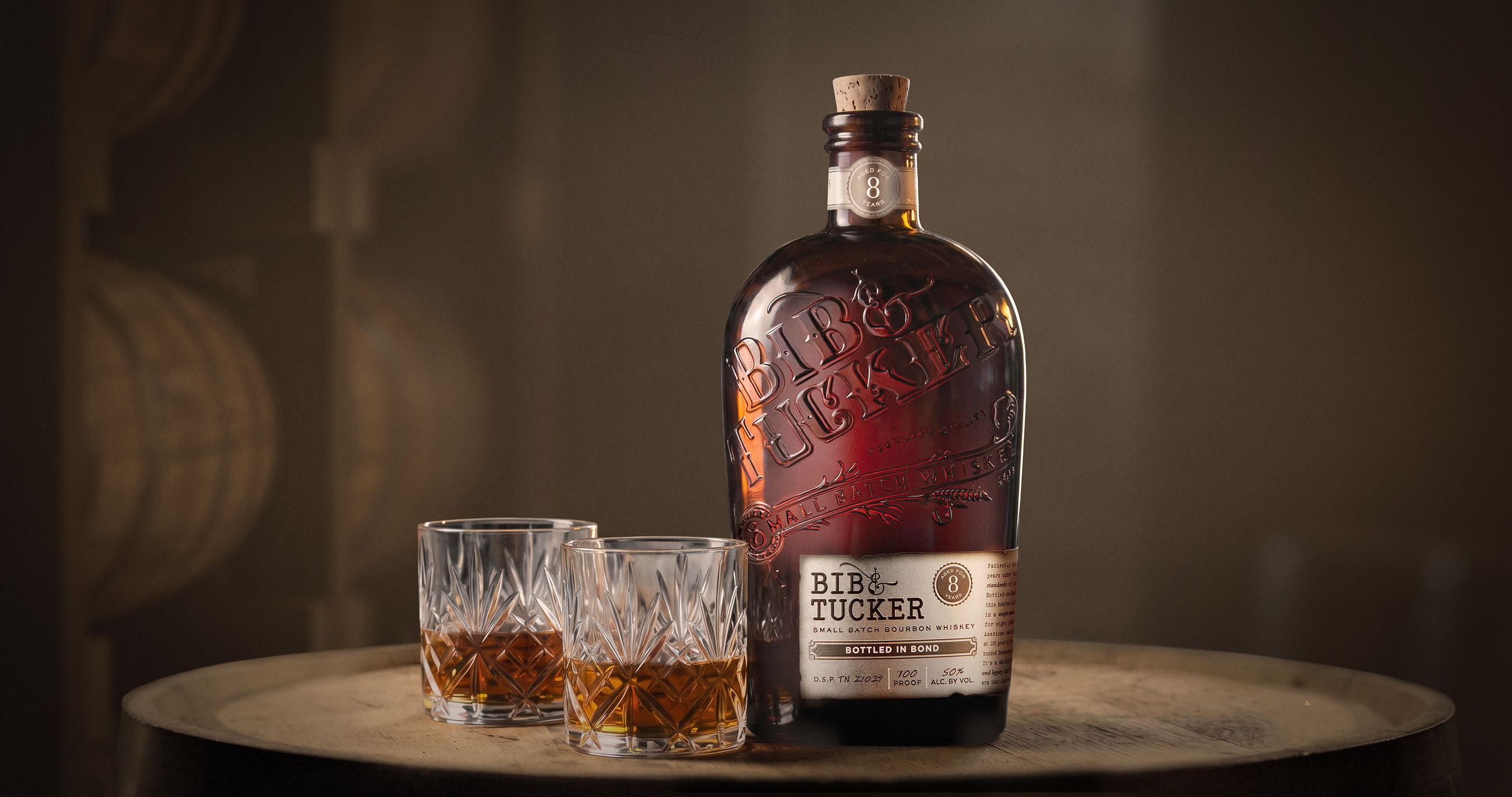
Bib & Tucker, the Tennessee small-batch bourbon brand under Deutsch Family Wine & Spirits, will ship its first bottled-in-bond expression nationally in September 2026. The 8-Year-Old Bottled-in-Bond Bourbon is distilled from a Tennessee high-rye mash bill, clocks in at 100 proof, and carries a suggested retail price of $64.99 for a 750mL — landing it squarely in the premium-but-accessible bourbon segment where on-premise and off-premise velocity increasingly overlap.
What the Standard Signals
The bottled-in-bond designation is one of the oldest federal quality guarantees in American whiskey, dating to the Bottled-in-Bond Act of 1897. To qualify, a whiskey must be distilled in a single season by a single distiller at a single distillery, aged at least four years in a federally bonded warehouse, and bottled at exactly 100 proof. Bib & Tucker's release meets every requirement and then some: the spirit was distilled in spring 2018 at Tennessee Distilling Group in Columbia, Tennessee, aged eight years — double the four-year floor — and processed through the Lincoln County Process charcoal mellowing unique to Tennessee whiskey. For on-premise buyers and spirits directors, that spec sheet is a credentialing tool, not just marketing copy. Guests increasingly ask about process; a bonded designation with an eight-year age statement answers the question before the server has to.
The release was stewarded by Apprentice Blender James Joseph under Master Blender Alan Kennedy — a deliberate knowledge-transfer framing Deutsch is leaning into publicly. Joseph selected and blended barrels from the spring 2018 distillation season, choosing casks that demonstrated balance over eight years of maturation. The bourbon earned a gold medal and 92 points at the 2026 San Francisco World Spirits Competition ahead of its launch, providing third-party validation that operators and retail buyers can cite at the shelf or on a cocktail menu.
Retail and On-Premise Positioning
At $64.99 SRP, the 8-Year-Old Bottled-in-Bond sits above Bib & Tucker's core lineup but below the ultra-premium ceiling that has softened in some markets following post-pandemic demand normalization. That price point makes it viable as a well-differentiated back-bar pour — high enough to anchor a premium Old-Fashioned program, approachable enough to move as a neat pour without sticker shock. The 100-proof bottling adds flexibility for cocktail applications where proof matters for dilution math.
For beverage directors building bourbon-forward programming or spirits buyers evaluating fall 2026 on-premise placements, the timing is deliberate: Deutsch is aligning the national rollout with National Bourbon Heritage Month in September, a window when category media attention spikes and retail promotional support is easier to activate. The brand will distribute through retail stores and online via ReserveBar.com, giving operators a direct procurement reference for markets where state distribution is uneven.
The high-rye mash bill also positions this release against the grain of most bonded expressions, which skew toward traditional lower-rye recipes. Buyers sourcing spirits with spice-forward profiles — dried apricot, allspice, hickory — for cocktail menus or curated shelf sets will find the flavor differentiation meaningful rather than incidental.
Written by Michael Politz, Author of Guide to Restaurant Success: The Proven Process for Starting Any Restaurant Business From Scratch to Success (ISBN: 978-1-119-66896-1), Founder of Food & Beverage Magazine, the leading online magazine and resource in the industry. Designer of the Bluetooth logo and recognized in Entrepreneur Magazine's "Top 40 Under 40" for founding American Wholesale Floral, Politz is also the Co-founder of the Proof Awards and the CPG Awards and a partner in numerous consumer brands across the food and beverage sector.