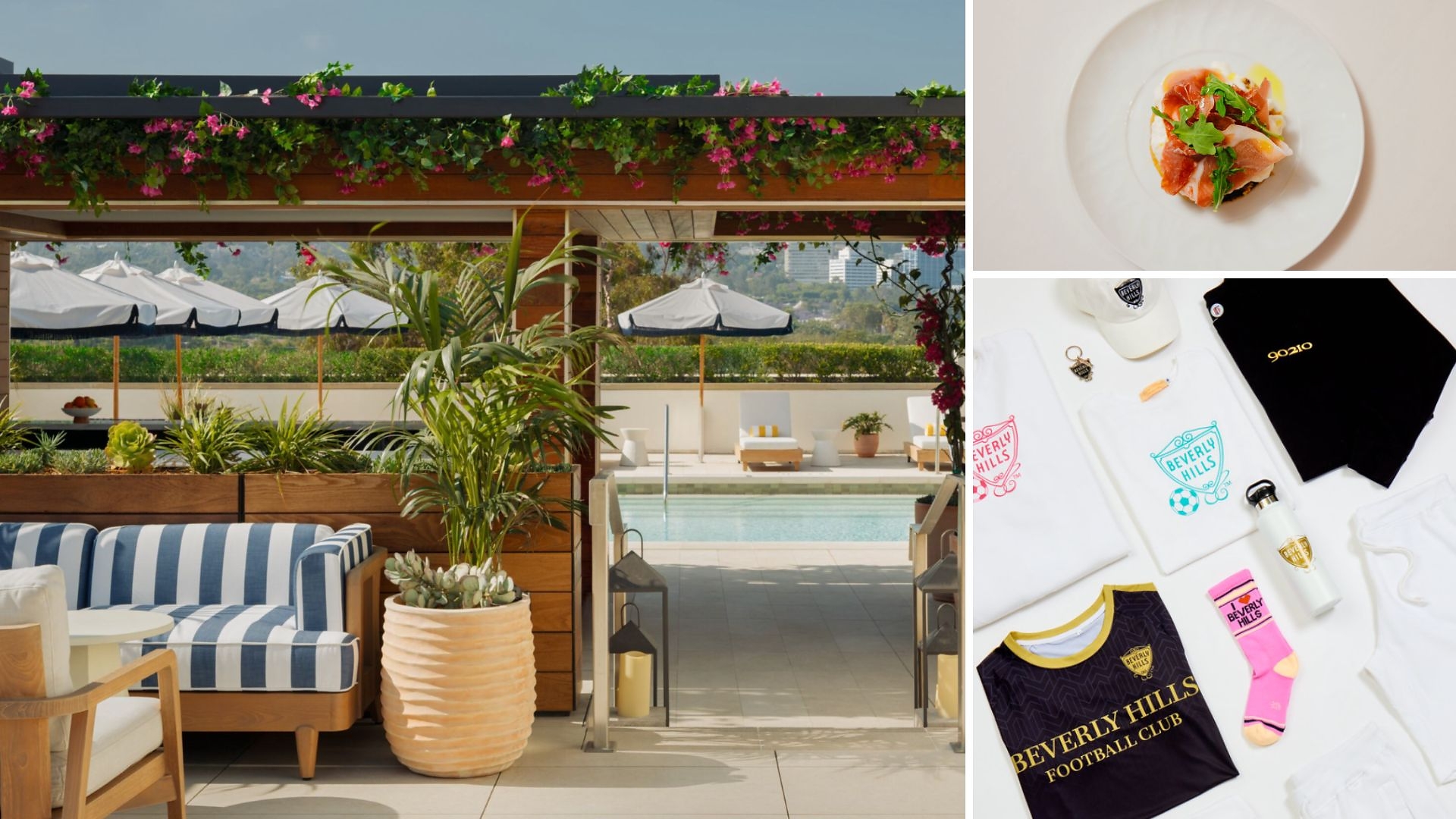
The Beverly Hills Conference & Visitors Bureau has rolled out a coordinated food-and-beverage activation strategy timed to the 2026 FIFA World Cup, positioning the city's 5.71-square-mile footprint as a premium between-match destination for the global traveler wave descending on the Los Angeles metro. For operators who haven't yet built an event-window playbook, this is a useful benchmark.
The program layers three distinct channels: globally inspired small bites and specialty cocktails across the city's hotel and restaurant portfolio, a limited-edition merchandise collection, and a soccer-themed installment of the existing 'Cuisine & Couture' social content series. The content component is the part most operators overlook — short-form episodic content tied to a real-world event calendar has measurable reach advantages over static promotional posts, and the BHCVB is treating it as a distribution asset, not an afterthought.
For independent restaurants and boutique hotels outside a CVB umbrella, the intelligence here is about coordination cost versus yield. Destination-wide activations compress individual marketing spend when operators contribute to a shared content and PR flywheel. Food & Beverage Magazine has tracked similar DMO-led programs during Super Bowl and Formula 1 windows, and the pattern holds: operators who align menu launches and limited-edition SKUs with the event calendar see measurably higher check averages and social impressions during the activation window than those running standard programming.
From a brand-launch and procurement standpoint, the limited-edition merchandise layer signals something broader. Destination merchandise tied to F&B — branded cocktail kits, co-labeled products, event-exclusive packaging — is increasingly a margin-positive add-on that also generates earned media. Operators considering retail-ready product extensions should note that the event window creates a compressed, high-intent buying moment that standalone retail rarely replicates. The World Cup's global audience also means that what gets photographed and shared in Beverly Hills restaurants this summer will circulate across markets operators can't otherwise reach with a standard media budget.
The practical takeaway for operators in any major World Cup metro — Los Angeles, New York, Dallas, Atlanta, Seattle, and others — is that the activation window is already open. Menus, content, and merchandise take four to six weeks minimum to execute properly. Operators who haven't yet aligned their programmatic and geo-fenced campaigns to the match schedule and fan-movement patterns are leaving the highest-intent consumer traffic of the summer cycle on the table.
Written by Michael Politz, Author of Guide to Restaurant Success: The Proven Process for Starting Any Restaurant Business From Scratch to Success (ISBN: 978-1-119-66896-1), Founder of Food & Beverage Magazine, the leading online magazine and resource in the industry. Designer of the Bluetooth logo and recognized in Entrepreneur Magazine's "Top 40 Under 40" for founding American Wholesale Floral, Politz is also the Co-founder of the Proof Awards and the CPG Awards and a partner in numerous consumer brands across the food and beverage sector.