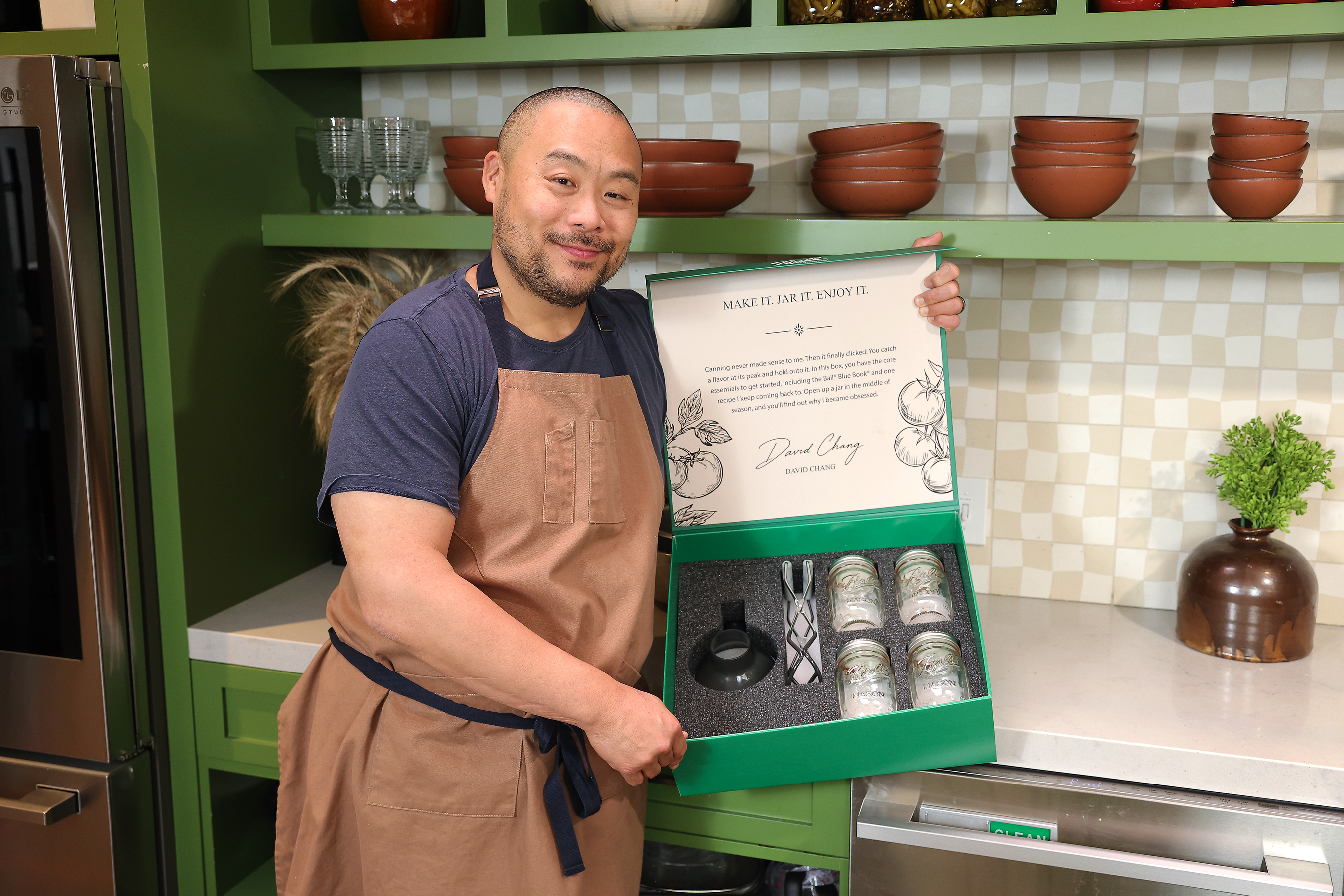
Ball® home canning, a Newell Brands property, has partnered with chef David Chang on a limited-edition beginner canning kit available exclusively at Walmart.com. The kit ships with four 16-oz Ball mason jars, a three-piece utensil set, the Ball® Blue Book® Guide to Preserving, and an exclusive Korean Hot Pickle Mix recipe developed by Chang. The Walmart-exclusive distribution and the Chang name are doing specific work here: lowering the perceived barrier to entry while anchoring the SKU inside the world's largest food retailer at peak canning season.
The Partnership Logic
Chef partnerships on consumer packaged goods are not new, but the mechanics of this one are worth unpacking for operators and brand strategists watching the space. Chang's culinary credibility translates a traditionally utilitarian category—home food preservation—into something aspirational and culturally relevant. Newell Brands is leaning into a documented behavioral shift: a 2026 survey conducted by Talker Research found that 84.0% of Americans have incorporated analog lifestyle choices into their daily routines. That statistic is the strategic backdrop for the launch. Home canning sits at the intersection of scratch cooking, seasonal sourcing, and the broader retreat from purely digital engagement—a position Ball is actively trying to own.
Waylon Good, Vice President of Brand Management at Newell Brands, framed the partnership plainly: "David's passion for cooking and bringing people together through food makes him the perfect partner to inspire a new generation of canners." That language—"new generation"—is the real signal. Ball has over 140 years of brand equity with legacy home canners; what it needs now is a recruitment channel into millennial and Gen Z kitchens, and Chang's food-media footprint provides that reach without requiring a paid media buildout from scratch.
What This Signals for Food Brands
For food and beverage brands watching from the sidelines, this launch illustrates a repeatable playbook: take a mature, low-glamour category, attach a high-credibility culinary figure, bundle an exclusive recipe or technique that can only be accessed through purchase, and route it through a mass retailer with strong grocery and housewares traffic. The exclusive recipe mechanic is worth noting—it creates a reason to buy the kit over assembling the same components individually, which matters when a consumer can find Ball mason jars in virtually any grocery or home goods aisle.
For operators sourcing private-label or co-branded pantry items, or for food brands considering chef collaborations for retail expansion, the structural lesson is clear: the exclusive content layer (here, the recipe) is what transforms a bundled product into a differentiated SKU. Distribution through Walmart.com also signals that Newell Brands is prioritizing e-commerce discoverability over specialty retail placement—a choice that favors volume and new-user acquisition over margin optimization. Brands building similar retail-readiness strategies should evaluate how brand launch and buyer deck frameworks can support that kind of mass-channel positioning.
The timing—mid-canning season—is deliberate. Peak produce availability from late July through September is when first-time canners are most likely to be motivated by farmer's market hauls and garden surpluses. Catching that consumer at the moment of intent, inside a retailer they already visit weekly, is a sound launch-window call. Operators and food brands tracking seasonal product launch windows will find this timing cadence worth benchmarking.
Written by Michael Politz, Author of Guide to Restaurant Success: The Proven Process for Starting Any Restaurant Business From Scratch to Success (ISBN: 978-1-119-66896-1), Founder of Food & Beverage Magazine, the leading online magazine and resource in the industry. Designer of the Bluetooth logo and recognized in Entrepreneur Magazine's "Top 40 Under 40" for founding American Wholesale Floral, Politz is also the Co-founder of the Proof Awards and the CPG Awards and a partner in numerous consumer brands across the food and beverage sector.