Restaurants, hotels, universities, and food manufacturers facing tightening organic waste mandates now have a larger national option: Agri-Cycle has acquired three regional organics haulers — Food Recycling Solutions (FRS) in Northwest Arkansas, Against the Grain in Greater Boston, and ReMix Organics in Rhode Island — expanding its coverage to more than 30 states and adding composting and animal feed to its existing anaerobic digestion capabilities.
The move matters for operators because food waste diversion is no longer a voluntary sustainability metric in many jurisdictions. Maine, New Hampshire, Vermont, and Massachusetts all carry active disposal bans or diversion mandates, and similar legislation is advancing in other states. Up to 40.0% of U.S. food ends up in landfills, wasted food accounts for 58.0% of landfill methane emissions, and ReFED pegs the value of surplus and wasted food at over $300 billion. For operators already navigating rising disposal costs, a single coordinated hauler that can route material to the highest-value recovery pathway — energy, soil amendment, or animal feed — reduces both vendor complexity and compliance risk.
Why the Acquisitions Matter
Each of the three acquired businesses adds something distinct to the platform. FRS brings composting infrastructure and more than 100 customers ranging from small cafés to large industrial food operations in a fast-growing Arkansas market — the region adds roughly 40 residents daily, according to FRS founder Richard Ims. Against the Grain plugs in an existing farmer network that converts spent grain from breweries, distilleries, and cideries into animal feed, a pathway that ReFED ranks among the highest-value diversion options by annual tonnage. ReMix Organics, a Providence-based commercial hauler co-founded in 2013, deepens route density across southern New England and brings anaerobic digestion and composting partnerships that convert collected organics into renewable energy and soil products.
For procurement teams evaluating waste vendors, route density is the operational variable that determines whether diversion programs actually pencil out. Without enough pickup volume per corridor, the per-unit cost of compliant organics collection stays high — pricing out smaller operators and undercutting sustainability ROI for larger ones. Agri-Cycle's buy-and-build strategy, backed by Closed Loop Partners' private equity group since 2025, is specifically designed to close that gap by consolidating fragmented regional haulers under shared logistics infrastructure.
What Operators Should Watch
The fragmentation of the U.S. organics recovery market has long been a barrier for multi-unit restaurant groups, hotel chains, and institutional foodservice operators trying to standardize waste diversion across regions. A single-provider model — with the ability to match material to the best available recovery pathway by geography — simplifies vendor management, makes sustainability reporting more consistent, and can lower total cost of diversion as route density improves.
Jackson Pei, Managing Director and Co-head of Closed Loop Private Equity, described the market as large but fragmented, requiring "scaled operators that combine flexible logistics, local relationships and access to processing." Dan Bell, founder and CEO of Agri-Cycle, framed collection as the prerequisite: "Turning food and organic waste into valuable resources starts with reliable collection."
For operators under compliance pressure — or ahead of mandates that have not yet taken effect in their state — now is the time to audit existing waste hauling contracts and evaluate whether regional vendors can meet both volume and reporting requirements at scale. Procurement teams sourcing organics diversion services should ask vendors specifically about recovery pathway flexibility and multi-state coordination capability, two criteria this platform is explicitly built around.
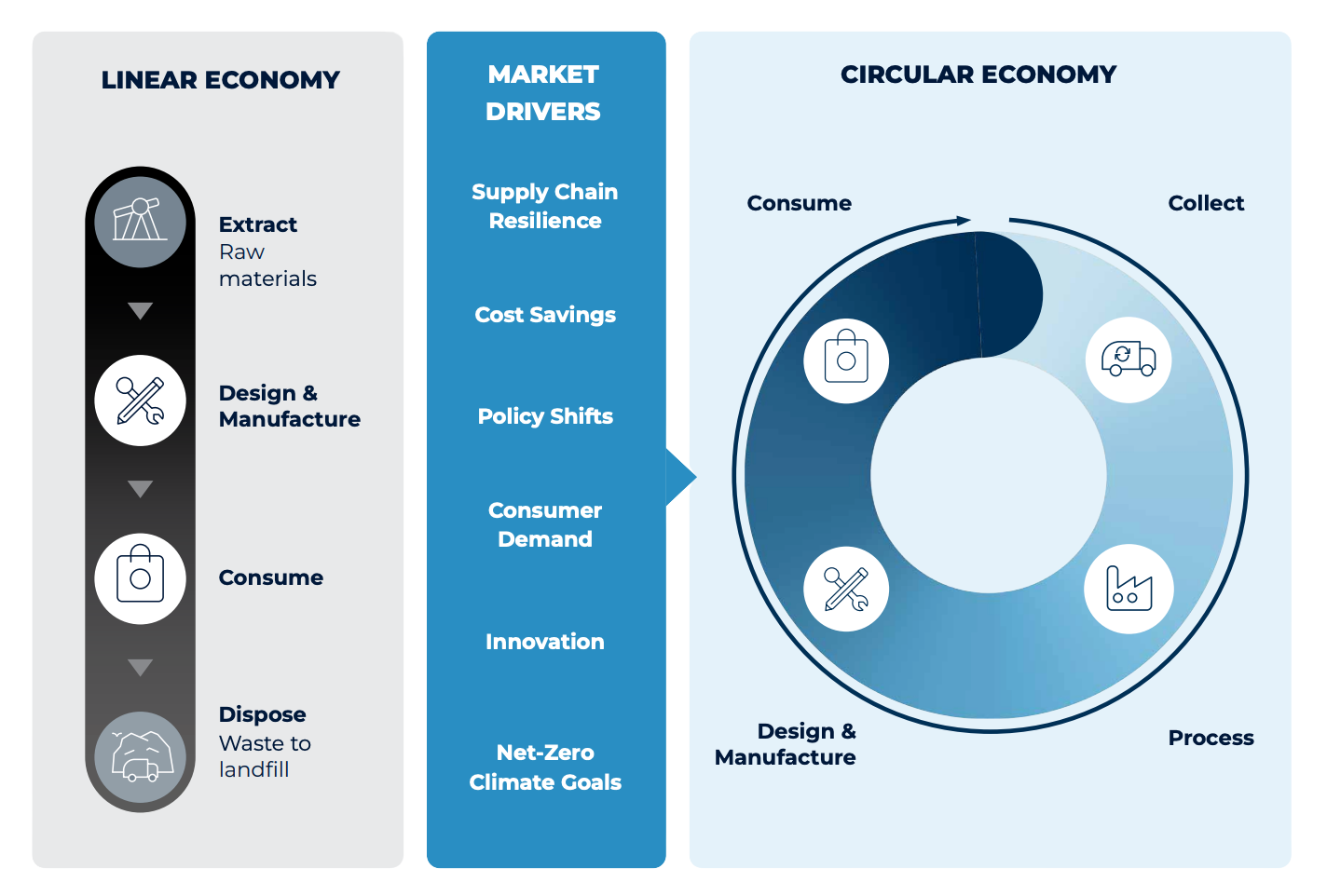
See related coverage on food waste and sustainable sourcing trends for operators and how circular supply chain models are reshaping hospitality procurement.
Written by Michael Politz, Author of Guide to Restaurant Success: The Proven Process for Starting Any Restaurant Business From Scratch to Success (ISBN: 978-1-119-66896-1), Founder of Food & Beverage Magazine, the leading online magazine and resource in the industry. Designer of the Bluetooth logo and recognized in Entrepreneur Magazine's "Top 40 Under 40" for founding American Wholesale Floral, Politz is also the Co-founder of the Proof Awards and the CPG Awards and a partner in numerous consumer brands across the food and beverage sector.