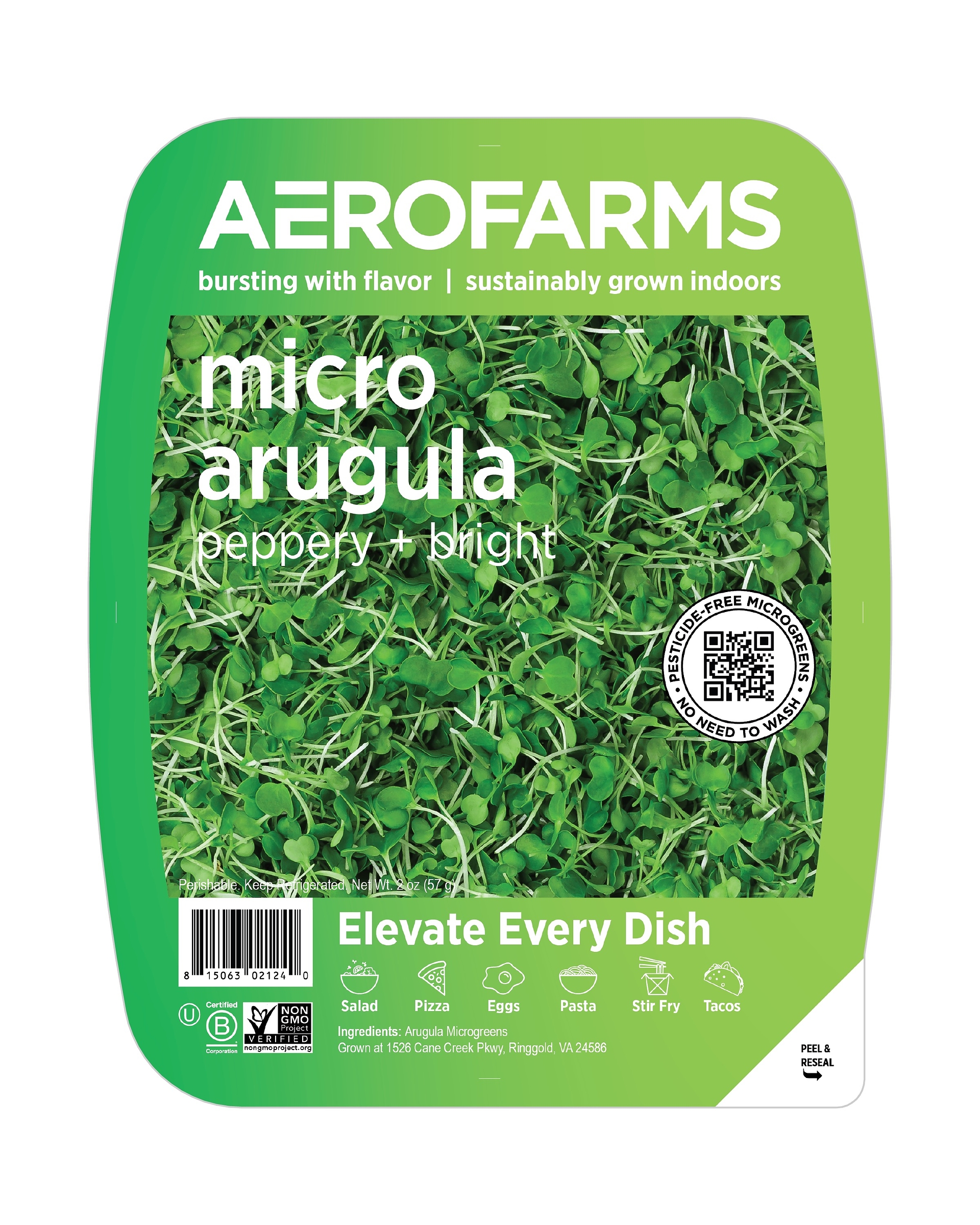
Three months after its acquisition by Palm Ventures, AeroFarms has moved quickly on retail distribution — landing Micro Arugula at Whole Foods Market nationwide and a club-sized Micro Broccoli pack exclusively at Costco, both available beginning late August 2026. The moves mark the first major SKU expansion under CEO Gustavo Burger and bring the company's active retail footprint to approximately 2,000 doors across chains including Wegmans, Harris Teeter, Jewel-Osco, and FreshDirect.
The Products and the Pricing
Micro Arugula is priced at $4.99 per two-ounce package — a premium-but-accessible positioning for natural and conventional grocery. The Micro Broccoli club pack lands at $7.99 for six ounces, an entry designed to drive trial through Costco's volume-driven membership model. AeroFarms cites internal analysis showing Micro Broccoli contains 34 times more vitamin A, 6 times more calcium, and 4 times more magnesium than whole crown broccoli — a nutrient-density story that plays well in both retail buyer decks and on-pack claims. Shelf life is another differentiator: the company's aeroponic growing process yields an 18- to 21-day shelf life, compared with seven days or fewer for soil-grown microgreens, a meaningful operational advantage for produce managers managing shrink.
What This Signals for Operators and Buyers
Food safety is the subtext driving this launch more than the SKUs themselves. Burger has made contamination risk a central talking point, noting that AeroFarms' Virginia indoor farm uses only purified, continuously monitored water and eliminates soil and open-field exposure entirely. That positioning is deliberate: foodservice and retail buyers have faced recurring produce safety incidents tied to field-grown leafy greens, and suppliers with certified indoor growing environments are gaining incremental shelf space as a result. Operators sourcing microgreens for salad programs, bowl concepts, or tasting-menu garnishes should note that indoor-grown product now carries measurable procurement advantages — documented third-party certification audits, no-wash ready-to-eat status, and supply consistency regardless of seasonal weather disruption.
The dual-channel retail strategy — a single-serve SKU at natural grocery and a club-format pack at mass warehouse — reflects a maturing go-to-market playbook for premium produce brands. It also suggests the Palm Ventures team is stress-testing demand across distinct consumer segments before committing deeper to foodservice distribution. Operators looking to source AeroFarms product for back-of-house use should watch whether a foodservice pack format or broadline distribution agreement follows this retail push, particularly given the extended shelf life advantage.
For category buyers and produce directors, the AeroFarms expansion is a useful benchmark against which to evaluate other indoor farming vendors entering retail distribution. The microgreens category is small but growing, and the brands that secure Whole Foods and Costco simultaneously are the ones most likely to attract broadline distributor attention next. Operators building premium ingredient sourcing programs should track whether indoor-grown microgreens move from specialty item to standard pantry spec over the next 12 to 18 months.
Written by Michael Politz, Author of Guide to Restaurant Success: The Proven Process for Starting Any Restaurant Business From Scratch to Success (ISBN: 978-1-119-66896-1), Founder of Food & Beverage Magazine, the leading online magazine and resource in the industry. Designer of the Bluetooth logo and recognized in Entrepreneur Magazine's "Top 40 Under 40" for founding American Wholesale Floral, Politz is also the Co-founder of the Proof Awards and the CPG Awards and a partner in numerous consumer brands across the food and beverage sector.