Convenience-store giant 7-Eleven, Inc. is making a coordinated value play across its restaurant portfolio, rolling out distinct deal menus at Laredo Taco Company, Raise the Roost, and Speedy Cafe simultaneously. The move positions 7-Eleven's captive foodservice brands as a direct alternative to QSR value meals — on the customer's way to work, not a detour from it.
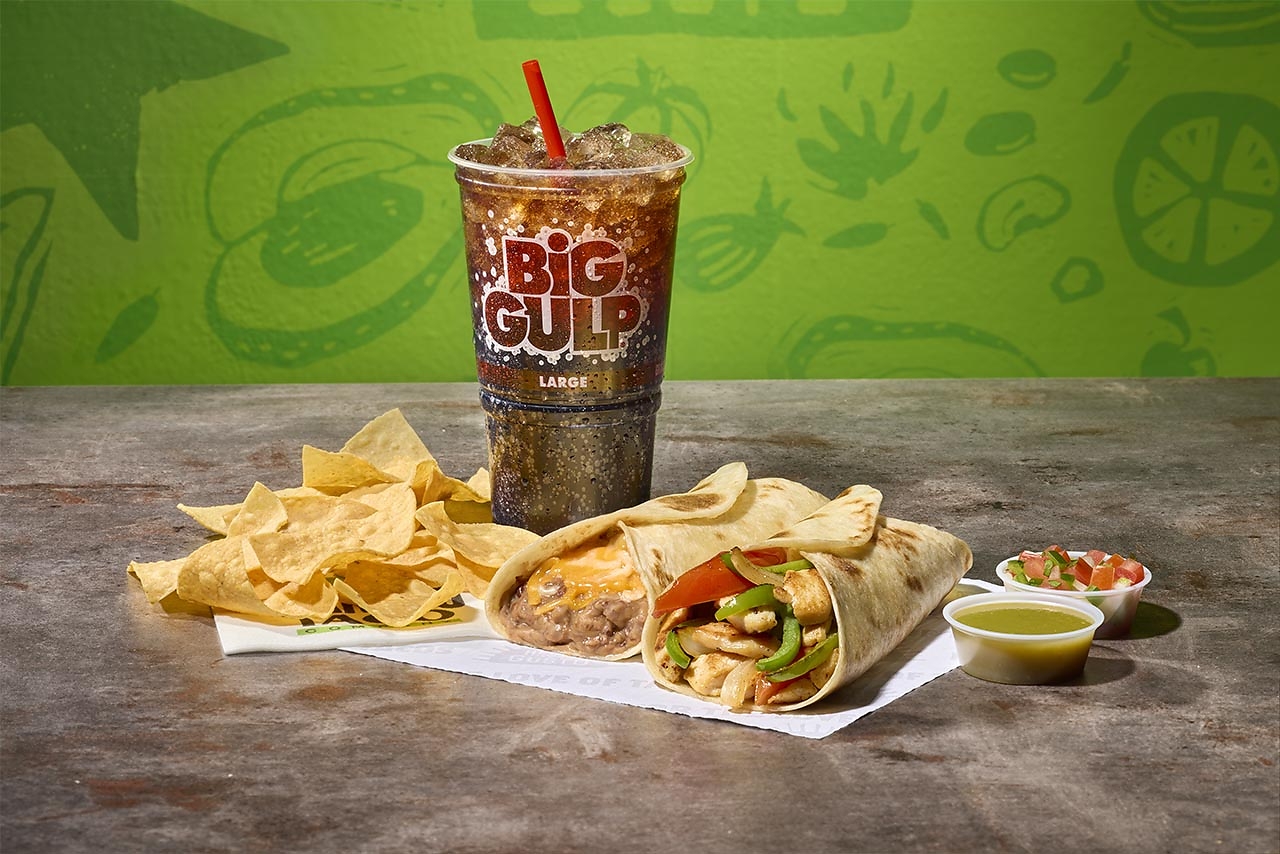
The three menus are distinct by concept but unified by a sub-$5 anchor. Laredo Taco Company's Más Value Menu leads with a $5 breakfast bundle (two breakfast tacos plus a small coffee) and a $7 lunch pairing (two lunch tacos plus a large Big Gulp), alongside a growing roster of à la carte items under $3. Raise the Roost's Raise Your Cravings Menu caps most items at $4, covering a Chicken Biscuit, Sausage & Cheese Muffin, Crispy Wrap, and 4-piece Nuggets. Speedy Cafe's Speedy Deals Menu goes lowest on price, offering Crispy Wraps and Grilled Wraps under $3, with breakfast sandwiches — Bacon, Egg & Cheese Croissant and Sausage, Egg & Cheese Biscuit — under $4. All three promotions run through October 27, 2026, at participating locations.
C-Store Foodservice Context
This launch doesn't happen in a vacuum. C-store foodservice has been one of the more resilient growth categories in the broader restaurant landscape, with operators like Wawa, Sheetz, and Casey's investing heavily in scratch-made and branded food programs. 7-Eleven's advantage is scale: more than 12,000 U.S. and Canada locations across its network, combined with a loyalty base exceeding 100 million members across its 7Rewards and Speedy Rewards programs. Value menus that integrate with loyalty redemption are a proven retention lever — and 7-Eleven has the infrastructure to execute at that level in ways independent operators and smaller QSR chains cannot easily replicate.
William Armstrong, Senior Vice President of Restaurant Operations and Innovation at 7-Eleven, Inc., framed the launch around customer convenience: the goal is to provide a reliable, affordable answer for breakfast, lunch, and dinner across busy schedules without requiring a separate foodservice trip.
What Operators Should Watch
For foodservice and hospitality operators, 7-Eleven's coordinated multi-brand value push is a useful benchmark in the current pricing environment. With food-away-from-home inflation still pressuring consumer spending decisions, the sub-$5 meal bundle has emerged as the dominant value anchor across QSR and fast-casual — and c-store operators are now engineering menus around that same threshold. Independent operators competing in breakfast daypart or grab-and-go lunch should pay attention to how structured value menus affect check frequency and loyalty enrollment, not just ticket size.
The promotional window also signals something about 7-Eleven's promotional cadence: a roughly two-month trial period with clearly defined end dates suggests the company is running structured market tests before committing to permanent menu architecture. Vendors and packaging suppliers pitching convenience-channel accounts should expect similar time-boxed pilot structures as the norm, not the exception, when 7-Eleven evaluates new SKUs or program formats.
For a deeper look at how convenience-channel foodservice is reshaping the operator intelligence landscape, and how value-menu strategy is influencing brand launch and menu development decisions, both categories are worth tracking closely through Q4 2026.
Written by Michael Politz, Author of Guide to Restaurant Success: The Proven Process for Starting Any Restaurant Business From Scratch to Success (ISBN: 978-1-119-66896-1), Founder of Food & Beverage Magazine, the leading online magazine and resource in the industry. Designer of the Bluetooth logo and recognized in Entrepreneur Magazine's "Top 40 Under 40" for founding American Wholesale Floral, Politz is also the Co-founder of the Proof Awards and the CPG Awards and a partner in numerous consumer brands across the food and beverage sector.