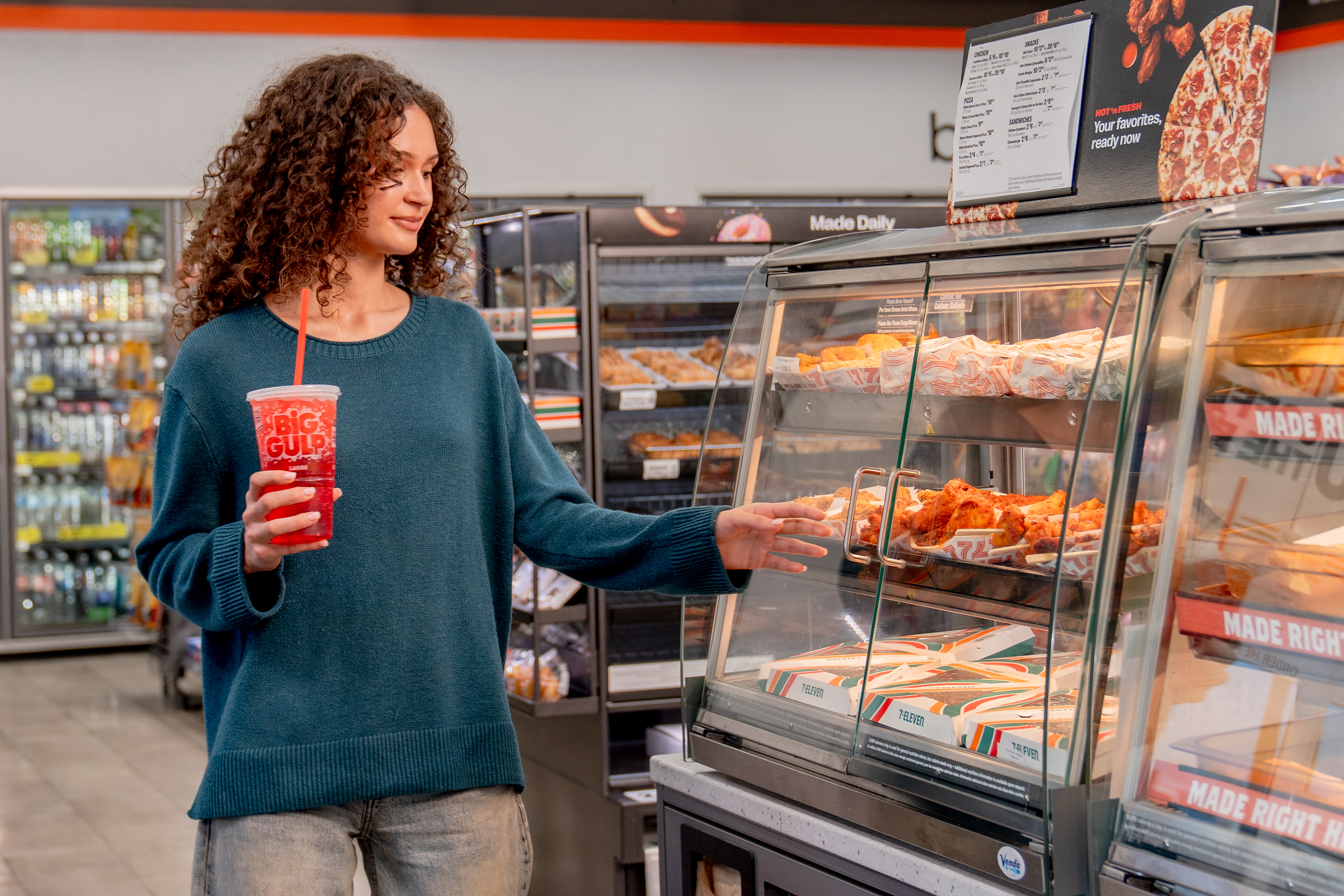
7-Eleven, Inc. is running a Summer Solstice promotional window across participating 7-Eleven, Speedway, and Stripes locations, centering deals on roller grill items, crispy chicken wings, and beverages. The activation leans into the "longest day" narrative as a traffic driver — a tactic that converts a cultural calendar moment into incremental snack and beverage transactions during extended daylight hours. For operators outside the c-store channel, the move is worth watching as a case study in seasonal urgency framing.
Calendar-anchored LTOs have become a reliable lever for high-frequency, low-average-check formats. Convenience, QSR, and fast-casual operators have increasingly stacked promotional windows around solstices, equinoxes, and weather milestones rather than traditional holiday dates — in part because those moments carry lower competitive noise than Memorial Day or Labor Day pushes. The roller grill and wings pairing is also deliberate: both items carry strong impulse-purchase behavior and benefit from visual merchandising at the point of decision, making them natural fits for a daypart-extension strategy as sunlight pushes dinner traffic later.
For operators evaluating their own seasonal promotion calendars, this activation signals a few procurement and marketing considerations worth building into planning cycles. First, roller grill and wing SKUs require supplier lead time when volume is expected to spike — operators running similar promotions without pre-confirmed inventory commitments tend to leave margin on the table. Second, the multi-banner execution (7-Eleven, Speedway, Stripes operating as one campaign) illustrates how shared promotional infrastructure across acquired or affiliated locations can compress media costs while broadening reach — a model increasingly relevant to multi-unit operators building shared marketing stacks. Third, the beverage tie-in is a classic margin-protection play: attaching a higher-margin drink to a discounted food item keeps ticket averages defensible even when food is the promotional anchor.
From a growth-marketing standpoint, solstice timing also creates a natural geo-fencing and daypart-targeting window. Extended daylight correlates with later convenience stops, more outdoor-to-drive-through transitions, and higher receptivity to snack messaging in the 4–8 p.m. window. Operators with programmatic or paid social budgets should consider whether their current campaigns are daypart-weighted or running flat across the day — most vendor data suggests flat delivery significantly underperforms daypart-optimized spend for impulse food categories. Seasonal geo-fencing strategy for c-store and QSR operators is an area where small budget reallocations can produce measurable lift.
The broader takeaway for operators is not the specific deals — it's the architecture. A defined cultural moment, a high-margin anchor item, a beverage attach, and a multi-location unified message. That framework is replicable at almost any scale, from a 3-unit regional chain to a single food hall operator running a solstice-week special.
Written by Michael Politz, Author of Guide to Restaurant Success: The Proven Process for Starting Any Restaurant Business From Scratch to Success (ISBN: 978-1-119-66896-1), Founder of Food & Beverage Magazine, the leading online magazine and resource in the industry. Designer of the Bluetooth logo and recognized in Entrepreneur Magazine's "Top 40 Under 40" for founding American Wholesale Floral, Politz is also the Co-founder of the Proof Awards and the CPG Awards and a partner in numerous consumer brands across the food and beverage sector.