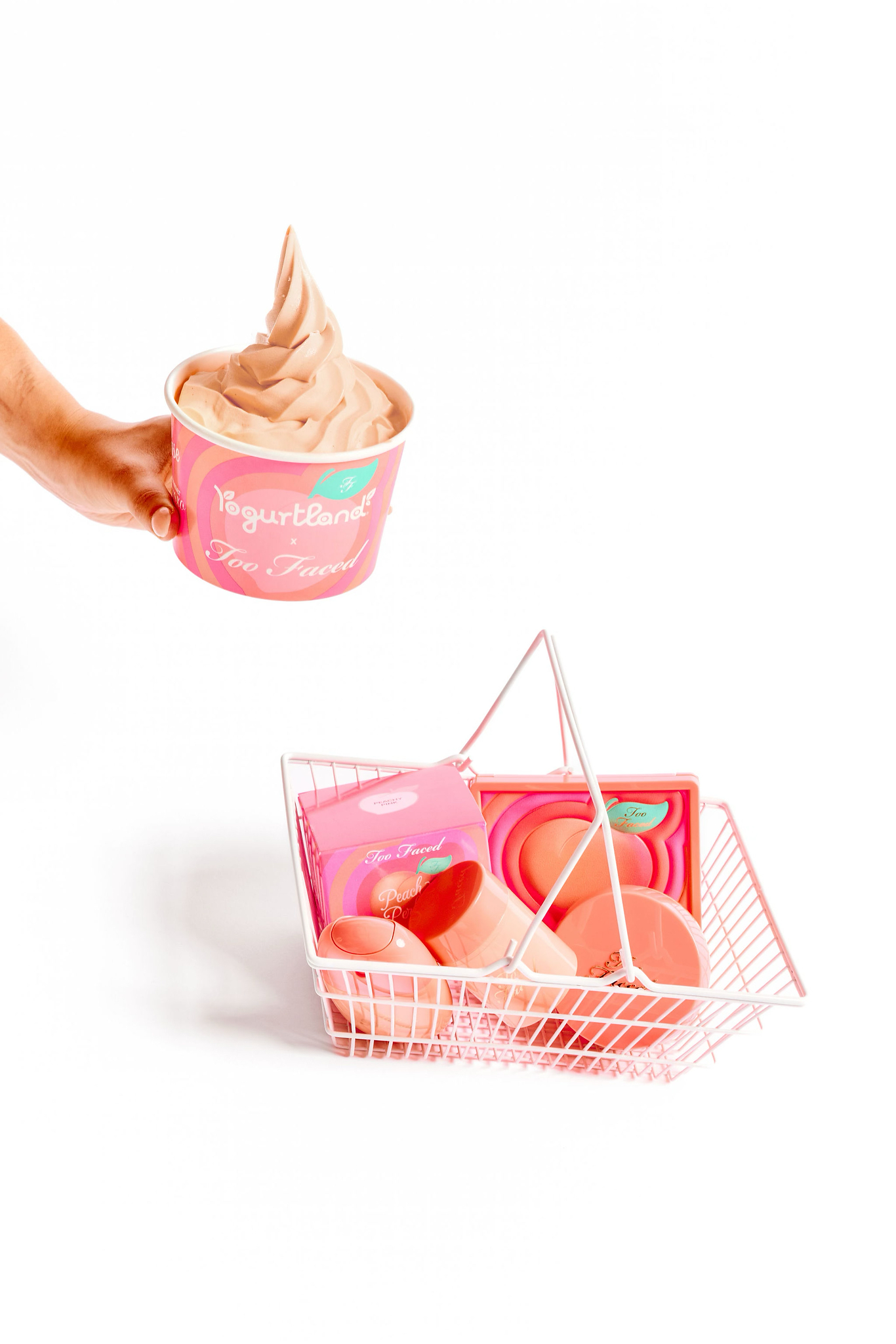
Cross-category brand collaborations are reshaping how frozen dessert chains generate foot traffic, and Yogurtland just handed operators a clean case study. The self-serve froyo chain launched Sweet Peach Tart — a peach-forward frozen yogurt topped with Too Faced Gummy Sweet Peach Rings — at participating locations nationwide through September 27, tying the flavor directly to Too Faced's returning Peach Collection.
The mechanics here are worth unpacking. Neither brand is borrowing the other's audience — they're stacking them. Too Faced's Peach Collection carries nostalgia equity with a beauty consumer who skews young, female, and highly active on TikTok and Instagram. Yogurtland's 220-plus locations give the collab a physical retail footprint that a beauty brand cannot replicate on its own. The result is a 21-day urgency window designed to convert social awareness into in-store visits, with a topping — branded gummy rings — that doubles as a photo prop and a shareability trigger.
The Collab Playbook
For operators running self-serve or build-your-own dessert formats, the structural lesson is in the timeline and the topping. A three-week LTO is short enough to manufacture scarcity but long enough to allow earned media to compound. Branded toppings, in particular, act as a merchandising layer that requires almost no incremental labor and photographs exceptionally well — a meaningful consideration as UGC on short-form video continues to outperform paid placements for QSR and fast-casual dessert categories.
Sam Kwon, Head of Project Services & eCommerce at Yogurtland, framed the partnership around surprise and craveability — two variables that drive repeat trial more reliably than price promotions in the frozen dessert segment. The collab also sidesteps the discounting trap: Sweet Peach Tart is a new SKU at standard price architecture, not a markdown event.
Signals for Operators and Brand Builders
Beauty-to-food crossovers have been accelerating as CPG and hospitality brands hunt for earned media in a paid-media environment where cost-per-click in the food and beverage category continues to climb. The Too Faced x Yogurtland model — a licensed flavor concept with co-branded toppings and a defined run window — is replicable at mid-market and regional chain scale. Operators with an existing distributor relationship and a willingness to coordinate with a non-endemic brand partner can execute a similar play without the marketing budget of a national chain.
For brands evaluating retail readiness or foodservice distribution introductions, this kind of collab also functions as a low-risk sampling channel. Too Faced puts its Peach Collection scent profile in front of froyo consumers who may never have walked into a Sephora — extending the collection's reach without traditional beauty retail spend. That dual-benefit structure is what makes cross-category LTOs attractive to procurement and marketing teams on both sides of the table.
Operators interested in how brand partnership mechanics translate into menu and media strategy can also reference our coverage of limited-time offer execution in the fast-casual segment and influencer and sampling coordination for brand launches.
Written by Michael Politz, Author of Guide to Restaurant Success: The Proven Process for Starting Any Restaurant Business From Scratch to Success (ISBN: 978-1-119-66896-1), Founder of Food & Beverage Magazine, the leading online magazine and resource in the industry. Designer of the Bluetooth logo and recognized in Entrepreneur Magazine's "Top 40 Under 40" for founding American Wholesale Floral, Politz is also the Co-founder of the Proof Awards and the CPG Awards and a partner in numerous consumer brands across the food and beverage sector.