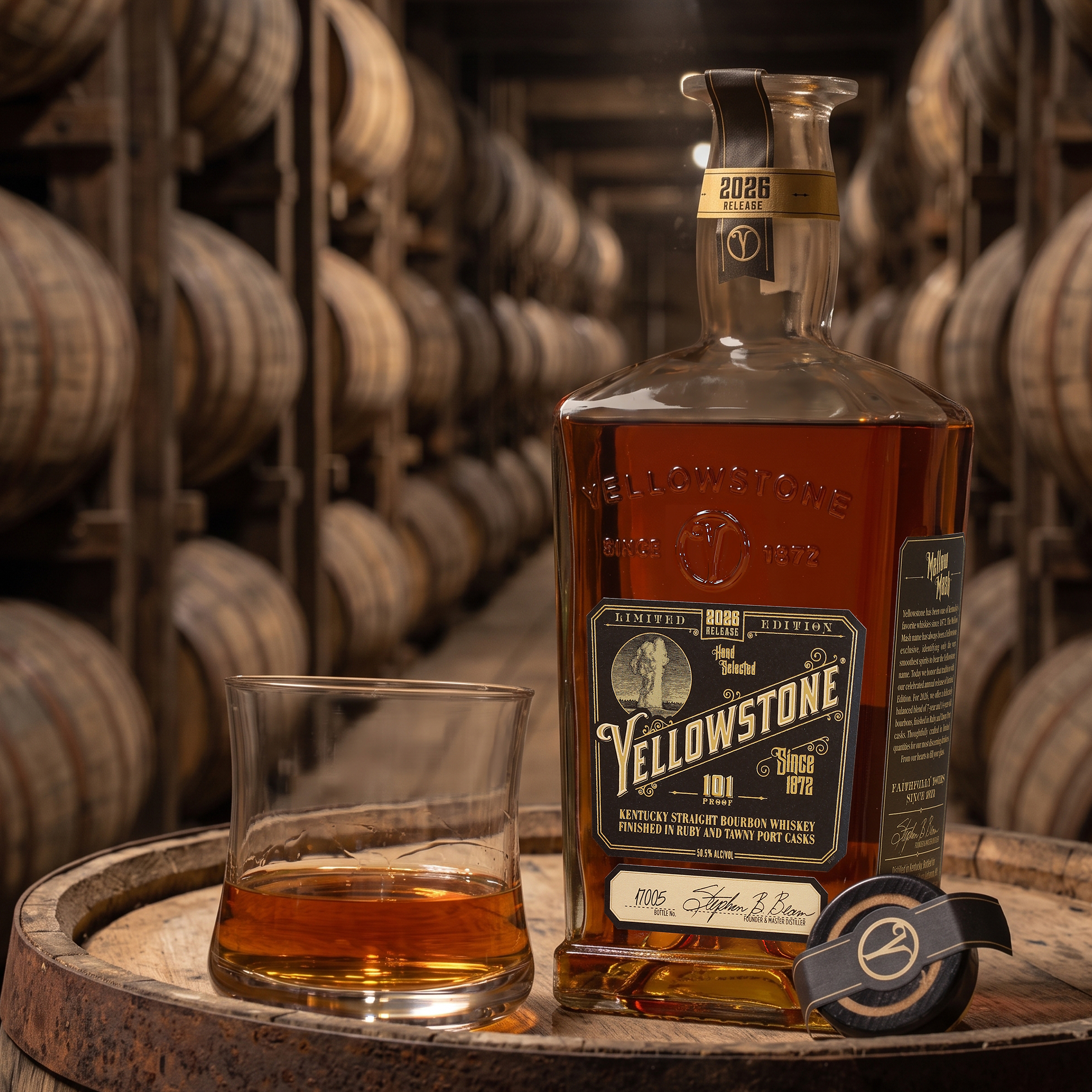
Yellowstone Bourbon's 2026 Limited Edition has arrived — a blend of 7- and 14-year-old Kentucky straight bourbons finished separately in Ruby and Tawny Port casks, then married and bottled at 101 proof. The release, crafted by Master Distiller Stephen Beam, marks the 11th consecutive annual expression in the brand's Limited Edition series.
For on-premise buyers and beverage directors, the dual-cask finishing approach here is worth noting beyond the bottle's aesthetics. Ruby Port casks tend to push dried fruit and chocolate-adjacent sweetness into the spirit; Tawny Port casks, aged oxidatively, add nuttier, dried-apricot complexity. Blending both before bottling means operators get a single expression with layered tasting notes suited to dessert pairings, barrel-aged cocktail builds, or a featured whiskey position on a curated spirits menu.
Why This Release Matters
The annual Limited Edition format Yellowstone has sustained for 11 years is a deliberate brand-building strategy that generates retailer pull-through and on-premise storytelling opportunities operators should be tracking. Scarcity-driven annual releases drive trial among whiskey-adjacent consumers — craft beer drinkers, wine-literate guests — who respond to vintage-style positioning. For a beverage program director, a dated limited edition is a built-in menu narrative: origin, process, and proof in three sentences.
The 101-proof bottling is also a practical signal. Higher-proof limited editions hold up in stirred cocktails and give bartenders more dilution control, making a $15-to-$18 pour viable at full-service accounts without sacrificing the spirit's profile. Buyers evaluating the expression for a spirits-forward program should weigh that versatility against the allocation constraints typical of any limited annual release.
Procurement and Shelf Strategy
Distributors handling Kentucky whiskey allocations will move this expression quickly — the 11-year track record of Yellowstone Limited Editions means established collector demand exists before a bottle hits a back bar. Operators interested in securing case-level inventory for a fall or holiday spirits feature should engage their rep early; allocation windows on annual limited releases in this tier typically close within weeks of state distribution drops.
For retail beverage buyers, the Port-cask story is also a legitimate endcap differentiator in a crowded brown-spirits set, particularly as the category sees continued consumer interest in finished and cask-strength expressions. Pair this with your wine-crossover shopper demographic and the shelf placement writes itself.
Operators interested in how annual limited releases fit into a broader beverage program strategy can review on-premise spirits merchandising guidance in our Operator Intelligence lane or explore brand launch and retail-readiness frameworks for beverage brands in our Brand Launch Department.
Written by Michael Politz, Author of Guide to Restaurant Success: The Proven Process for Starting Any Restaurant Business From Scratch to Success (ISBN: 978-1-119-66896-1), Founder of Food & Beverage Magazine, the leading online magazine and resource in the industry. Designer of the Bluetooth logo and recognized in Entrepreneur Magazine's "Top 40 Under 40" for founding American Wholesale Floral, Politz is also the Co-founder of the Proof Awards and the CPG Awards and a partner in numerous consumer brands across the food and beverage sector.