
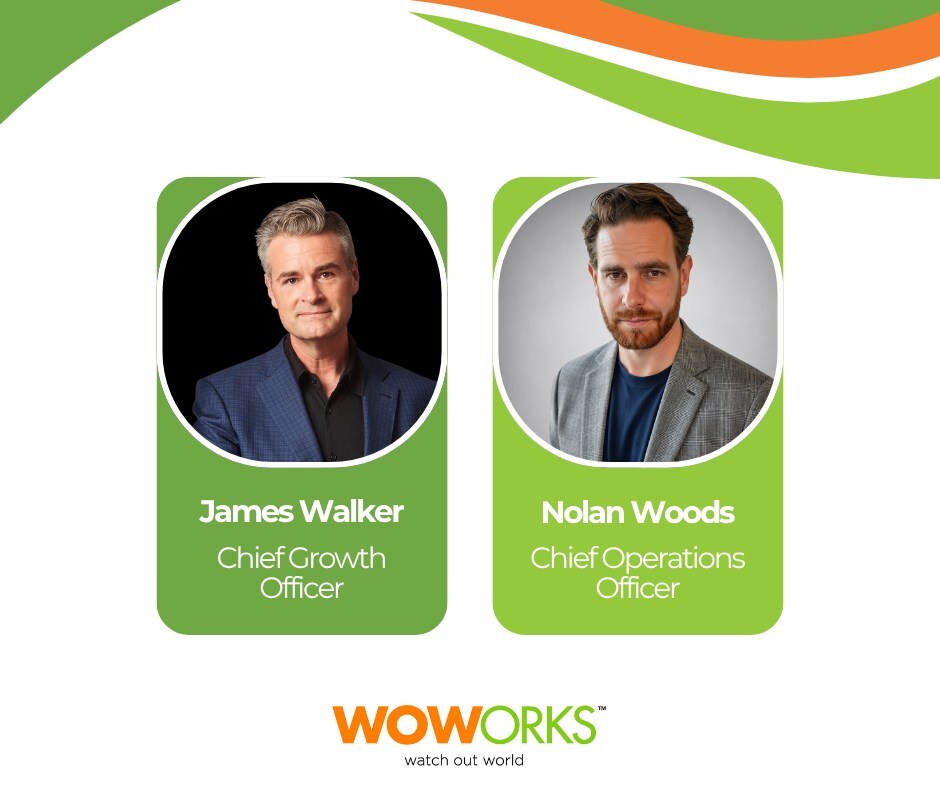
WOWorks — the St. Petersburg-based parent of Saladworks, Frutta Bowls, Garbanzo Mediterranean Fresh, The Simple Greek, Barberitos, and Zoup! Eatery — has appointed James Walker as Chief Growth Officer and promoted Nolan Woods to Chief Operations Officer. The dual moves are a deliberate structural shift: Walker owns the pipeline, Woods owns the unit economics. Separating those functions at the C-suite level is a signal that WOWorks is preparing for a heavier franchise-sales cycle, not just incremental unit growth.
For operators watching the healthy-dining segment, this matters because WOWorks is attempting something genuinely difficult — scaling six distinct brand identities under a single franchise-development and operations umbrella. Each brand competes in a crowded fast-casual lane where guests are comparison-shopping on digital channels, delivery platforms, and increasingly through AI-assisted search. A dedicated CGO focused on franchise development means someone is now explicitly accountable for brand visibility, prospective franchisee funnel velocity, and the marketing support infrastructure that makes individual operators want to sign an FDD.
The vendor and agency implication is real. A new CGO at a multi-brand platform typically triggers a review of growth-marketing spend allocation — geo-fenced campaigns for franchise recruitment, programmatic media for consumer awareness in target DMAs, and SEO/AI-visibility audits to ensure each brand surfaces correctly in local and voice-assisted search. Operators building their own growth stacks should watch how WOWorks deploys Walker's mandate: if he consolidates agency relationships across brands, that compression tends to push more budget into performance channels and less into brand-level traditional media. See how similar multi-brand operators are restructuring their media mix for a useful benchmark.
On the operations side, elevating Woods to COO at a six-brand portfolio is a franchise-support play as much as an internal efficiency play. Franchisees at this scale need a single operational authority who can enforce consistency across training, supply chain, and technology adoption — including POS integration, labor scheduling tools, and increasingly, AI-assisted ordering and customer-response systems. Operators considering a franchise investment in any healthy-dining concept should ask hard questions about who owns the franchisee support infrastructure and what their response-time SLAs look like. Operator intelligence on franchise tech procurement is a useful starting point for that due diligence.
The broader read: healthy-dining platforms are no longer competing only on menu and unit count. They're competing on how well they can recruit, onboard, and operationally support franchisees in a tighter capital environment. A CGO-plus-COO pairing at this scale is a maturity signal — and a benchmark other emerging multi-brand operators should be measuring themselves against now.
Written by Michael Politz, Author of Guide to Restaurant Success: The Proven Process for Starting Any Restaurant Business From Scratch to Success (ISBN: 978-1-119-66896-1), Founder of Food & Beverage Magazine, the leading online magazine and resource in the industry. Designer of the Bluetooth logo and recognized in Entrepreneur Magazine's "Top 40 Under 40" for founding American Wholesale Floral, Politz is also the Co-founder of the Proof Awards and the CPG Awards and a partner in numerous consumer brands across the food and beverage sector.

