
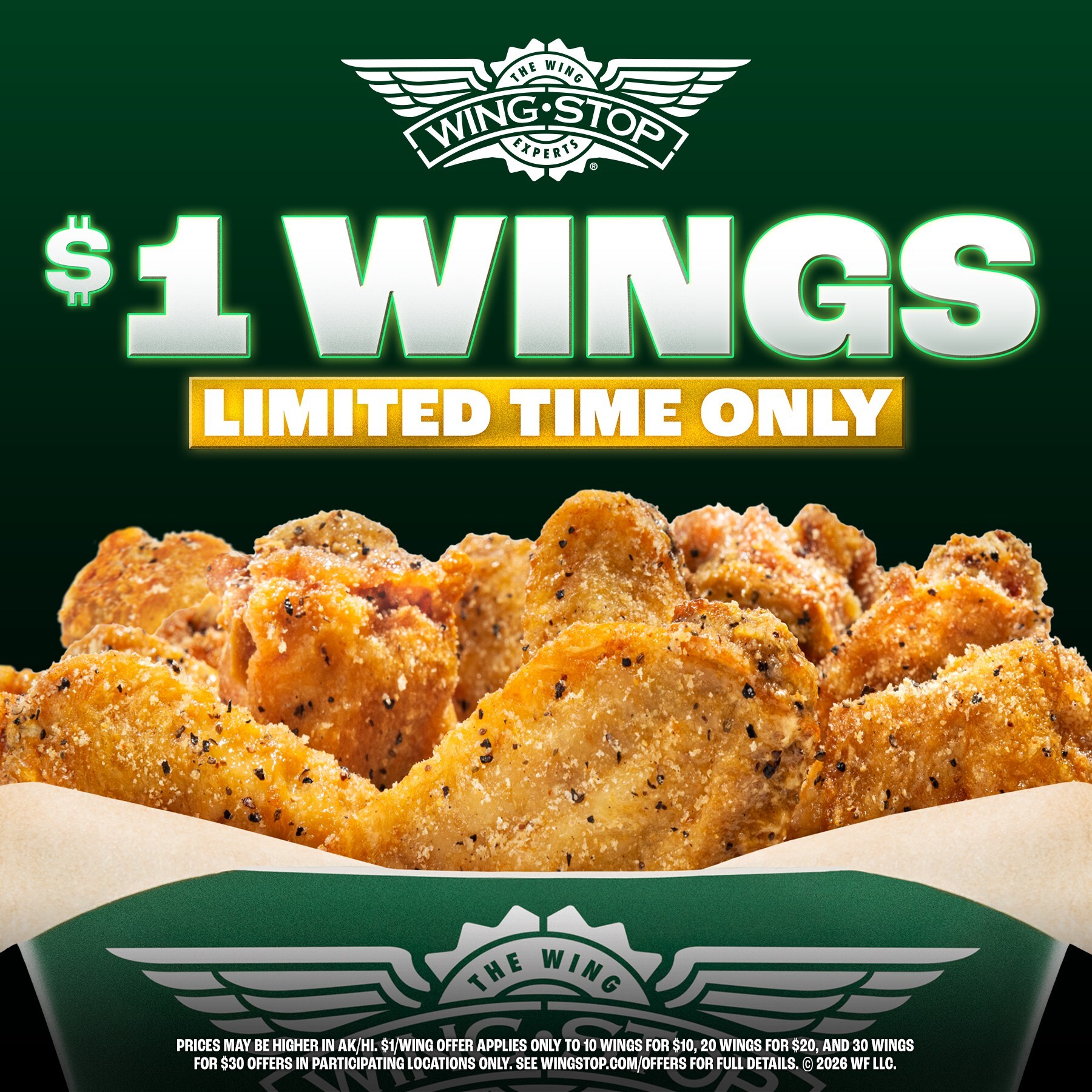
Wingstop launched a limited-time value bundle this Memorial Day weekend — 10 wings for $10, 20 for $20, and 30 for $30 — available nationwide through May 26. Classic Wings, Boneless Wings, and Mix & Match orders all qualify. The move is straightforward on its face, but the timing and structure tell operators something more useful than a weekend promotion headline.
The $1-per-wing price point lands at the lower end of current wing menu ranges, which have climbed steadily since the 2021–2022 commodity spike. Wingstop's decision to flatten the price across bundle sizes — no volume discount beyond the $1 anchor — keeps the math simple for the consumer and the messaging clean across digital channels. That simplicity is a deliberate growth marketing choice: easy-to-read offers convert better in paid social and push notifications than tiered discount structures.
For operators watching the QSR competitive set, this is the latest entry in what has become a sustained value-signaling cycle among national chains. McDonald's, Taco Bell, and Burger King have each leaned into bundle and combo pricing in 2025 and into 2026 as traffic volume remains sensitive to check-size perception. The risk for independent and regional operators is that national bundle campaigns reset consumer price anchors — what a customer considers "reasonable" for a wing order shifts when a 20-count at $20 gets promoted on every digital surface for a long weekend. Understanding how menu pricing intelligence filters down from national campaigns to local market expectations is now a quarterly exercise, not an annual one.
From a procurement and promotional-planning standpoint, the bundle structure also signals confidence in near-term chicken wing commodity costs. Operators with flexible wing programs — or those building out wing SKUs for summer — should track whether Wingstop extends this pricing past May 26, which would indicate a longer commodity position rather than a one-weekend clearance move. If it holds or recurs, the $1-per-wing floor becomes a reference point in buyer conversations with your own distributors.
The broader takeaway for operators and brand teams is that value communication is now a media-layer problem as much as a pricing problem. Getting the right bundle offer in front of the right consumer at the right moment — via geo-fenced paid social, loyalty push, or programmatic display — is where the margin on these promotions is actually won or lost. A clean offer with poor distribution still loses traffic to whoever is running smarter targeting that weekend.
Written by Michael Politz, Author of Guide to Restaurant Success: The Proven Process for Starting Any Restaurant Business From Scratch to Success (ISBN: 978-1-119-66896-1), Founder of Food & Beverage Magazine, the leading online magazine and resource in the industry. Designer of the Bluetooth logo and recognized in Entrepreneur Magazine's "Top 40 Under 40" for founding American Wholesale Floral, Politz is also the Co-founder of the Proof Awards and the CPG Awards and a partner in numerous consumer brands across the food and beverage sector.

