
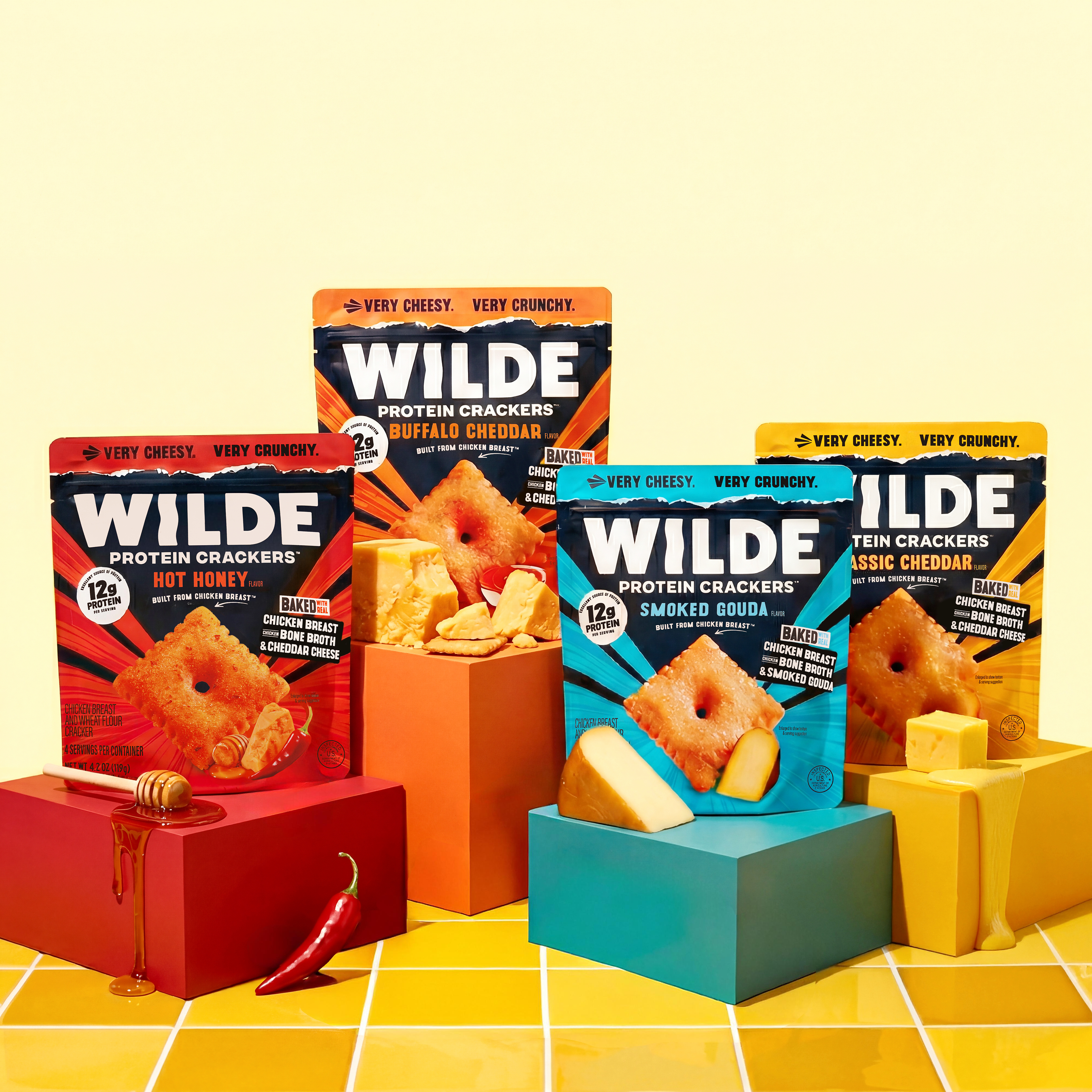
Wilde, the Lexington, Kentucky-based brand that built its business on chicken breast-based snack chips, has moved into the cracker aisle with a product it is positioning as a structural category disruption rather than a line extension. WILDE Protein Crackers are formulated starting with all-natural chicken breast, chicken bone broth, and real cheese — not a grain base with protein powder added downstream. The result is an oven-baked cracker carrying 12 grams of protein per serving, a figure the brand says is four times the protein load of leading cheese cracker incumbents. For retail buyers and foodservice operators sourcing better-for-you snack sets, that functional gap is the opening argument.
The timing lands alongside a meaningful infrastructure move. Wilde has brought a 100,000-square-foot USDA-regulated production facility online, which signals the brand is not testing category adjacency — it is committing capital and regulatory overhead to it. Owning production at that scale gives Wilde margin flexibility, quality control over a perishable protein input, and the throughput needed to pursue national retail velocity. Operators evaluating Wilde as a potential grab-and-go or amenity SKU should note that supply reliability is now a stated infrastructure priority, not an aspiration.
The broader snack landscape context matters here. The protein-forward snack segment has compounded steadily as consumers trade refined-carb formats for higher-satiety options, and the cracker sub-category has been slower to see genuine protein-first innovation than bar or chip formats. Most cracker brands have responded with modest protein enrichment — typically 3 to 5 grams via whey or plant isolates added to a conventional dough. Wilde's inversion of that process — starting with a USDA-inspected animal protein as the base — is a formulation decision that also functions as a retail positioning decision. Shelf placement, buyer conversations, and promotional logic all shift when the product can credibly anchor a high-protein claim rather than support one. For operators stocking snack walls in fitness-adjacent hospitality, corporate dining, or health-focused retail foodservice, that distinction affects how you merchandise and how you price.
From a brand-launch and distribution intelligence standpoint, a cross-category debut backed by a new owned facility is a signal worth tracking. It suggests Wilde is building toward a broader platform — chicken breast as a snack-food ingredient system — rather than defending a single SKU. That has implications for brokers and distributors who may be asked to open new buyer conversations in cracker and baked-goods sets, and for competing brands in the better-for-you snack space who will need to respond on formulation or cede the protein-first positioning in that aisle. Retail media budgets, trade spend, and sampling campaigns around a cracker launch are structurally more expensive than a chip extension, so watching Wilde's promotional velocity over the next two quarters will indicate how aggressively they are funding the channel push.
Operators and buyers evaluating the protein snack category for 2026 planning should treat this launch as a benchmark data point. The formulation bar has moved. If a cracker can now credibly carry 12 grams of protein from a clean-ingredient, USDA-regulated build, the private-label and co-manufacturing conversations in your snack procurement will need to account for that reference point. Review your current snack set performance against protein-per-serving metrics before your next category review. Learn more about how better-for-you brands are building retail readiness in our Brand Launch Department coverage and track the snack and protein category shifts shaping buyer decisions in our Operator Intelligence reporting.
Written by Michael Politz, Author of Guide to Restaurant Success: The Proven Process for Starting Any Restaurant Business From Scratch to Success (ISBN: 978-1-119-66896-1), Founder of Food & Beverage Magazine, the leading online magazine and resource in the industry. Designer of the Bluetooth logo and recognized in Entrepreneur Magazine's "Top 40 Under 40" for founding American Wholesale Floral, Politz is also the Co-founder of the Proof Awards and the CPG Awards and a partner in numerous consumer brands across the food and beverage sector.

