The Wild Blueberry Association of North America (WBANA) released The ABCs of Phytonutrients: A Back-to-School Guide to Wild Blueberry Plant Power on September 10, 2026 — a free, four-part toolkit designed to help nutrition reporters, educators, dietitians, and food marketers translate dense plant-science terminology into language consumers and families can actually absorb. For operators and brand marketers building health-forward messaging around superfoods, functional ingredients, or frozen fruit, this kind of industry-funded translation infrastructure matters: it standardizes the vocabulary before it reaches the retail shelf or the restaurant menu.
Why Language Gaps Cost Brands
WBANA's Health Research Committee lead Colleen Craig noted the catalyst plainly — consumer publications have increasingly used varied bioactive compound terms when covering wild blueberries, triggering consumer confusion and inbound questions about what words like "anthocyanins," "phytonutrients," and "antioxidants" actually mean in relation to one another. That terminology drift is a real operator problem. When the language describing an ingredient's health benefits isn't consistent across media, menus, packaging, and point-of-sale, shopper trust erodes and product differentiation weakens. The toolkit is WBANA's attempt to set a plain-language standard before the category fragments further.
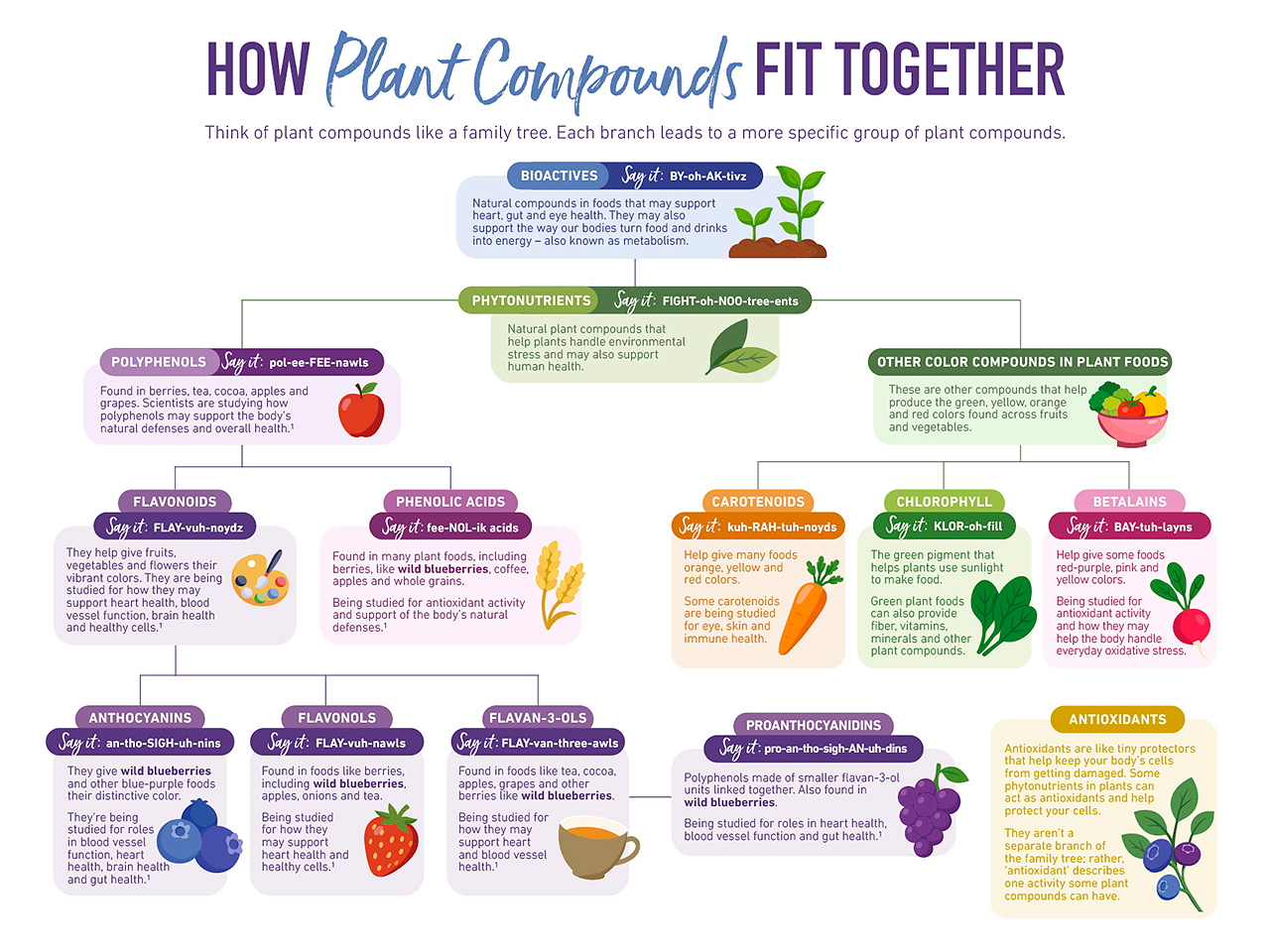
To keep that language genuinely accessible, WBANA enlisted Maine-based registered dietitian Jenny Shea Rawn, MS, MPH, RD, and her 9-year-old daughter, Lexi, as co-collaborators — operating on the principle that if a concept can't be explained clearly enough for a child to understand it, the messaging needs refinement. The result is an ABCs framework: A for Anthocyanins (the natural pigments behind wild blueberries' blue-purple color, functioning as antioxidants), B for Bioactives (the broader class of naturally occurring compounds scientists study for their interactions with the body), and C for Color (the visible cue that signals the presence of those compounds). The framework is deliberate — it gives writers and marketers a sequenced entry point rather than a flat glossary.
What the Toolkit Contains
The four-piece package includes a phytonutrients guide with definitions, a plant-compound family-tree graphic, and a summary of peer-reviewed research linking wild blueberry compounds to blood vessel function, cardiometabolic health, gut health, and brain health — citing a 2026 review published in Critical Reviews in Food Science and Nutrition. Rounding out the toolkit: a "Nature's Crayon Box" pigment poster, a kid-friendly lunchbox note with snack ideas, and a communication-inspiration sheet with story angles and classroom-ready framing. All assets are available free on both the U.S. and Canadian WBANA sites.
For operators in the frozen fruit and functional-food space, the practical application is straightforward. Health-forward menu callouts, packaging copy, and digital content increasingly reference bioactive terminology — and the brands that own clear, consistent explanations build more durable consumer trust than those that rely on vague "superfood" shorthand. WBANA's toolkit won't replace a brand's own content strategy, but it provides a credible, dietitian-vetted reference point that marketing and culinary teams can build from.
Food and beverage suppliers working the retail and foodservice channels should also note the timing: back-to-school is one of the strongest windows for fruit and vegetable messaging, and a free resource tied to that moment gives sales teams, brokers, and retail dietitians a tangible leave-behind. Brands in adjacent categories — beets, purple cabbage, elderberry, acai — have an opportunity to benchmark against WBANA's approach and consider whether their own ingredient associations are doing comparable communication groundwork. For more on how ingredient science translates into brand positioning, see our coverage on functional ingredient marketing for foodservice operators.
Written by Michael Politz, Author of Guide to Restaurant Success: The Proven Process for Starting Any Restaurant Business From Scratch to Success (ISBN: 978-1-119-66896-1), Founder of Food & Beverage Magazine, the leading online magazine and resource in the industry. Designer of the Bluetooth logo and recognized in Entrepreneur Magazine's "Top 40 Under 40" for founding American Wholesale Floral, Politz is also the Co-founder of the Proof Awards and the CPG Awards and a partner in numerous consumer brands across the food and beverage sector.