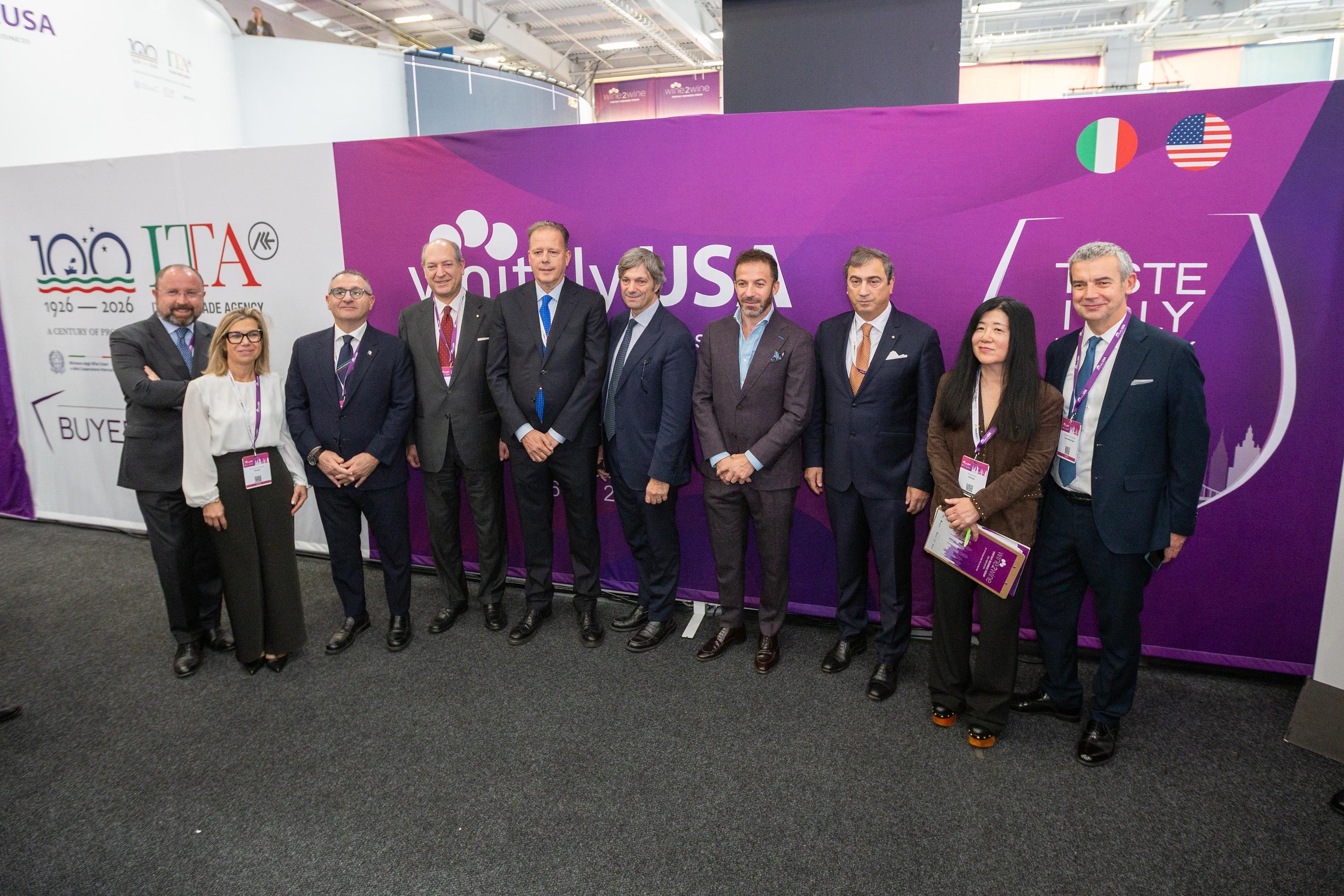
Italian wine's largest U.S. trade event, Vinitaly.USA, opened October 26 at Pier 36 in New York City, assembling 300 exhibitors and 2,500 labels for a two-day trade push organized by Veronafiere in partnership with ITA – Italian Trade Agency. For beverage directors, importers, and on-premise buyers, the event is less a trade show than a live intelligence briefing on where Italian wine's U.S. market strategy is heading next.
The Consumer Gap
The headline number from the UIV-Vinitaly Observatory deserves serious operator attention: 35 million Americans already drink Italian wine — the highest penetration of any importing country — but more than 50 million regular wine consumers remain untapped. That gap represents a strategic priority for the entire category, and the direction Italian producers are moving to close it has direct implications for how buyers should be building their wine programs.
Generational data is where the story gets most actionable. Research conducted for Vinitaly.USA found that Italian wines show a more balanced sales distribution across age groups than California wines, where consumers over 55 account for more than 70.0% of volume. That cross-generational appeal positions Italian producers to compete for the growing cohort of younger on-premise guests — a segment every restaurant beverage director is actively trying to capture.
Consumption Habits Shift
Equally important is the consumption-occasion data surfaced by the Wine Market Council and highlighted at the event. While 67.0% of regular wine consumers still drink wine on its own and 63.0% pair it with a meal, 34.0% report mixing wine into cocktails, 30.0% serve it chilled over ice, and a meaningful share combine it with nonalcoholic beverages. Critically, 75.0% of regular wine consumers engage with wine in at least one way that falls outside traditional drinking occasions.
For operators, this is a menu and programming signal. Bars and restaurants account for 50.0% of the influence on consumers' new wine habits — second only to family (60.0%) and well ahead of social media (30.0%). That places on-premise venues in a powerful position to shape how Italian wine is perceived and consumed by younger audiences. Producers at Vinitaly.USA are explicitly signaling readiness to support versatile formats and non-traditional serving styles, which means importers and distributors will increasingly bring SKUs and program concepts designed for cocktail lists, aperitivo hours, and by-the-glass innovation — not just traditional pairings.
"Italian wine has the quality, diversity, and regional traditions needed to attract new consumers in the United States," said Giovanni Sacripante, General Manager of Veronafiere. "The challenge is to understand how demand is evolving and guide commercial strategies to engage different audiences, from fine dining to emerging consumption occasions."
What Buyers Should Track
The scale of the U.S. import market provides the commercial backdrop: the United States imported approximately $4.9 billion worth of wine from the European Union alone in 2025, and Italian exports to the U.S. have exceeded $1.0 billion, with Italy ranking as the leading foreign supplier by volume and second by value. That market position is durable but not automatic — the Veronafiere and ITA partnership is explicitly framing this event as an investment play, not a victory lap.
The 13th edition of the wine2wine Vinitaly Business Forum ran concurrently with more than 20 sessions covering market trends, wine tourism, and education. For buyers attending or tracking the event remotely, the sessions on market segmentation by age, ethnicity, and geography are the most procurement-relevant — they preview how Italian producers plan to position product and invest in marketing over the next cycle.
For operators building or refreshing their Italian wine programs, the intelligence from Vinitaly.USA points in one consistent direction: the category is actively repositioning toward younger guests and flexible consumption occasions. Buyers who align their programs now — aperitivo-friendly labels, cocktail-ready options, regional story-driven by-the-glass selections — will be ahead of the import marketing spend that is already following those consumers. For deeper context on category-level beverage trends shaping on-premise buying, see our coverage in Operator Intelligence and for guidance on building supplier relationships with emerging importers, visit our Marketplace listings.
Written by Michael Politz, Author of Guide to Restaurant Success: The Proven Process for Starting Any Restaurant Business From Scratch to Success (ISBN: 978-1-119-66896-1), Founder of Food & Beverage Magazine, the leading online magazine and resource in the industry. Designer of the Bluetooth logo and recognized in Entrepreneur Magazine's "Top 40 Under 40" for founding American Wholesale Floral, Politz is also the Co-founder of the Proof Awards and the CPG Awards and a partner in numerous consumer brands across the food and beverage sector.