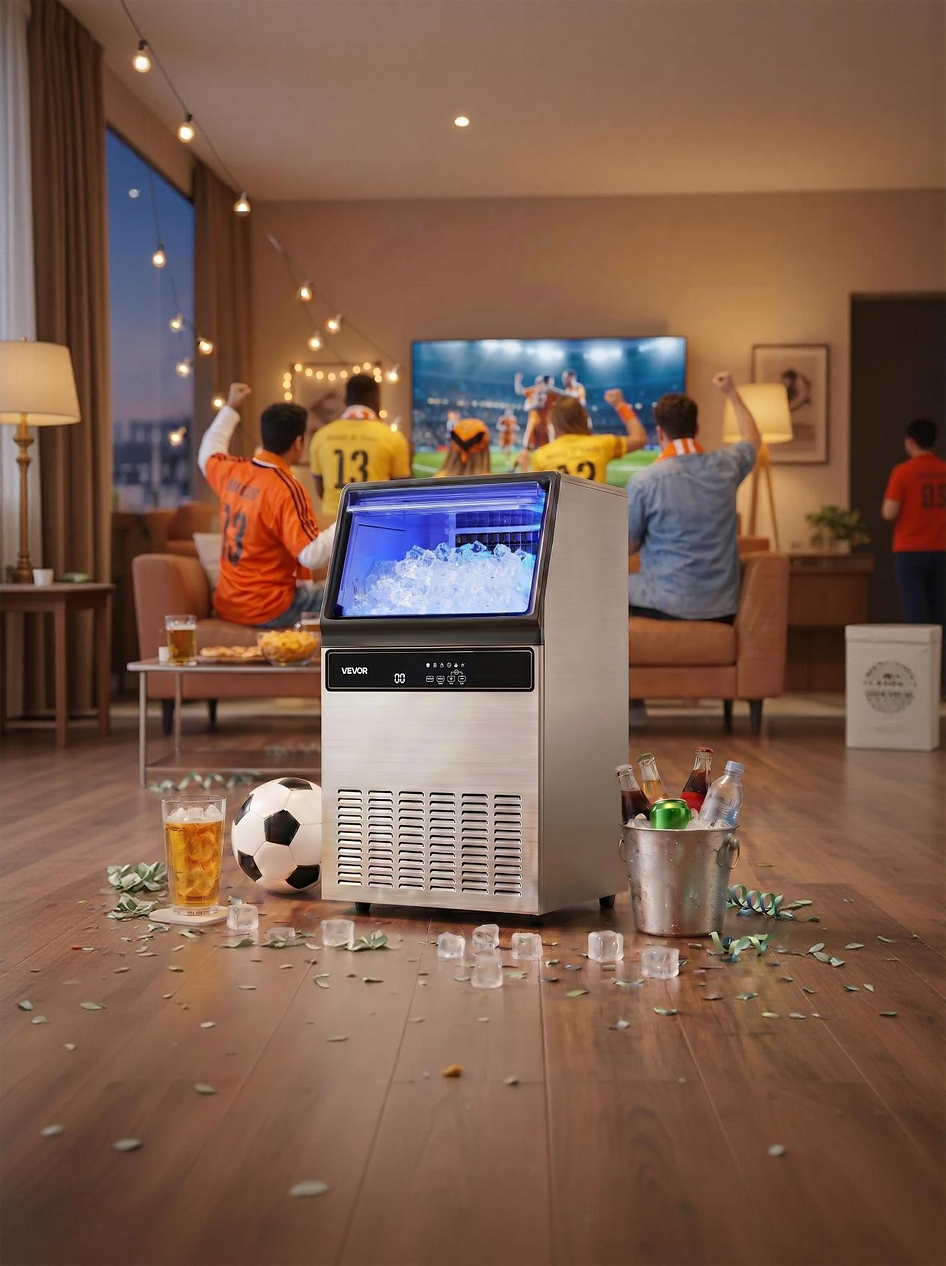
VEVOR is running a geo-targeted sampling activation in Houston tied to summer sporting events, offering free ice to bars, food trucks, and backyard-event operators under its "Free Ice for Game Nights" banner. The campaign launches June 22, timed to what the brand describes as a surge period for the city's venue economy. The move is less interesting as a PR stunt and more interesting as a signal about where equipment vendors are placing their bets — and what that tells operators about a recurring margin leak they may not be tracking.
The underlying data point is worth taking seriously. The National Restaurant Association has documented beverage sales spikes of 30.0–50.0% at bars and restaurants during major sporting events. For a venue running tight on ice infrastructure, that kind of demand compression doesn't just create a service problem — it creates a revenue problem. Operators who run out of ice mid-event are effectively capping their bar tab at halftime. Equipment vendors like VEVOR are reading that gap correctly, even if their activation is consumer-facing.
The competitive landscape for commercial ice makers has quietly expanded over the past two years. Brands that historically served only institutional foodservice buyers have been pushing into the mid-market — the 80-seat sports bar, the food truck fleet, the event caterer running three pop-ups on a Saturday. VEVOR's Houston push fits that pattern: use a high-visibility moment to build brand recognition among operators who may not have a purchasing relationship yet. If a bar manager runs out of ice during a watch party and later sees a VEVOR unit in a trade ad, the brand has done its job. For similar category plays and vendor landscape coverage, see our Marketplace roundup on kitchen and bar equipment.
For operators, the procurement intelligence here is straightforward. Ice capacity is a throughput constraint that most venue budgets treat as fixed until a service failure makes it visible. The question worth asking before your next high-volume event is whether your current ice output — measured in pounds per 24 hours against your peak cover count and average drink ticket — actually matches projected demand. A 150-seat sports bar pulling 4.0–5.0 drinks per cover on a sold-out game night needs a different ice plan than its Tuesday dinner service suggests. On the marketing side, equipment vendors running geo-fenced activations in host cities is a tactic worth borrowing: if you're a supplier or a distributor, Houston's sporting calendar just handed you a legitimate reason to put product in front of decision-makers. For a deeper look at how operators are thinking about event-driven revenue planning, see our Operator Intelligence coverage on beverage program scaling.
Written by Michael Politz, Author of Guide to Restaurant Success: The Proven Process for Starting Any Restaurant Business From Scratch to Success (ISBN: 978-1-119-66896-1), Founder of Food & Beverage Magazine, the leading online magazine and resource in the industry. Designer of the Bluetooth logo and recognized in Entrepreneur Magazine's "Top 40 Under 40" for founding American Wholesale Floral, Politz is also the Co-founder of the Proof Awards and the CPG Awards and a partner in numerous consumer brands across the food and beverage sector.