The Brand Move
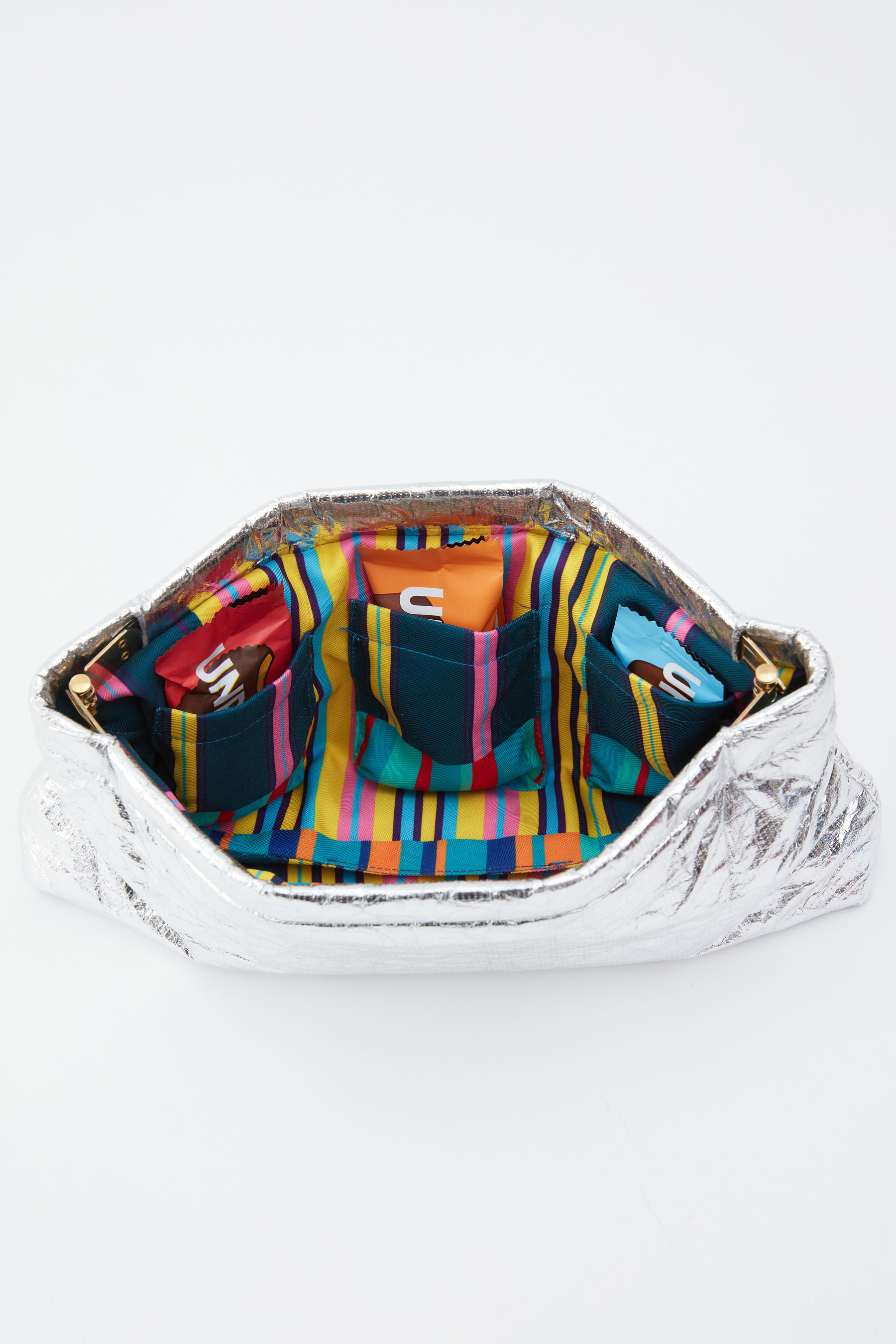
Unreal Snacks is debuting the Coco Bag — a $425 limited-edition clutch co-designed with New York fashion label Rachel Comey — on the runway at Comey's Spring/Summer '27 show during New York Fashion Week. The bag's silver Tyvek exterior replicates the inside of an Unreal chocolate wrapper; its interior features custom pockets sized for the brand's Dark Chocolate Coconut Bars and Peanut Butter Cups. The piece goes to pre-order September 9, with broader availability tied to the S/S '27 collection launch on February 1.
For food and beverage operators tracking how better-for-you brands build cultural gravity outside traditional retail channels, this collaboration is worth studying. Unreal — stocked at Target, Whole Foods Market, Costco, Sprouts, Kroger, and Publix — is not a niche startup hunting distribution. It is, by its own positioning, the largest and fastest-growing better-for-you chocolate brand in the U.S. The NYFW activation is less about finding new customers and more about deepening brand identity at a moment when the "better-for-you" category is crowded enough that emotional differentiation matters as much as ingredient claims.
Why Operators Should Track This
The mechanics of this launch map directly onto a tactic more food brands are deploying: anchor a product story to a cultural event with strong visual media pull, then let the earned coverage do the retail-marketing work. Food installations styled by food designer Alice Malaret will appear front-of-house and backstage at the Comey show, extending the brand's presence into editorial photography and social content that Unreal does not have to produce itself. That is efficient brand-launch architecture — one activation generating assets across fashion, food, and lifestyle press simultaneously.
For operators evaluating their own brand-launch or co-marketing strategies, the Coco Bag model illustrates a few principles worth internalizing. First, the collaboration works because both brands share a genuine audience overlap — creative professionals who value craft, functionality, and considered consumption. Forced pairings between food brands and fashion tend to read as stunt marketing; this one has a credible shared aesthetic. Second, Unreal's retail footprint — mass and natural channel simultaneously — means any earned media from NYFW converts across a wide range of purchase environments, from Whole Foods to Costco. That kind of retail breadth makes cultural activations a higher-return investment.
What This Signals
Alison Whritenour, Chief Commercial Officer at Unreal, framed the collaboration as a visibility play: putting the brand's interior packaging language on the outside of a fashion object. That inversion — making the functional decorative, making the package the product — is increasingly common among CPG brands trying to generate media value in categories that advertising alone cannot penetrate.
For hospitality and foodservice buyers watching procurement trends, the broader signal here is that better-for-you snack brands are competing not just on ingredient panels but on cultural positioning. Brands that build strong identity outside the grocery aisle tend to command stronger shelf placement and better sell-through when they return to pitch retail buyers. The NYFW moment is, in part, a buyer-deck move dressed up as a fashion collaboration.
Operators sourcing snack programs for hotel minibars, airport lounges, or premium foodservice accounts should note that Unreal's distribution depth — including Amazon and Thrive Market alongside mass retail — makes it an accessible addition to curated snack assortments already leaning on cleaner ingredient stories. The cultural credibility this activation builds will likely support those conversations through early 2027.
Written by Michael Politz, Author of Guide to Restaurant Success: The Proven Process for Starting Any Restaurant Business From Scratch to Success (ISBN: 978-1-119-66896-1), Founder of Food & Beverage Magazine, the leading online magazine and resource in the industry. Designer of the Bluetooth logo and recognized in Entrepreneur Magazine's "Top 40 Under 40" for founding American Wholesale Floral, Politz is also the Co-founder of the Proof Awards and the CPG Awards and a partner in numerous consumer brands across the food and beverage sector.