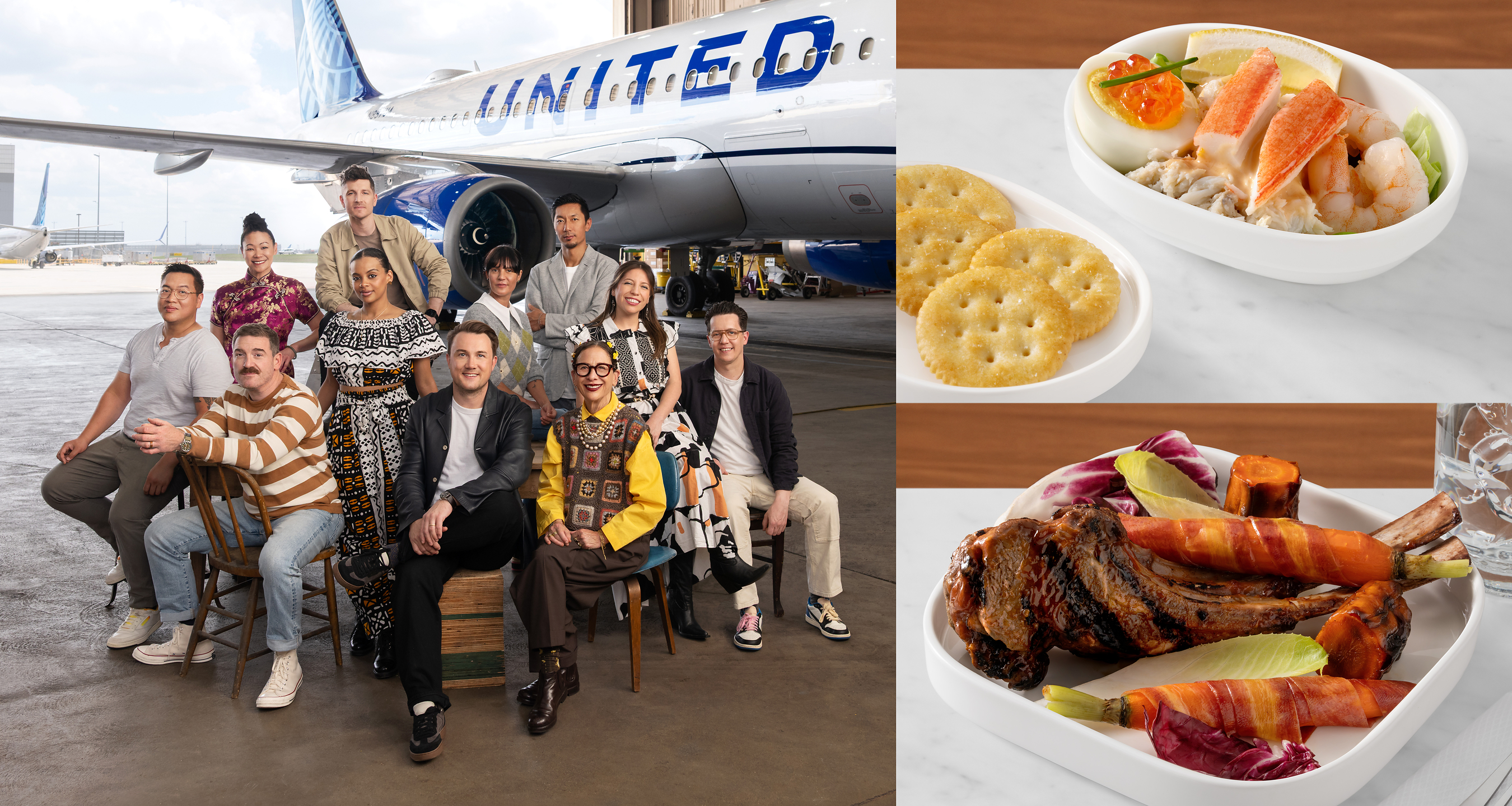
United Airlines is rolling out 30 new dishes across its United Polaris international business-class cabins on November 1, the second rotation of a collaboration with Chef's Table, the Emmy Award-winning Netflix documentary brand. The expanded program features 11 chefs tied to seven U.S. hub cities plus London, São Paulo, and Tokyo — a geographic structure designed to connect meal provenance to departure market and reinforce route identity through food.
The first rotation, launched August 1, generated quantifiable results that food and hospitality operators should note: more than 60,000 customers ordered the meals, with satisfaction scores running nearly 20 points higher than other preordered inflight options. That delta is unusually large for a loyalty program metric and gives United's hospitality team a concrete ROI signal to justify continued investment. Aaron McMillan, United's Managing Director of Hospitality Programs, noted that the response "reinforces the value of bringing perspectives of world-class chefs onboard in a way that reflects the destinations we serve."
The Investment Thesis
United has committed more than $150 million to elevating its customer dining experience in 2025 alone, a figure that spans onboard service, Club dining upgrades, and the preorder infrastructure that underpins the Chef's Table program. The preorder window — available five days to 24 hours before departure — is operationally significant: it allows the airline to function more like a high-volume catering operation with demand data in hand, reducing waste and improving yield on premium ingredients. For foodservice operators thinking about how pre-commitment models change kitchen economics, this is a scaled real-world test worth watching.
The chef roster reads like a James Beard Foundation alumni directory. Participants in this rotation include Nancy Silverton (Osteria Mozza, Los Angeles), David Barzelay (Lazy Bear, San Francisco), Tomos Parry (Mountain and Brat, London), Justin Yu (Theodore Rex, Houston), Penelope Wong (Yuan Wonton, Denver), Jenner Tomaska (Esmé, Chicago), Fariyal Abdullahi (Hav & Mar, Newark), Isabel Coss and Matt Conroy (Lutèce and Pascual, Washington D.C.), Manu Buffara (Manu, São Paulo), and Tashi Gyamtso (Jimgu, Tokyo). Each chef contributes a three-course set — appetizer, salad, and entrée — anchored to seasonal produce and the culinary identity of their home city.
What Operators Should Take Away
For food and beverage operators, the structural intelligence here is in how United is using media IP — the Chef's Table brand and its associated Netflix audience — to do the heavy lifting on menu credibility and storytelling. Passengers can watch exclusive behind-the-scenes Chef's Table content on seatback screens and access episodes of the Chef's Table: Talks podcast during the flight. The dining experience is extended into a content experience, which reduces the burden on the food itself to carry all the brand weight. This is a model that hotel F&B directors, contract foodservice operators, and airline catering companies should study carefully as they compete for premium customer attention.
The program is structured to run through December 31 and rotate seasonally into 2027, suggesting United views this as a permanent program architecture rather than a limited promotion. For culinary consultants, contract catering firms, and premium ingredient suppliers looking to enter the airline channel, the Chef's Table model — regional chef curation, media-amplified storytelling, preorder demand signals — represents the emerging standard for how carriers will source and market inflight dining going forward. Operators building brand launch packages or hospitality channel strategies for premium food products should factor airline partnership pipelines into their distribution planning.
Written by Michael Politz, Author of Guide to Restaurant Success: The Proven Process for Starting Any Restaurant Business From Scratch to Success (ISBN: 978-1-119-66896-1), Founder of Food & Beverage Magazine, the leading online magazine and resource in the industry. Designer of the Bluetooth logo and recognized in Entrepreneur Magazine's "Top 40 Under 40" for founding American Wholesale Floral, Politz is also the Co-founder of the Proof Awards and the CPG Awards and a partner in numerous consumer brands across the food and beverage sector.