United Airlines has dropped the mileage threshold for its Economy meal preorder program from routes over 1,190 miles to routes over 900 miles across North America and the Caribbean, adding 420 flights per day and reaching up to 65,000 additional customers daily. The change brings hub-to-hub routes — Chicago to Houston, Denver to San Francisco, Houston to Washington, D.C. — into the preorder system for the first time.
For foodservice and hospitality operators tracking airline F&B as a demand signal, the expansion is worth watching. Airlines increasingly function as captive-audience foodservice channels, and United's move to systematize preorders at shorter distances reflects a broader shift: the industry is treating inflight meal programs less like a legacy amenity and more like a direct-to-consumer retail operation with its own merchandising cadence.
The Menu and the Model
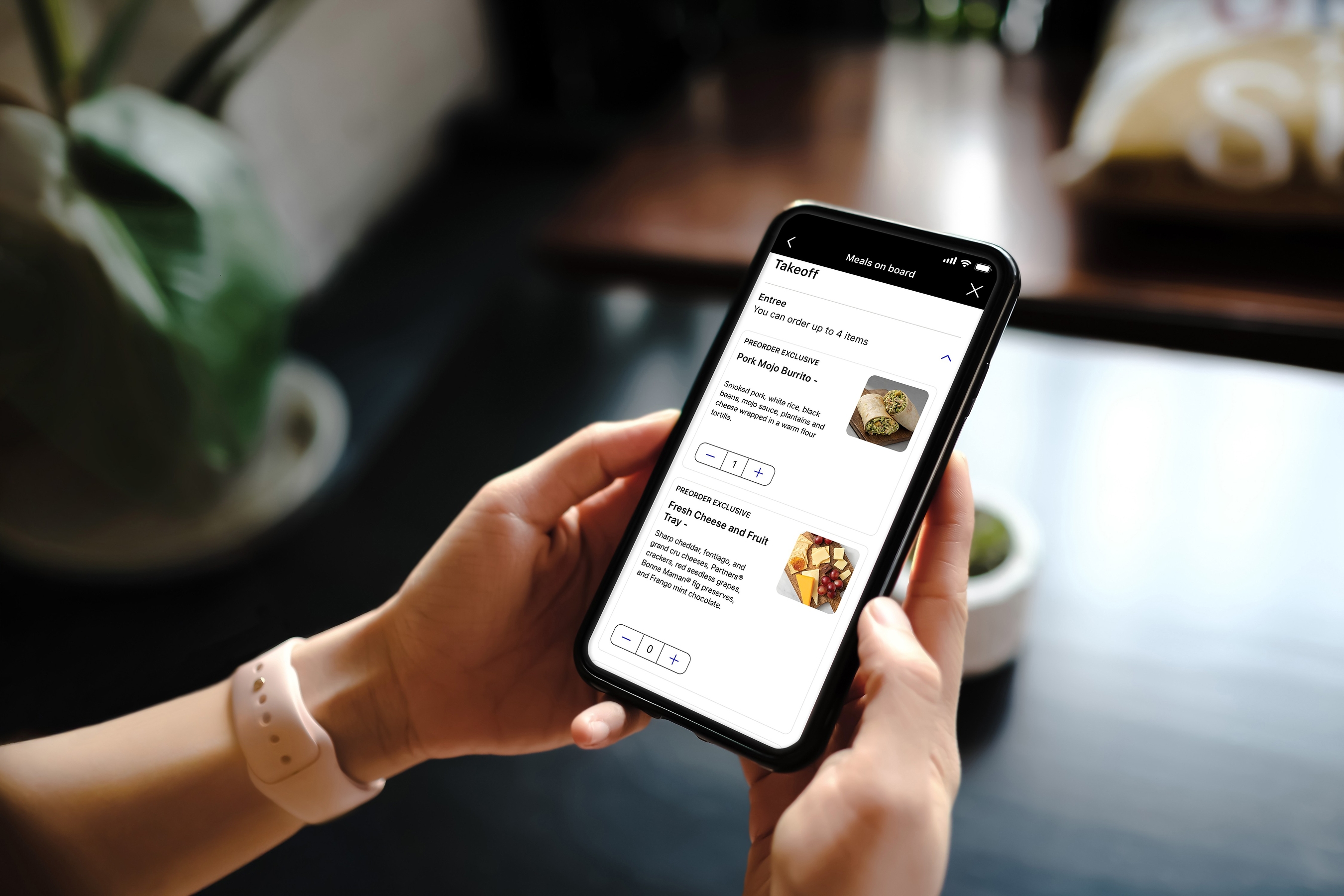
The current preorder menu rotates monthly and includes fresh sandwiches, burritos, burgers, pasta, and breakfast items. Among the current selections is a Chicago patty melt developed by Jeff Mauro of Mauro Provisions, a collaboration model that mirrors what hotel F&B and fast-casual operators have used to drive menu credibility through chef partnerships. Customers can place orders up to five days before departure and as late as 24 hours prior, through united.com or the United mobile app.
The preorder infrastructure itself is the more instructive detail for operators and vendors in the food-and-beverage supply chain. By gating fresh food behind a digital preorder — rather than loading speculative quantities onto each flight — United is effectively running a demand-signal system that reduces waste, tightens procurement forecasting, and creates a direct data relationship with the passenger before boarding. That is a model with clear analogs in ghost kitchen fulfillment, hotel room-service pre-selection, and stadium F&B pre-order platforms.
What It Signals for Vendors
United is also refreshing its snackbox lineup on November 1, updating the Tapas, Takeoff, and Recline boxes with new selections, and has introduced a limited-edition collaboration with the Make-A-Wish Foundation. The pace of menu rotation and co-branded product introductions suggests a content-marketing-style approach to F&B programming — frequent enough to drive repeat engagement from frequent flyers, varied enough to generate press coverage.
For suppliers, brokers, and packaging vendors already serving travel retail or airline catering, the mileage-threshold expansion represents incremental volume at scale. Sixty-five thousand additional preorder-eligible passengers per day is not a rounding error in foodservice terms. Distributors and co-manufacturers with cold-chain capabilities suited to airline catering environments should be monitoring United's RFP activity accordingly.
Operators benchmarking their own preorder or advance-purchase programs — whether in hotel dining, stadium concessions, or airport grab-and-go — can use United's threshold adjustment as a reference point: shorter dwell times do not necessarily preclude advance-order programs if the digital infrastructure and fulfillment logistics are in place. The data collection alone may justify the investment.
- United lowered its meal preorder mileage cutoff from 1,190 miles to 900 miles, adding 420 flights and up to 65,000 eligible customers per day.
- The preorder window runs from 5 days to 24 hours before departure via app or website, creating a direct demand-signal feed ahead of galley loading.
- Monthly menu rotation and chef collaborations — including a patty melt from Jeff Mauro of Mauro Provisions — position the program as a retail merchandising channel, not just a legacy amenity.
- United refreshes its snackbox lineup November 1, signaling an accelerating cadence of F&B product introductions that suppliers and co-manufacturers should track.
- Operators running hotel dining, stadium concessions, or airport retail can adapt United's preorder logistics model to reduce waste and improve procurement forecasting on shorter service windows.
Written by Michael Politz, Author of Guide to Restaurant Success: The Proven Process for Starting Any Restaurant Business From Scratch to Success (ISBN: 978-1-119-66896-1), Founder of Food & Beverage Magazine, the leading online magazine and resource in the industry. Designer of the Bluetooth logo and recognized in Entrepreneur Magazine's "Top 40 Under 40" for founding American Wholesale Floral, Politz is also the Co-founder of the Proof Awards and the CPG Awards and a partner in numerous consumer brands across the food and beverage sector.