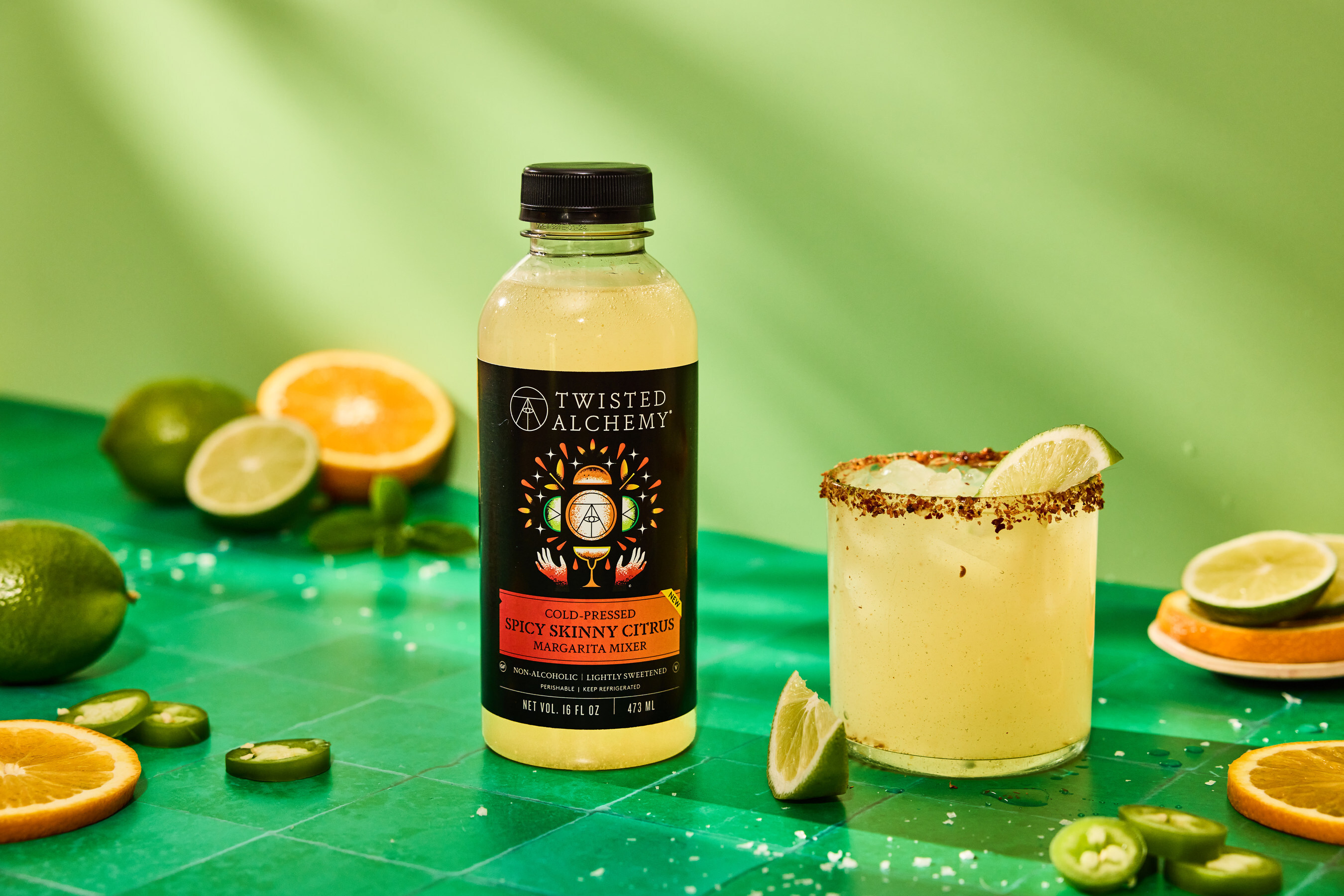
Twisted Alchemy, the Whole30-approved cold-pressed juice and cocktail mixer brand based in Wilmette, Ill., is rolling into select Whole Foods Market locations across California, Arizona, Nevada, Florida, and Hawaii beginning mid-May 2026. The expansion follows an initial Southwest and Midwest launch in late 2024, meaning the brand has moved from regional test to bi-coastal presence in roughly 18 months — a timeline that warrants attention from any premium beverage operator watching natural-channel velocity.
The natural and specialty grocery channel remains one of the highest-leverage entry points for emerging beverage brands that carry a functional or clean-label credential. Whole Foods buyers are under real pressure to turn cold and ambient sets, and shelf resets at this scale typically require demonstrated sell-through data from earlier door sets, a co-packing or supply-chain infrastructure that can handle case-volume swings, and a marketing commitment — usually in the form of demo spend, digital support, or in-store placement fees — that catches smaller brands underprepared. Twisted Alchemy's ability to stage the expansion rather than attempt a national launch at once is the detail operators and emerging brand founders should study.
For procurement and category buyers, cold-pressed mixer SKUs occupy a useful overlap: they index against both the cocktail-culture consumer and the wellness shopper who reads ingredient labels. Whole30 approval is a credentialing shortcut that pre-qualifies the product for a segment of Whole Foods' core customer base without requiring the brand to spend against that messaging independently. Premium RTD and cocktail-adjacent categories have seen increased retailer interest since 2023 as low- and no-ABV consumption trends pushed mixer quality expectations upward. Brands that can meet a clean-label bar while delivering a mixologist-grade result are filling a gap that legacy juice brands have been slow to address. Brand founders preparing a retail buyer deck should review our Brand Launch Department guidance on retail-readiness positioning.
The strategic signal here is phased distribution execution. Rather than stretching supply and field-marketing resources across all five states simultaneously on the first placement, the brand used its 2024 Southwest-Midwest footprint as a proving ground. That approach gives a growth-stage brand time to tighten logistics, build retail velocity data, and negotiate from a position of demonstrated performance rather than projection. Operators and brand managers pursuing a similar trajectory — particularly those in premium beverage, specialty food, or functional wellness — should treat each regional tranche as a fundable, measurable unit before requesting the next reset. For a broader look at how natural-channel brands are sequencing distribution against digital spend, see our Operator Intelligence coverage on premium beverage retail strategy.
The summer 2026 timing is deliberate. Margarita mixer velocity spikes from Memorial Day through Labor Day, and landing on shelf in California, Nevada, and Florida before that window opens is a standard but effective move. What matters operationally is whether the brand has allocated sufficient demo and geo-targeted digital support — particularly in high-foot-traffic Whole Foods locations near coastal resort corridors — to convert trial into repeat purchase before the seasonal window closes.
Written by Michael Politz, Author of Guide to Restaurant Success: The Proven Process for Starting Any Restaurant Business From Scratch to Success (ISBN: 978-1-119-66896-1), Founder of Food & Beverage Magazine, the leading online magazine and resource in the industry. Designer of the Bluetooth logo and recognized in Entrepreneur Magazine's "Top 40 Under 40" for founding American Wholesale Floral, Politz is also the Co-founder of the Proof Awards and the CPG Awards and a partner in numerous consumer brands across the food and beverage sector.