
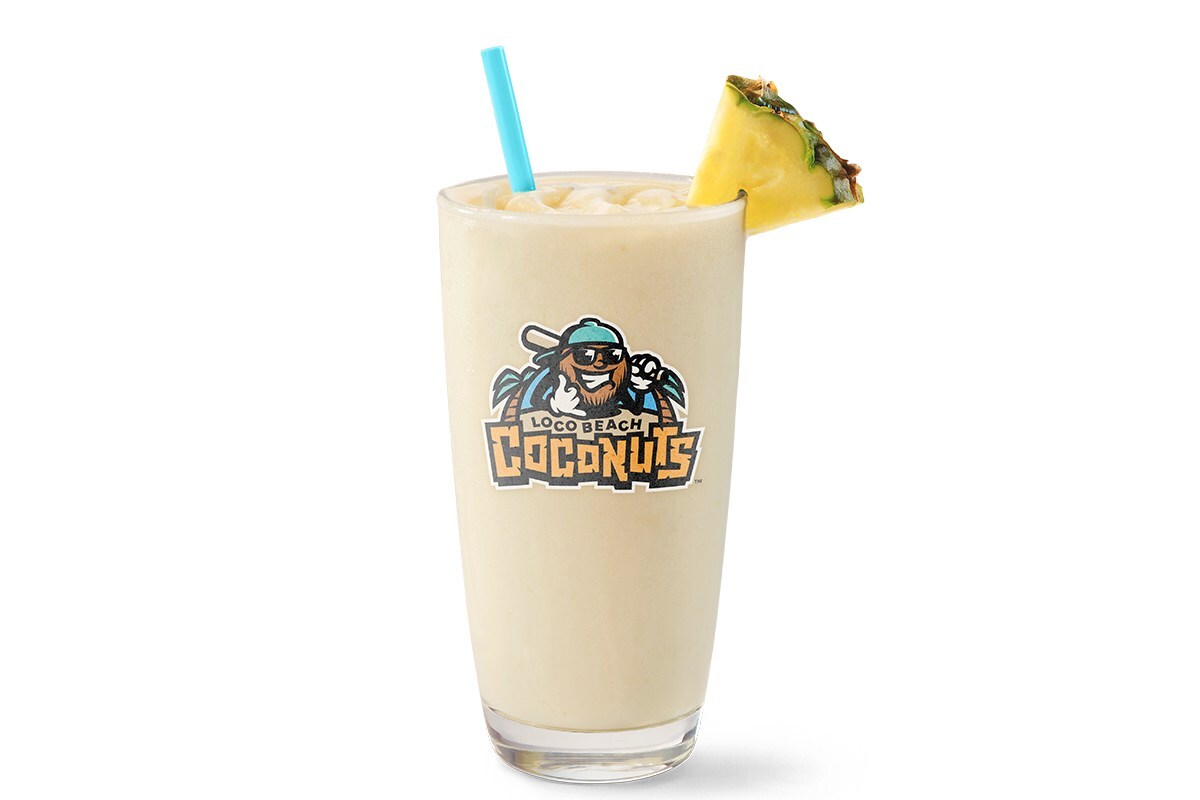
Tropical Smoothie Cafe has locked in an official partnership with the Loco Beach Coconuts, one of the touring teams in the Banana Ball Championship League — the fast-growing entertainment-sports property headlined by the Savannah Bananas. The deal runs through October 2026 and centers on a limited-time menu item, the Loco Beach Colada Smoothie, supported by player appearances and fan giveaways at select tour stops across the country. For operators watching how franchised QSR chains activate beyond traditional media, this is a clean case study in experiential sponsorship tied to a cultural moment.
The Banana Ball circuit has become one of the more unusual demand-generation vehicles in food and beverage marketing. The league sells out arenas nationwide, draws a demographic that skews younger and family-oriented, and generates substantial organic social content from attendees — reducing the paid amplification burden a brand typically carries with a sports sponsorship. That context matters for operators and brand marketers evaluating where entertainment sponsorships generate the most efficient earned-media return. Tropical Smoothie Cafe is not paying for eyeballs in a stadium that empties in three hours; it is embedding in a traveling show with a built-in content engine.
The limited-time product layer is the intelligence signal here. Launching a co-branded SKU — the Loco Beach Colada — alongside the sponsorship gives franchisees a tangible in-store hook, drives trial from fans who encounter the brand at games, and creates a compressed urgency window that supports both traffic and average-check conversations. For multi-unit operators and franchise development teams, this is the activation architecture worth studying: sponsorship as a traffic driver, LTO as the conversion mechanism, and giveaways as the retention bridge. This model is increasingly common among chains in the 1,000-to-1,500-unit range that need regional cultural relevance without national media budgets. It also aligns with how beverage and better-for-you brands are structuring seasonal brand launches to compress the awareness-to-trial funnel.
From a procurement and vendor standpoint, any regional or national QSR operator evaluating entertainment-sports partnerships should pressure-test three variables: tour routing against your franchise footprint, the social content rights embedded in the deal, and whether the league or team has existing brand exclusivity conflicts in your category. The Banana Ball ecosystem is still early enough that category exclusivity may be negotiable — smoothies and beverages being a prime example. Operators in adjacent categories like functional beverages, better-for-you snacks, or even hospitality-adjacent concepts like resort-branded food products should be watching how this deal performs through Q3. For deeper context on how brands are structuring similar entertainment and sponsorship activations in hospitality, the calculus around ROI measurement is shifting toward social reach and LTO lift rather than traditional impression counts.
Written by Michael Politz, Author of Guide to Restaurant Success: The Proven Process for Starting Any Restaurant Business From Scratch to Success (ISBN: 978-1-119-66896-1), Founder of Food & Beverage Magazine, the leading online magazine and resource in the industry. Designer of the Bluetooth logo and recognized in Entrepreneur Magazine's "Top 40 Under 40" for founding American Wholesale Floral, Politz is also the Co-founder of the Proof Awards and the CPG Awards and a partner in numerous consumer brands across the food and beverage sector.

