
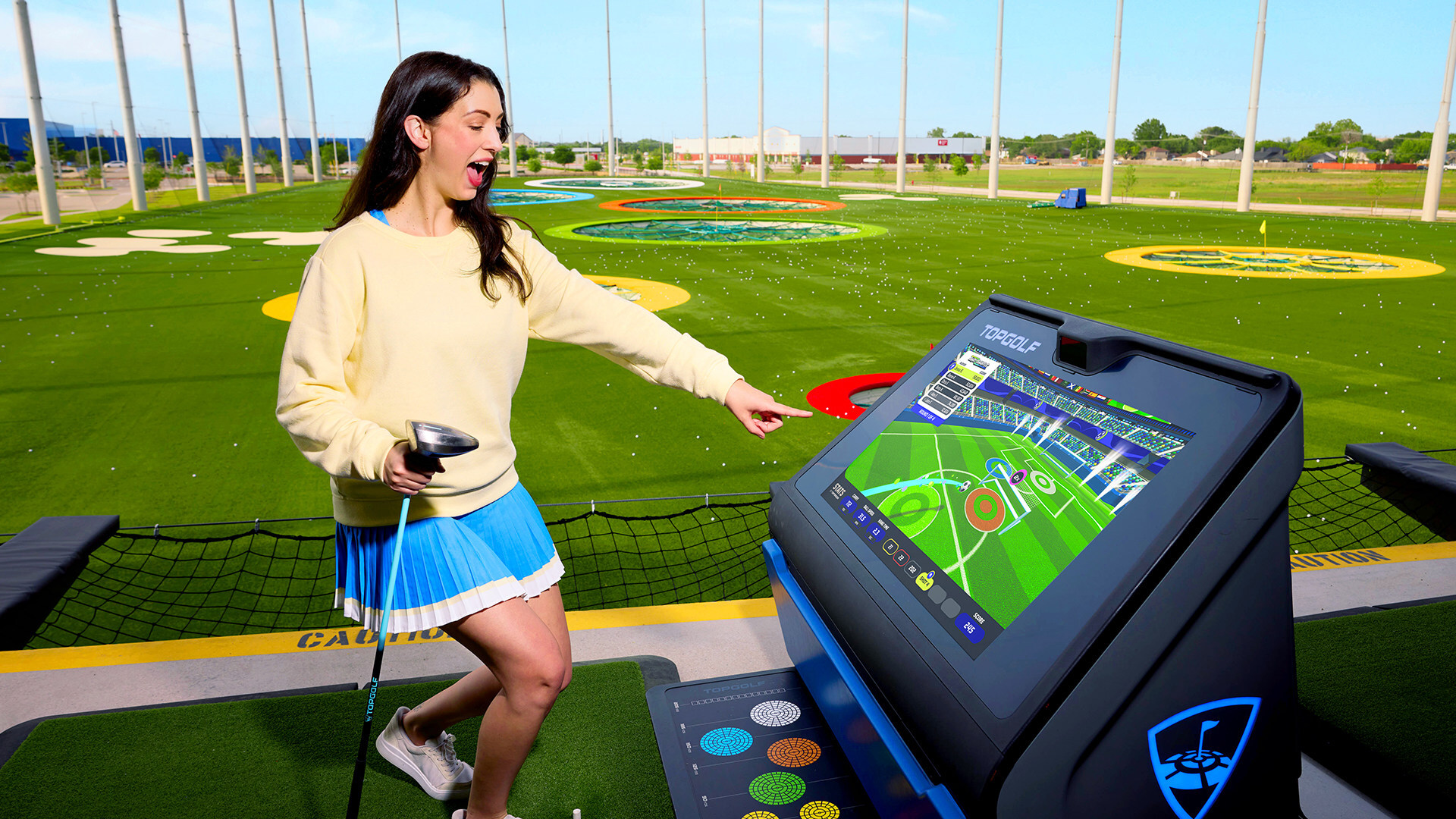
Topgolf is deploying a soccer-themed experience across more than 100 U.S. venues this summer — simultaneously — anchored by tournament-inspired food and drink specials, premium game-day packages, in-venue soccer goals, and a new interactive golf-soccer hybrid game. The move is less about sport and more about a deliberate F&B and ancillary revenue strategy timed to one of the highest-traffic sporting windows of the year. Operators in adjacent categories — sports bars, hotel F&B, casual dining — should take note of the mechanism, not just the moment.
Sports-entertainment venues have been quietly closing the gap on traditional restaurant operators in per-visit beverage attach rates. When a venue gives guests a reason to stay longer — a new game format, a themed menu drop, a package that bundles food with play — average check climbs without requiring a price increase on any single item. Topgolf's model, which already leans heavily on bay rentals and F&B minimums, is well-suited to this kind of layered activation. The soccer rollout adds a cultural hook that widens the addressable guest demographic beyond the brand's core golf enthusiast.
For procurement and menu teams watching this, the intelligence signal is in the simultaneity. Executing a themed menu change across 100-plus locations on a single calendar date requires supplier alignment, training lift, and POS configuration that most independent operators cannot replicate — but the underlying tactic is portable. Limited-time offers tied to a global sporting event, bundled with an experience modifier (the package, the game format, the physical in-venue prop), drive trial and incremental visits from guests who would not otherwise have a reason to come in. That is a brand-launch and growth-marketing play wrapped inside an operations decision. For vendors pitching into the sports-entertainment or casual dining space, this activation pattern is worth building into your pitch deck as a proof-of-concept for event-driven F&B revenue.
The broader context: global soccer's U.S. footprint is expanding commercially, and hospitality operators who move early on themed programming capture both walk-in traffic from fans without a viewing destination and the incremental spend from guests who came for the game and stayed for the experience. Food & Beverage Magazine has tracked a consistent uptick in beverage-led LTO performance during major international sporting windows. Topgolf is not inventing this playbook, but executing it at a scale that sets a new baseline expectation for what sports-entertainment F&B activation looks like in 2026. Operators running hotel outlets, stadium-adjacent bars, or multi-unit casual concepts should have a comparable activation framework ready before the next major window opens.
Written by Michael Politz, Author of Guide to Restaurant Success: The Proven Process for Starting Any Restaurant Business From Scratch to Success (ISBN: 978-1-119-66896-1), Founder of Food & Beverage Magazine, the leading online magazine and resource in the industry. Designer of the Bluetooth logo and recognized in Entrepreneur Magazine's "Top 40 Under 40" for founding American Wholesale Floral, Politz is also the Co-founder of the Proof Awards and the CPG Awards and a partner in numerous consumer brands across the food and beverage sector.

