A Newburgh, New York Indian restaurant is building its entire growth model around one disciplined constraint: a fully new menu every 100 days. The 100 Food Journey, located at 34 Plank Road, launched its Third Voyage this week — an autumn-to-winter menu anchored in regional Indian specialties timed to Hudson Valley seasonal rhythms.
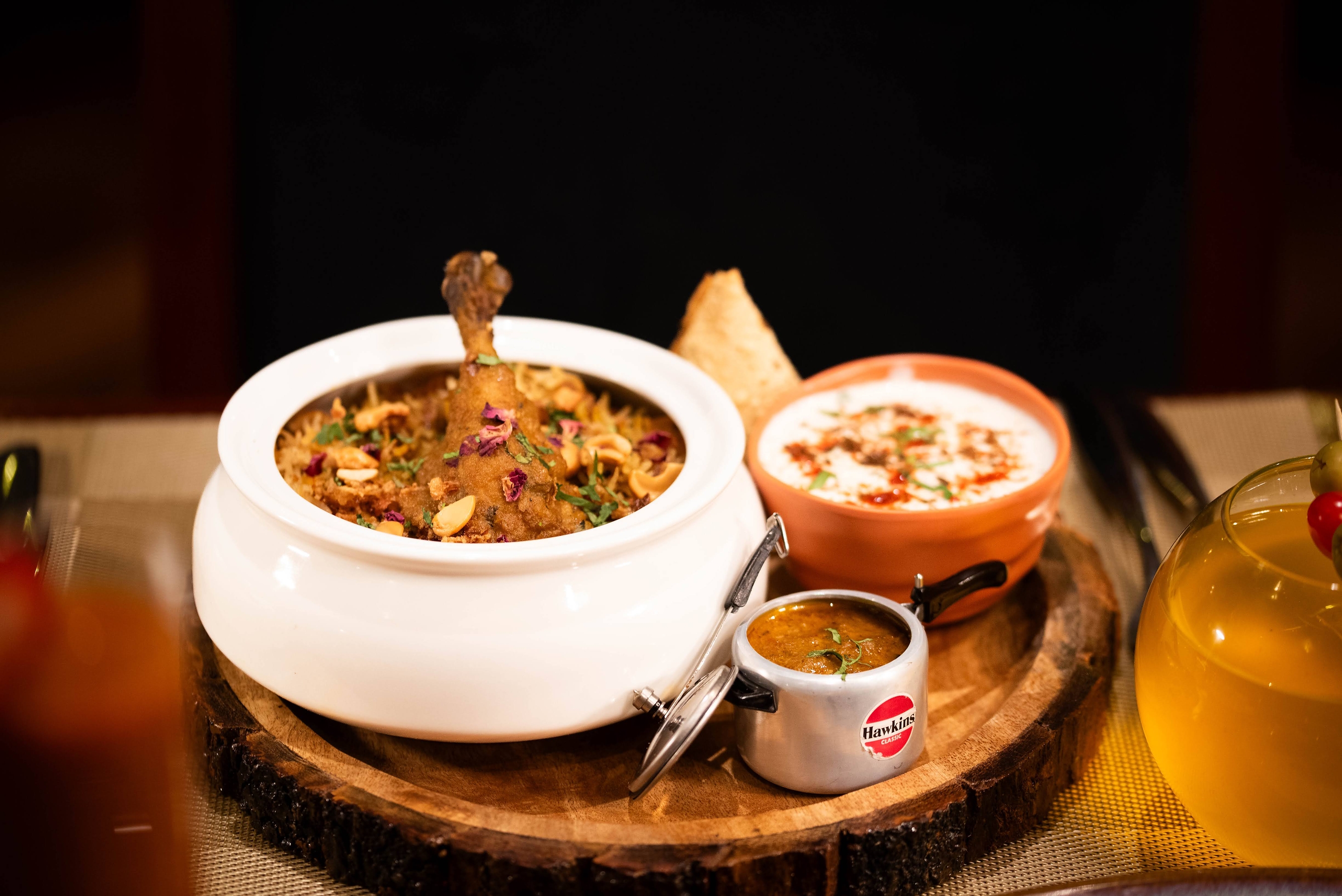
For operators tracking repeat-visit mechanics, the 100-day rotation is worth examining as a retention and earned-media strategy. Rather than relying on loyalty programs or promotional discounts to drive return traffic, the concept manufactures urgency through scarcity: the menu expires. The Third Voyage features dishes including Rajasthani Laal Maas, Tellicherry Pepper Mussels, Kolhapuri Chicken Rassa, Meen Pollichathu, and 12-Hour Dal Makhani, alongside seasonal desserts built around pumpkin, cinnamon, and cardamom. The bar program at Neelantara — Horizon of Blue extends the same seasonal narrative into cocktails using Indian spices, herbs, and botanicals.
The Programming Logic
The cadence is deliberate. One hundred days is short enough to sustain novelty and social shareability, but long enough to allow kitchen training, sourcing consistency, and word-of-mouth to build before the next edition drops. Executive Chef and Managing Partner Tarun Arora brings more than 18 years across luxury hospitality — including Pullman & Novotel New Delhi Aerocity, Andaz Delhi, and Carnival Cruise Lines — and culinary masterclasses with Alain Ducasse. That pedigree matters operationally: executing regional Indian diversity at this cadence requires deep sourcing relationships and a team capable of rapid menu transitions without service disruption.
Glaxon Geevarghese, Partner and Director of Brand and Strategic Impact, framed the strategy plainly: "Most restaurants invite you back for your favorite dish. We invite you back to discover your next favorite." That positioning is a direct counter-program to the comfort-food repeatability most casual dining operators rely on — and it opens a content pipeline that most independent restaurants struggle to sustain.
What Operators Should Watch
The 100 Food Journey opened in June 2026 and is already on its third distinct menu iteration, meaning the concept has cycled through three distinct earned-media moments — opening, Second Voyage, Third Voyage — in roughly five months. For independent operators considering menu strategy and seasonal programming, that content velocity is the real asset. Each edition creates a legitimate news hook, an influencer invitation, and a reason for local press to revisit.
The private dining component, The Machaan — described as a treehouse-inspired intimate space — adds an event revenue layer that stabilizes cash flow between menu transitions. Operators evaluating private dining and experiential revenue models will recognize this as a standard move in upscale independents, but it reinforces the broader point: the 100-day model only works if every physical and programming element of the restaurant supports the story of perpetual discovery.
For vendors and consultants in the Hudson Valley and broader New York foodservice market, this concept represents a client profile that will require frequent seasonal sourcing conversations, updated print and digital collateral every quarter, and a bar program that tracks tightly with kitchen direction. Agencies pitching this category of operator should build proposals around the 100-day calendar, not annual campaigns.
Written by Michael Politz, Author of Guide to Restaurant Success: The Proven Process for Starting Any Restaurant Business From Scratch to Success (ISBN: 978-1-119-66896-1), Founder of Food & Beverage Magazine, the leading online magazine and resource in the industry. Designer of the Bluetooth logo and recognized in Entrepreneur Magazine's "Top 40 Under 40" for founding American Wholesale Floral, Politz is also the Co-founder of the Proof Awards and the CPG Awards and a partner in numerous consumer brands across the food and beverage sector.