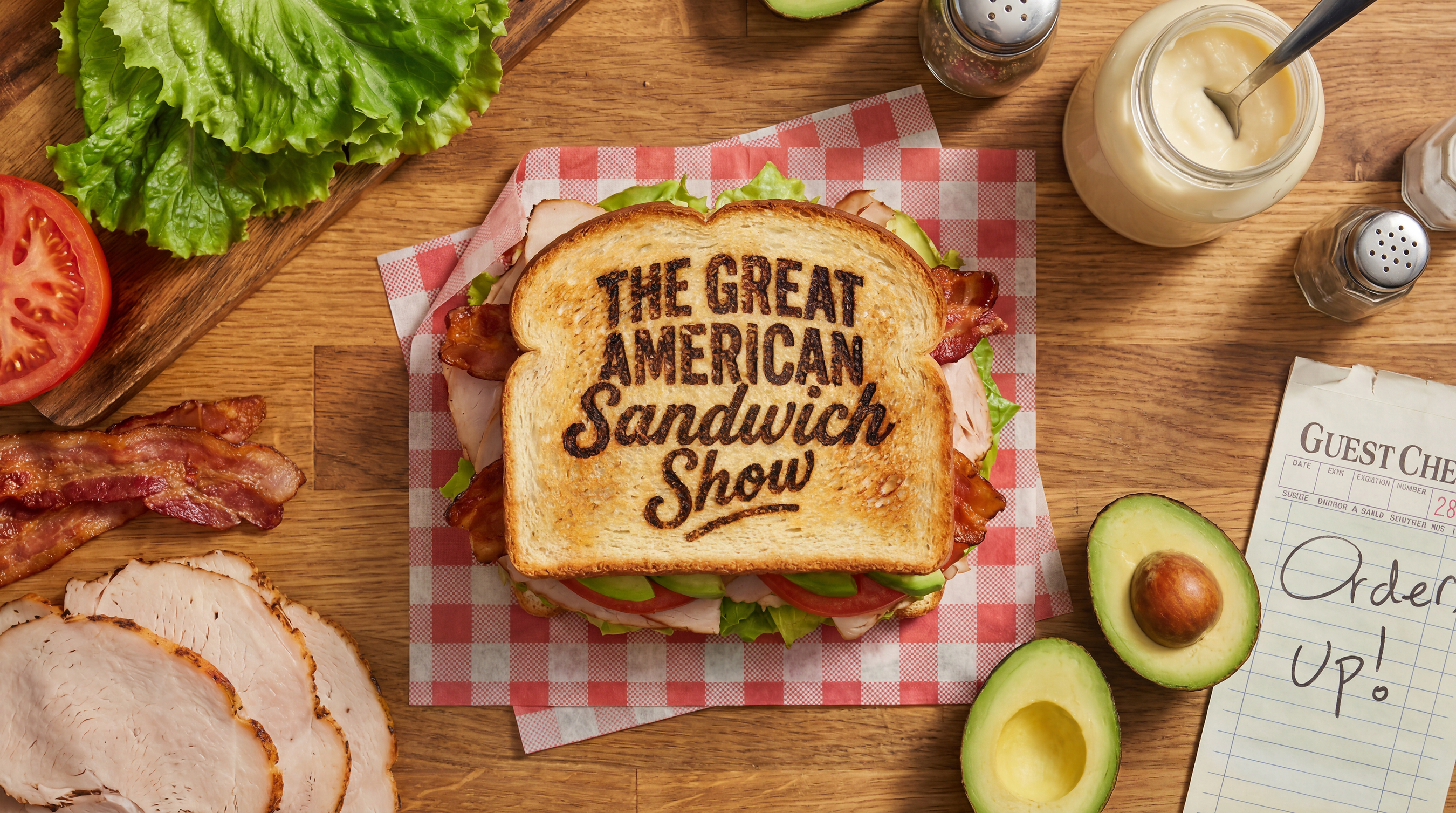
Taste of Home, the community-driven food and entertaining property under Trusted Media Brands, has launched The Great American Sandwich Show — a YouTube-first original series hosted by comedian, writer, and chef Lindsay Ames. Each episode follows Ames and a celebrity guest as they recreate the guest's all-time favorite sandwich, letting conversation emerge naturally through the cooking process rather than a scripted format. The move signals a deliberate platform bet: YouTube, not streaming, not social short-form, as the primary distribution layer for long-form food content in 2026.
For food brands and restaurant operators, the format is worth dissecting. Sandwich-category content consistently over-indexes on YouTube due to its visual accessibility and broad demographic pull — from QSR loyalists to home cooks. Taste of Home's decision to anchor the series in a specific food category, rather than a general culinary umbrella, reflects a content-segmentation strategy that CPG brands and ingredient suppliers have been quietly funding through sponsorships and product integration for the past two cycles. If you're a deli protein brand, a bread supplier, or a condiment label with retail distribution, this is exactly the type of editorial environment that reaches buyers at the consideration stage without paid search friction. Operators running sandwich-forward concepts — fast casual, deli, grab-and-go — should note how the celebrity-guest format naturalizes menu conversation in a way that branded content rarely achieves.
On the distribution intelligence side, YouTube's algorithm continues to reward episodic food content that sustains average view duration above the 50% threshold. A recurring series with a consistent host and a defined format — this one checks both boxes — compounds discoverability over time in a way that one-off viral clips do not. For brands evaluating content-led growth strategies versus paid programmatic spend, Taste of Home's move is a useful benchmark: owned-channel series reduce CPM dependency while building first-party audience data that can be retargeted across display and email. Publishers running this playbook are increasingly positioning their series as de facto brand-launch vehicles for food and beverage entrants seeking credibility before retail placement.
The broader signal here is that food media properties are accelerating their pivot from recipe-utility content to personality-driven episodic franchises — and they're doing it on YouTube because that's where monetization, search indexing, and long-form watch time still converge. Operators and brand managers who treat YouTube purely as a secondary amplification channel are leaving audience-building equity on the table. Tracking which food media properties are building recurring series — and what category verticals they're choosing — is a useful proxy for where CPG and foodservice ad budgets are flowing next.
Written by Michael Politz, Author of Guide to Restaurant Success: The Proven Process for Starting Any Restaurant Business From Scratch to Success (ISBN: 978-1-119-66896-1), Founder of Food & Beverage Magazine, the leading online magazine and resource in the industry. Designer of the Bluetooth logo and recognized in Entrepreneur Magazine's "Top 40 Under 40" for founding American Wholesale Floral, Politz is also the Co-founder of the Proof Awards and the CPG Awards and a partner in numerous consumer brands across the food and beverage sector.