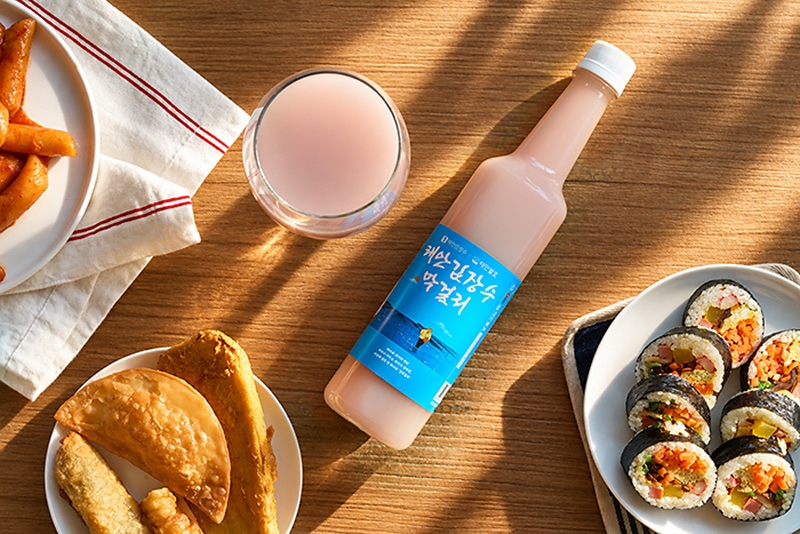
Taean Ferment Co., Ltd., a traditional liquor maker based in Taean, South Chungcheong Province, is preparing to debut "Taean Gimjangsu Gim Makgeolli" — a pink-hued, unfiltered rice liquor brewed with locally harvested gopchang laver — before the end of the year. The launch will be anchored by a Wadiz crowdfunding campaign and a presence at a domestic liquor trade fair, giving the company a two-stage feedback loop before it approaches distribution buyers.
The Product Story
The makgeolli is a patent-registered takju that blends the saltiness and nuttiness of Taean's coastal laver with the sweetness of domestic rice. The pink color is a deliberate differentiator from conventional unfiltered rice liquors, which skew white or pale yellow. For importers and specialty beverage buyers, the visual distinction matters: in a crowded K-beverage import market increasingly defined by flavored soju and fruit makgeolli, a visually distinct format with a verifiable regional provenance story carries real on-shelf merit.
Taean Ferment already produces takju, yakju, and distilled spirits under labels including "Taean Baekju" and "Taean Beopju," alongside spirits made with oriental melon and gamguk (wild chrysanthemum). The laver makgeolli widens the ingredient map to include seafood-derived flavors — an unusual move in craft liquor globally, and one the company has protected with a patent, adding a defensible IP layer to the brand story.
What the Launch Model Signals
The decision to run a crowdfunding campaign before approaching retail or on-premise distribution is a disciplined market-read strategy. Wadiz, South Korea's leading rewards-based crowdfunding platform, has become a legitimate test channel for food and beverage producers gauging price tolerance, packaging response, and consumer vocabulary around new ingredients. By layering in a live trade fair — where buyers, importers, and media can taste the product in person — Taean Ferment is building a dossier of real consumer data before it sets distribution terms.
For U.S. and international importers watching the Korean craft spirits category, that approach is worth noting. Brands that arrive in import markets with crowdfunding traction, documented consumer feedback, and a patent on a core process are substantially easier to place with specialty retailers and Japanese or Korean restaurant accounts than brands launching cold. The pink color and the regional laver identity also suit the kind of narrative that moves product in natural food retail and curated beverage programs.
Operators building Asian beverage programs — particularly those managing sake and soju lists at Korean BBQ concepts or pan-Asian on-premise accounts — should track this brand through the crowdfunding cycle. The salty-savory flavor profile could position laver makgeolli as a food-pairing alternative to low-ABV sparkling wine in courses where umami is the dominant note. For more on emerging fermented beverage formats relevant to U.S. on-premise buyers, see coverage in Operator Intelligence and the Marketplace directory for verified importers actively sourcing Korean craft liquor.
Written by Michael Politz, Author of Guide to Restaurant Success: The Proven Process for Starting Any Restaurant Business From Scratch to Success (ISBN: 978-1-119-66896-1), Founder of Food & Beverage Magazine, the leading online magazine and resource in the industry. Designer of the Bluetooth logo and recognized in Entrepreneur Magazine's "Top 40 Under 40" for founding American Wholesale Floral, Politz is also the Co-founder of the Proof Awards and the CPG Awards and a partner in numerous consumer brands across the food and beverage sector.