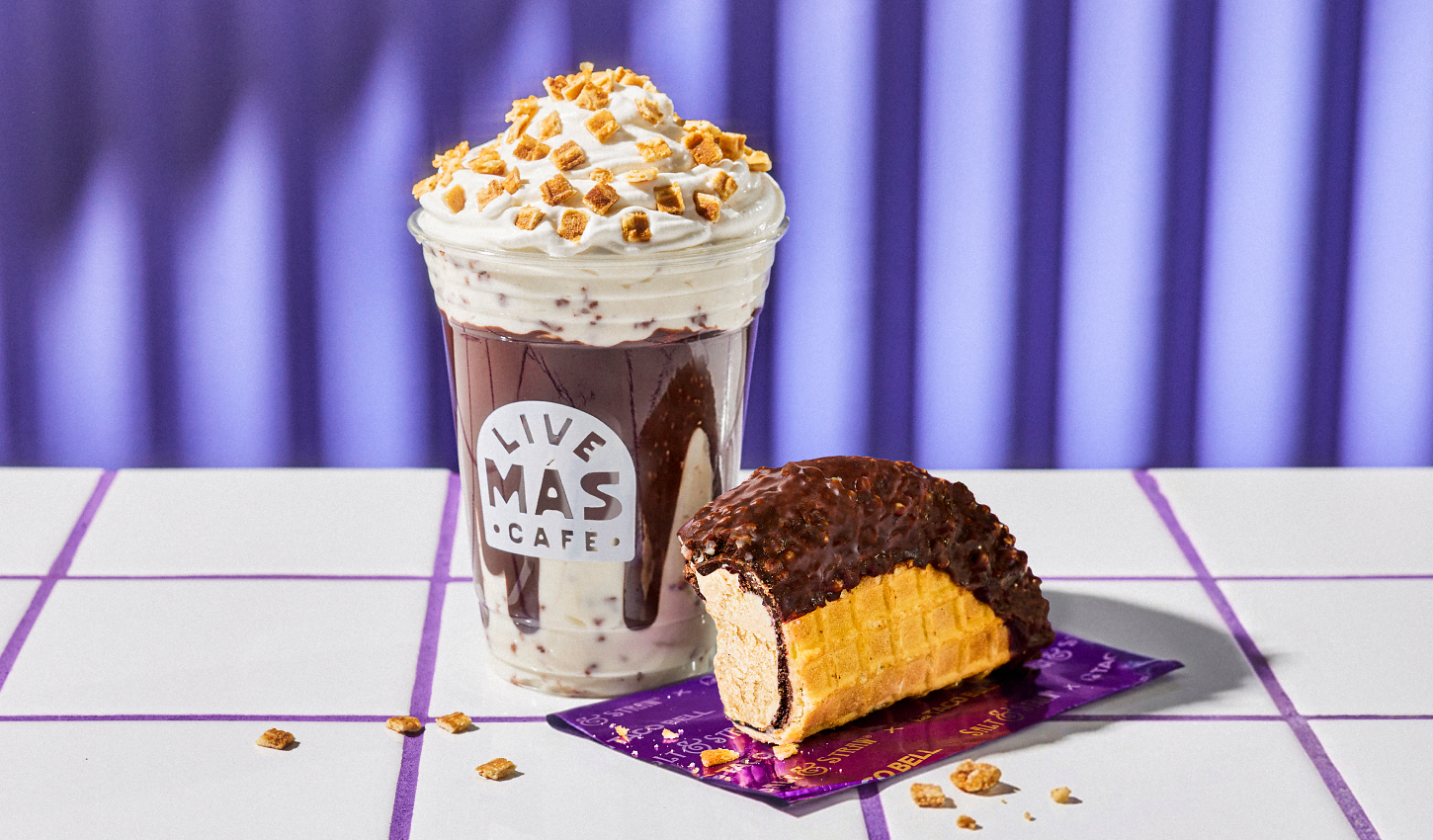
A year after the Tacolate sold out on launch weekend and drew lines at Salt & Straw scoop shops nationwide, Taco Bell has returned with a second collaboration — and this time the distribution architecture is more deliberate. The Salt & Straw Churro Ice Cream Taco, priced at $3.99, hit all domestic locations on September 1, 2026, while a companion beverage, the Choco-Waffle Chiller (starting at $4.69), launched exclusively through Live Más Café locations in California, Las Vegas, Houston, and Dallas. The two-track rollout is the more instructive story for foodservice operators.
The Channel Strategy
What Taco Bell is executing here is a tiered access model that most multi-unit operators can adapt: a broad, affordable entry point at standard locations drives traffic and trial, while a premium format lives inside a sub-brand channel built for higher check and longer dwell time. Live Más Café — Taco Bell's coffee and specialty-beverage concept — gets its first-ever branded collaboration through this drop, validating the sub-brand as a platform for exclusive, limited-run product. For operators running a flagship concept alongside a café, bar, or fast-casual spinoff, that sequencing is worth noting. The exclusive item doesn't just reward the secondary format's guests; it gives the media cycle a second beat and extends the story's shelf life past opening day.
Loyalty and Scarcity as Growth Levers
The loyalty mechanic layered on top is equally instructive. On September 8, Taco Bell Rewards members received a one-hour window to enter a sweepstakes for 100 limited-edition Salt & Straw x Taco Bell coolers, each packed with three Churro Ice Cream Tacos. The prize pool had a total ARV of $3,500 — a negligible media spend for the earned attention a "Tuesday Drop" generates across social channels. For operators building or refining a loyalty program, this is a clean case study in using scarcity and a defined entry window to drive app opens, email engagement, and incremental transactions without discounting the core product. The mechanic also functions as a data-collection event: every sweepstakes entry is a Rewards account touchpoint.
What Operators and Brand Managers Should Take Away
The broader signal for the foodservice and CPG community is that artisan-brand collaborations — once the territory of full-service restaurants and boutique hotels — are now a tested growth vehicle at QSR scale. Salt & Straw brings craft credibility and a loyal following across 57 scoop shops; Taco Bell brings nearly 10,000 domestic doors and a loyalty base large enough to make a 100-prize sweepstakes feel competitive. Brands on either side of that equation should be mapping their own collaboration candidates: who in an adjacent category has the audience you want, and what channel or format innovation makes the partnership feel like more than a co-branded SKU?
For operators considering LTO strategy and menu innovation, the Churro Ice Cream Taco also underscores the value of iteration over novelty. Taco Bell did not reinvent the format — it refreshed a proven one with a new flavor profile and wider distribution. That's a lower-risk path to a high-attention moment than launching an entirely new category. Agencies and brand managers pitching collaboration concepts to QSR and fast-casual clients should study how the brand launch mechanics here — exclusive café SKU, loyalty drop, physical merch, earned media — were sequenced to sustain coverage across a full week rather than burning the story in a single news cycle.
Written by Michael Politz, Author of Guide to Restaurant Success: The Proven Process for Starting Any Restaurant Business From Scratch to Success (ISBN: 978-1-119-66896-1), Founder of Food & Beverage Magazine, the leading online magazine and resource in the industry. Designer of the Bluetooth logo and recognized in Entrepreneur Magazine's "Top 40 Under 40" for founding American Wholesale Floral, Politz is also the Co-founder of the Proof Awards and the CPG Awards and a partner in numerous consumer brands across the food and beverage sector.