The Collab and the Product
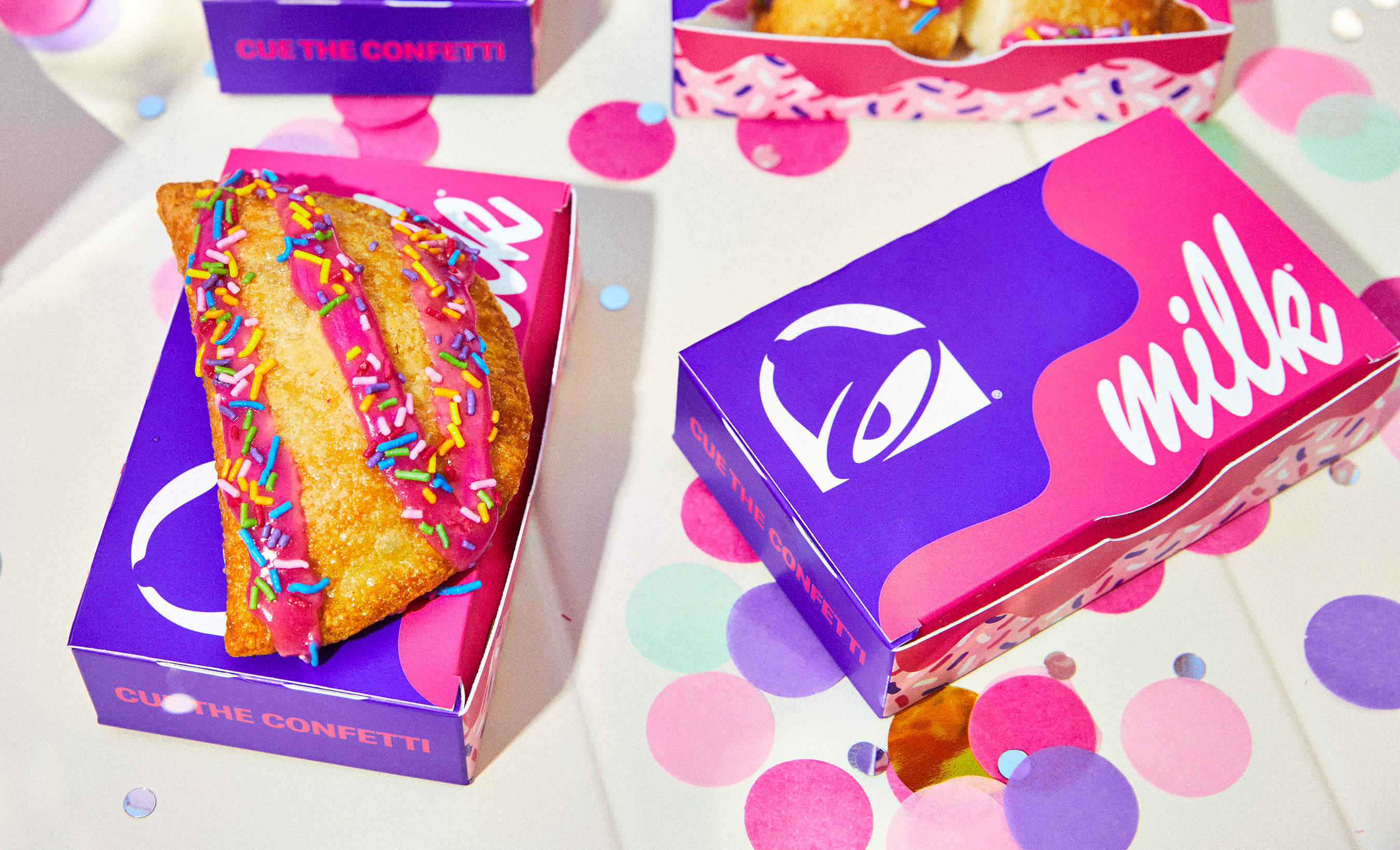
Taco Bell and Milk Bar are returning to menus nationwide on October 15 with the Milk Bar Birthday Cake Empanada — a $3.49 crispy dessert filled with cake batter, topped with pink frosting and rainbow sprinkles, and sold in custom occasion packaging. The item was teased at Taco Bell's annual Live Más LIVE brand event before rolling to all participating domestic locations for a limited run while supplies last.
This is the third co-developed product between the two brands. The 2022 Strawberry Bell Truffles fused Milk Bar's signature Cake Truffles with Taco Bell's Crunchy Taco Shell. The 2025 Birthday Cake Churros brought frosting-filled, sprinkle-topped churros to Taco Bell's dessert section. Each iteration has used Milk Bar's Birthday Cake IP as the anchor flavor — demonstrating a deliberate, compounding brand-equity strategy rather than a one-off licensing play.
Why Operators Should Pay Attention
The more instructive element here isn't the product itself — it's the loyalty integration layered on top of it. From October 15 through October 28, Taco Bell Rewards Members who have added their birthday to their profile can redeem their birthday reward as either a free Milk Bar Birthday Cake Empanada or a regular Mountain Dew Baja Blast Freeze. That bifurcated reward mechanic does two things simultaneously: it drives app engagement around an LTO window and gives the brand a zero-cost birthday occasion touchpoint that competes directly with the coffee-chain birthday-drink programs that have trained consumers to expect celebration perks from QSR loyalty programs.
For multi-unit operators and brand marketers tracking loyalty ROI, the structure matters. Tying a limited-time SKU to an identity-based reward — birthday date on file — incentivizes profile completion, which deepens first-party data capture. Liz Matthews, Global Chief Food Innovation Officer at Taco Bell, framed the collab around fan demand for familiar flavors in unexpected formats, a positioning that also functions as a test-and-learn signal for operators evaluating which flavor platforms have cross-category extension potential on their own menus.
What This Signals for the Category
Dessert is underperforming its potential across much of the QSR and fast-casual segment — low attachment rates, high food-cost sensitivity, and minimal occasion marketing. The Taco Bell–Milk Bar model addresses all three pressure points: a recognizable co-brand lowers the consumer education burden, a $3.49 price point sits above impulse-add territory while staying accessible, and birthday-occasion framing converts a generic LTO into a personal moment worth sharing on social.
Christina Tosi, Chef and Founder of Milk Bar, noted that the collaboration's appeal is seeing a well-known flavor surface in an unexpected delivery format — a product-design principle that applies equally to operators building their own seasonal or regional specials. The broader takeaway for foodservice operators is that IP-backed flavor collaborations now function as a marketing channel in themselves, generating earned media and social content that would otherwise require paid amplification.
For suppliers and packaging vendors, the custom occasion packaging component is worth noting: it signals that presentation investment on dessert LTOs is being treated as brand spend, not just cost of goods. Operators evaluating dessert and beverage menu strategy or brand-collaboration frameworks should benchmark this rollout against their own occasion-marketing cadence.
Written by Michael Politz, Author of Guide to Restaurant Success: The Proven Process for Starting Any Restaurant Business From Scratch to Success (ISBN: 978-1-119-66896-1), Founder of Food & Beverage Magazine, the leading online magazine and resource in the industry. Designer of the Bluetooth logo and recognized in Entrepreneur Magazine's "Top 40 Under 40" for founding American Wholesale Floral, Politz is also the Co-founder of the Proof Awards and the CPG Awards and a partner in numerous consumer brands across the food and beverage sector.