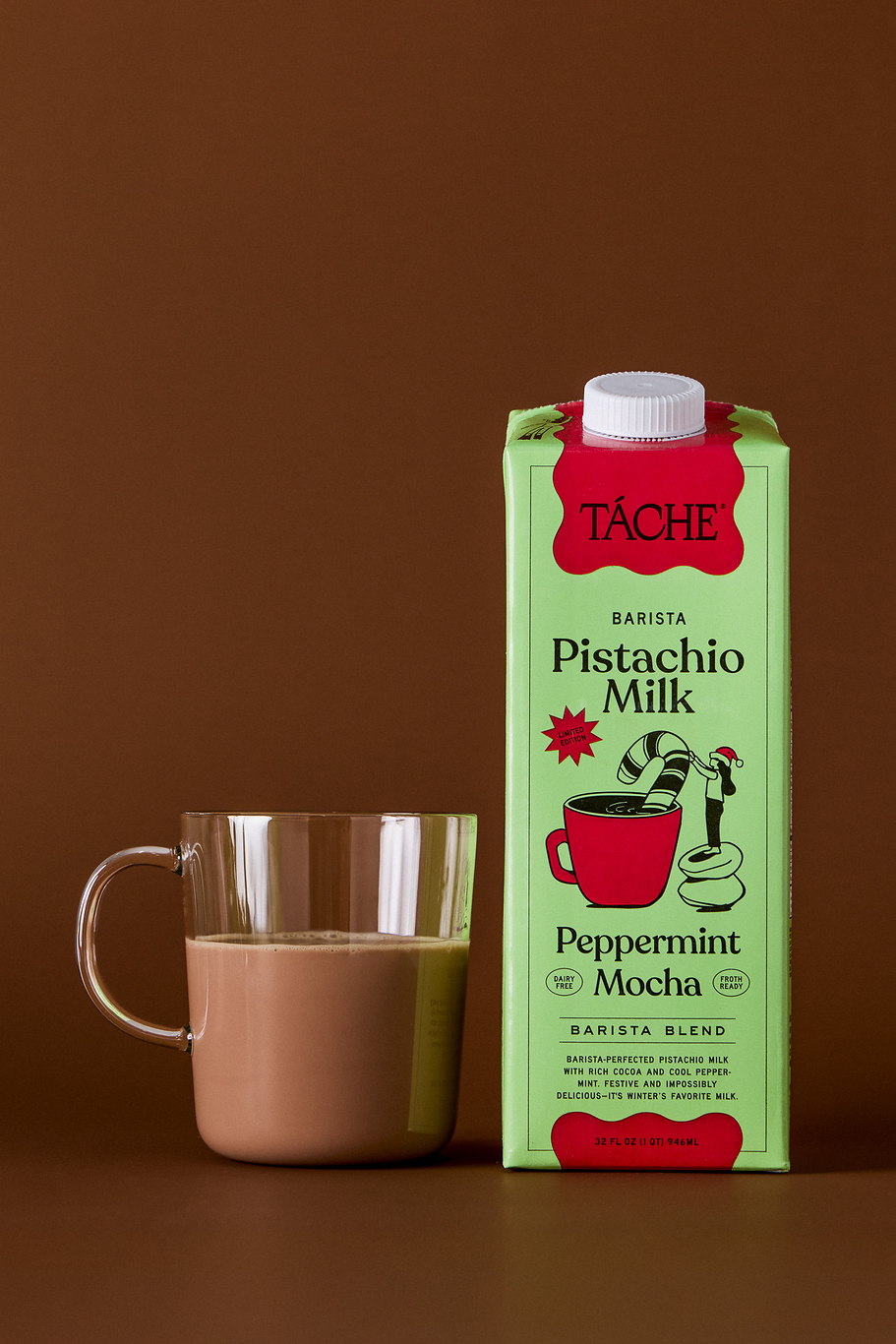
Táche Pistachio Milk has launched its first chocolate product — the Peppermint Mocha Barista — marking the brand's second limited-edition seasonal SKU and its first foray into chocolate pistachio milk after more than two years of development. The move matters to operators because it signals how a specialty plant-based brand with real café traction is using seasonal innovation to hold shelf and menu space heading into the most competitive beverage quarter of the year.
The product combines chocolate, peppermint, and Táche's signature pistachio milk base. It carries the same no-seed-oil, non-GMO positioning as the core line and retails at $7.99 per 32 fl. oz. carton at traditional retail and $9.00 DTC, with a six-pack priced at $54.00. A 15% subscribe-and-save incentive is active on the direct channel — a structure increasingly common among better-for-you beverage brands trying to stabilize repeat purchase outside of Amazon.
The Retail and Café Footprint
Táche now sits in more than 5,500 retail locations — including Whole Foods Market, Erewhon, H-E-B, Target, Albertsons, and Safeway banners — and is poured at more than 4,000 café doors nationwide. That footprint gives the Peppermint Mocha launch an immediate on-premise test environment that most emerging alt-milk brands cannot access. Beginning December 8, the SKU will appear on menus at Aritzia's A-OK Cafe locations in a seasonal Frosted Mint Mocha application, as well as a modifiable add-in for other drinks. The Aritzia placement is worth watching: fashion-adjacent café activations are becoming a low-cost trial mechanism for specialty beverage brands, borrowing dwell time and brand affinity from the retail host rather than building their own foot traffic.
What This Signals for Plant-Based Buyers
Founder and CEO Roxana Saidi described the launch as an extension of the brand's larger positioning around pistachio's cultural legitimacy — noting that when Táche launched in 2020, pistachio was still largely a snacking or artificial-flavoring reference point. The brand's timing on the original pistachio milk proved prescient, and the category has since moved from novelty to competitive shelf staple. The question for category buyers now is whether flavor-line extensions — particularly limited seasonal SKUs — can sustain velocity without cannibalizing core SKU performance or straining co-man capacity.
The Peppermint Mocha follows a Pumpkin Spice Barista released earlier in 2026, establishing a seasonal-drop cadence. For operators sourcing plant-based milks at scale, that pattern creates both opportunity and complexity: seasonal SKUs can drive promotional lift and trial, but they require tighter forecast coordination with distributors and café operators to avoid short-fills during peak demand windows. Brands executing this well — Táche included — are building the kind of café-operator relationships that brand-launch teams look for when evaluating foodservice distribution readiness.
For procurement and category managers evaluating the alt-milk shelf heading into Q1 2027, the Táche expansion is a useful benchmark. The brand is demonstrating that pistachio milk has moved past first-mover novelty into a format capable of supporting a multi-SKU portfolio with seasonal depth — the same trajectory oat milk brands followed four to five years ago. Operators building plant-based beverage programs should track whether the Peppermint Mocha velocity data supports permanent portfolio expansion or remains a traffic-driving limited edition.
Written by Michael Politz, Author of Guide to Restaurant Success: The Proven Process for Starting Any Restaurant Business From Scratch to Success (ISBN: 978-1-119-66896-1), Founder of Food & Beverage Magazine, the leading online magazine and resource in the industry. Designer of the Bluetooth logo and recognized in Entrepreneur Magazine's "Top 40 Under 40" for founding American Wholesale Floral, Politz is also the Co-founder of the Proof Awards and the CPG Awards and a partner in numerous consumer brands across the food and beverage sector.
Frequently Asked Questions
What's the retail price on Táche's new Peppermint Mocha Barista, and how does DTC pricing compare?
The 32 fl. oz. carton retails at $7.99 in traditional channels like Whole Foods and Target, while direct-to-consumer pricing sits at $9.00 per unit with a six-pack at $54.00. Táche is running a 15% subscribe-and-save incentive on DTC to compete with Amazon's subscription model and build predictable repeat purchase outside marketplace platforms.
Where can café operators source Táche's chocolate pistachio milk right now?
Táche has placement at 4,000+ café doors nationwide, with immediate distribution through Aritzia's A-OK Cafe locations starting December 8, where it appears as a Frosted Mint Mocha and as a modifiable add-in for other applications. The brand's 5,500+ retail door count — including Whole Foods, Erewhon, H-E-B, Target, and Albertsons — creates customer awareness that drives café demand.
How long did Táche spend developing this chocolate pistachio milk formula?
The brand invested more than two years in R&D before launching the Peppermint Mocha Barista, signaling serious formulation work to balance chocolate and peppermint flavors with pistachio's inherent profile. This development timeline is typical for better-for-you beverage brands that compete on clean labels and no-seed-oil positioning.
Is this a permanent SKU or a limited seasonal run?
The Peppermint Mocha Barista is Táche's second limited-edition seasonal SKU, meaning it's a temporary offering designed to drive trial and hold shelf space during the high-competition holiday beverage quarter. The seasonal model lets the brand test category extension without long-term inventory commitment while leveraging its existing 4,000-café footprint for real-time feedback.
Why does the Aritzia A-OK Cafe placement matter for specialty beverage buyers?
Fashion-adjacent café activations like Aritzia function as low-cost trial mechanisms — Táche borrows customer dwell time and brand affinity from the retail host rather than building its own foot traffic. This model is becoming standard among emerging alt-milk brands looking to validate seasonal SKUs in controlled environments before broader rollout.