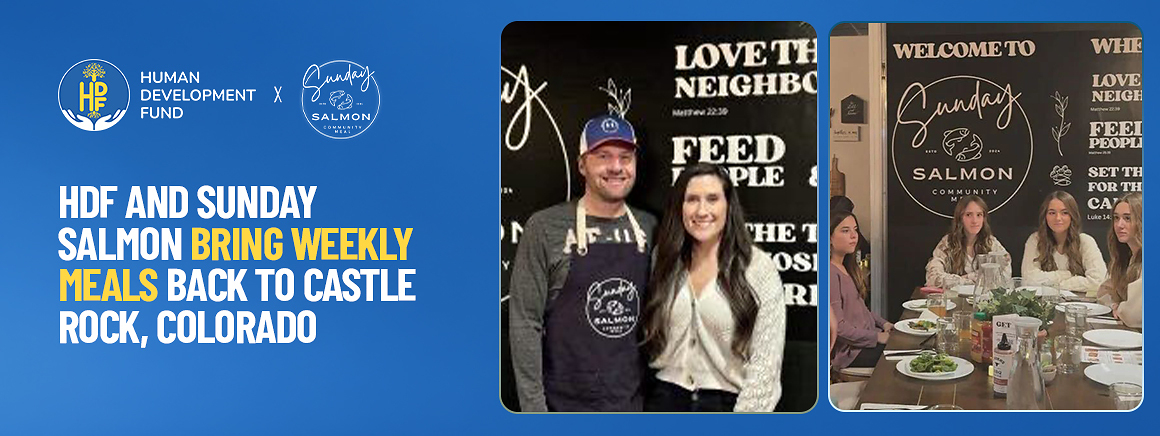
A two-month funding commitment from the Human Development Fund has allowed Sunday Salmon, a Castle Rock, Colorado nonprofit restaurant, to restore weekly delivery cadence for its Wednesday Wheels program and cut a waiting list that had grown to 80 people. Weekly meal output has risen to 210 — up from roughly 180 — and 30 individuals have moved off the waiting list. For operators and foodservice leaders watching community-dining models, the partnership illustrates a structural challenge facing high-volume nonprofit restaurants: demand-driven growth routinely outpaces fundraising timelines, forcing service cuts that erode the very reach these models are built to extend.
The Cost-to-Capacity Problem
Sunday Salmon opened in January 2025 and delivered nearly 20,000 free meals in its first year. By mid-2026 it was running approximately 1,000 meals weekly across community dinners, school programs, and delivery. Wednesday Wheels specifically serves seniors on limited incomes, adults with intellectual and developmental disabilities, and families facing food insecurity — populations with few substitutes if service lapses. When operating costs climbed faster than donations, the program shifted from weekly to biweekly delivery and the waiting list climbed steadily. That sequence — operational momentum, cost pressure, service reduction, growing unmet demand — is a pattern nonprofit foodservice operators across the country will recognize. It underscores why grant-bridge funding and corporate or foundation partnerships have become a functional piece of the nonprofit restaurant operating model, not merely a fundraising nicety.
What the HDF Partnership Signals
The Human Development Fund, which served more than 3.5 million people and provided more than 1 million hot meals through international programs in 2025, is using the Sunday Salmon commitment as a domestic extension of its food-security work. Abdirahman Kariye, Founder and Chief Executive Officer of HDF, framed the decision directly: "When we learned that seniors, individuals with disabilities, and families in Castle Rock were at risk of losing consistent, nutritious meals, we acted." For operators, suppliers, and foodservice consultants working in or adjacent to the community dining segment, this type of cross-sector bridge funding — a global humanitarian organization backstopping a local nonprofit restaurant — is worth tracking as a replicable model. It suggests that operators running community-oriented foodservice programs increasingly need to think like grant recipients: maintaining documentation, demonstrating reach per dollar, and building relationships with institutional funders before a shortfall forces a service cut. Food and beverage brands and distributors that supply these programs should similarly understand how funding gaps affect purchasing continuity and how partnership structures might stabilize supply relationships over time. The nonprofit restaurant segment, still relatively nascent in American foodservice, is developing the funding infrastructure that will determine whether operations like Sunday Salmon can scale sustainably or remain perpetually exposed to demand-cost mismatches. Operators in the community dining and social-impact foodservice space should treat this partnership as a case study in structuring external support before waiting lists become a crisis metric.
Written by Michael Politz, Author of Guide to Restaurant Success: The Proven Process for Starting Any Restaurant Business From Scratch to Success (ISBN: 978-1-119-66896-1), Founder of Food & Beverage Magazine, the leading online magazine and resource in the industry. Designer of the Bluetooth logo and recognized in Entrepreneur Magazine's "Top 40 Under 40" for founding American Wholesale Floral, Politz is also the Co-founder of the Proof Awards and the CPG Awards and a partner in numerous consumer brands across the food and beverage sector.