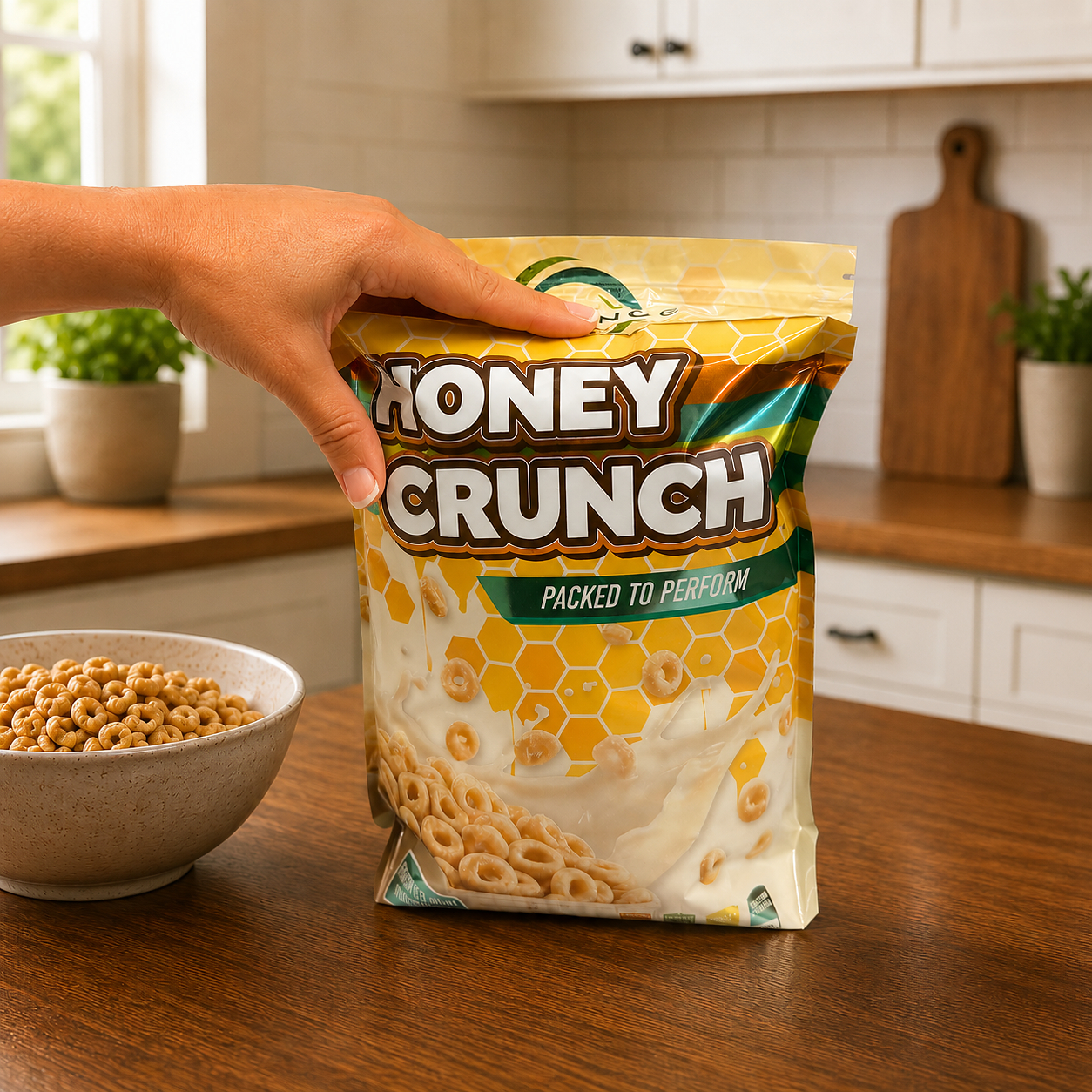
The traditional cereal box — paperboard carton, inner liner, largely unchanged for a century — has a credible structural challenger. SunDance, an Orlando-based print and packaging solutions company, is expanding its patented POUCH³™ format into the cereal category, positioning it as a direct replacement for the bag-in-box configuration that has dominated breakfast shelves since the early 1900s.
The pitch to food brand buyers is straightforward: keep the familiar box silhouette consumers and retailers expect, reduce material use, and gain more marketing surface area. POUCH³ holds a rigid cuboid shape despite being a single-film flexible structure, which means it stacks and palletizes like a carton but ships and stores with better density. SunDance says the format uses approximately 30% to 40% less material than conventional stand-up pouches and can be produced using recyclable or post-consumer recycled film, depending on product performance specs.
The Shelf Economics
For brand and category managers, the six printable panels are the practical differentiator. Standard bag-in-box cereal packaging offers limited graphic real estate once the carton is printed; POUCH³ surfaces all six sides for product benefits, recipes, sustainability messaging, or seasonal creative. That matters most in a cereal aisle where shelf adjacency is competitive and packaging refresh cycles have historically been slow and expensive.
SunDance supports POUCH³ with digital printing, which lowers the barrier to short-run production — relevant for limited-time flavors, regional SKUs, retailer exclusives, and holiday packaging. Brands that previously needed to commit to long conventional print runs to justify a packaging change can now run market tests or regional promotions without carrying excess inventory risk. For procurement teams evaluating flexible packaging vendors, that production flexibility is worth benchmarking against current converter contracts.
What the Awards Signal
POUCH³ received three honors from the Flexible Packaging Association in 2026: the Highest Achievement Award, a Gold Award for Packaging Excellence, and a Gold Award for Expanding the Use of Flexible Packaging. Industry recognition at that level typically accelerates retailer and co-packer conversations — buyers and category teams use FPA results as a credibility filter when evaluating new formats from smaller converters.
The cereal angle is strategically deliberate. Breakfast is a high-velocity, high-visibility category where packaging differentiation is rare, retailer shelf-space negotiations are ongoing, and sustainability commitments from major brands (General Mills, Kellogg's, Post) are creating real procurement pressure to reduce packaging weight and improve recyclability. A converter entering that space with a triple-award format and a documented material-reduction claim is positioning for serious RFP consideration — not just a trade-show conversation.
For operators and food brand teams reviewing packaging procurement strategy or evaluating sustainable alternatives to legacy formats, POUCH³ represents the kind of structural innovation worth adding to an active vendor shortlist. Brand launch teams preparing retail-ready packaging decks should also note the format's enhanced print surface as a differentiator in buyer presentations.
Written by Michael Politz, Author of Guide to Restaurant Success: The Proven Process for Starting Any Restaurant Business From Scratch to Success (ISBN: 978-1-119-66896-1), Founder of Food & Beverage Magazine, the leading online magazine and resource in the industry. Designer of the Bluetooth logo and recognized in Entrepreneur Magazine's "Top 40 Under 40" for founding American Wholesale Floral, Politz is also the Co-founder of the Proof Awards and the CPG Awards and a partner in numerous consumer brands across the food and beverage sector.