
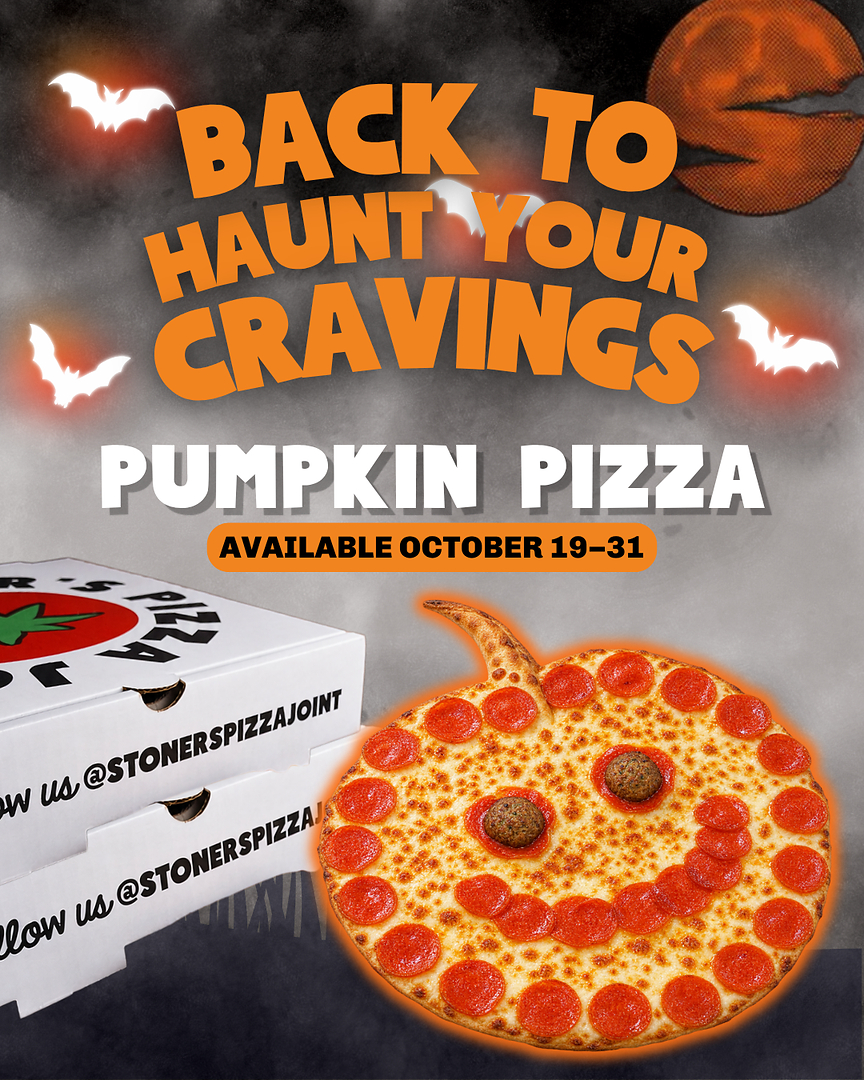
A pumpkin-shaped flatbread pizza, available October 19–31, anchors Stoner's Pizza Joint's Halloween push — but the more instructive play for operators is the loyalty mechanic attached to it. Rewards members who purchase the seasonal item during the first week of availability earn 31 Bonus Points, a time-compressed incentive designed to front-load trial and generate early transaction data for a limited-time offering.
The LTO Architecture
The pizza itself is built on Stoner's signature flatbread, topped with pepperoni and meatballs arranged into a jack-o'-lantern face, and deliberately served uncut so guests can "carve" it themselves. The participatory element is a practical table-management detail, but it also creates social content opportunities — an increasingly relevant consideration for fast-casual operators looking to extend earned media from a single menu event. CEO John Stetson frames it straightforwardly: "From the meatball eyes to carving your own slices, it's a fun way for families and friends to celebrate together."
The Loyalty Layer
The 31-point bonus during October 19–25 compresses the incentive window to the launch period only, a structure that rewards early adopters and surfaces demand signals before the full run ends on October 31. For operators building or refining their own rewards programs, this kind of tiered, occasion-specific bonus is worth modeling: it gives the brand a measurable conversion window within the LTO window, and it gives loyalty members a reason to act now rather than wait. It also ties neatly to National Pizza Month, a calendar hook that fast-casual and independent pizza operators can leverage for earned media at low cost.
Ordering is available through the Stoner's app, online, and in-store — a multi-channel availability posture that reflects the operational baseline most fast-casual brands are now expected to maintain. For operators still consolidating digital and in-store order data, the seasonal LTO is a useful forcing function: it generates a discrete data set on channel preference, time-of-day purchasing, and loyalty redemption behavior that can inform future campaign planning.
The broader pattern here — seasonal shape, loyalty multiplier, short window — is a repeatable playbook any regional pizza brand or fast-casual concept can adapt. The Halloween occasion is crowded, but the mechanics translate cleanly to other calendar moments: Valentine's Day, game-day weekends, or local events where a shareable, visually distinct product can drive both foot traffic and digital orders. Operators looking to build seasonal LTO strategy into their annual marketing calendar should note that the loyalty integration is what separates a promotional stunt from a growth move.
Written by Michael Politz, Author of Guide to Restaurant Success: The Proven Process for Starting Any Restaurant Business From Scratch to Success (ISBN: 978-1-119-66896-1), Founder of Food & Beverage Magazine, the leading online magazine and resource in the industry. Designer of the Bluetooth logo and recognized in Entrepreneur Magazine's "Top 40 Under 40" for founding American Wholesale Floral, Politz is also the Co-founder of the Proof Awards and the CPG Awards and a partner in numerous consumer brands across the food and beverage sector.

