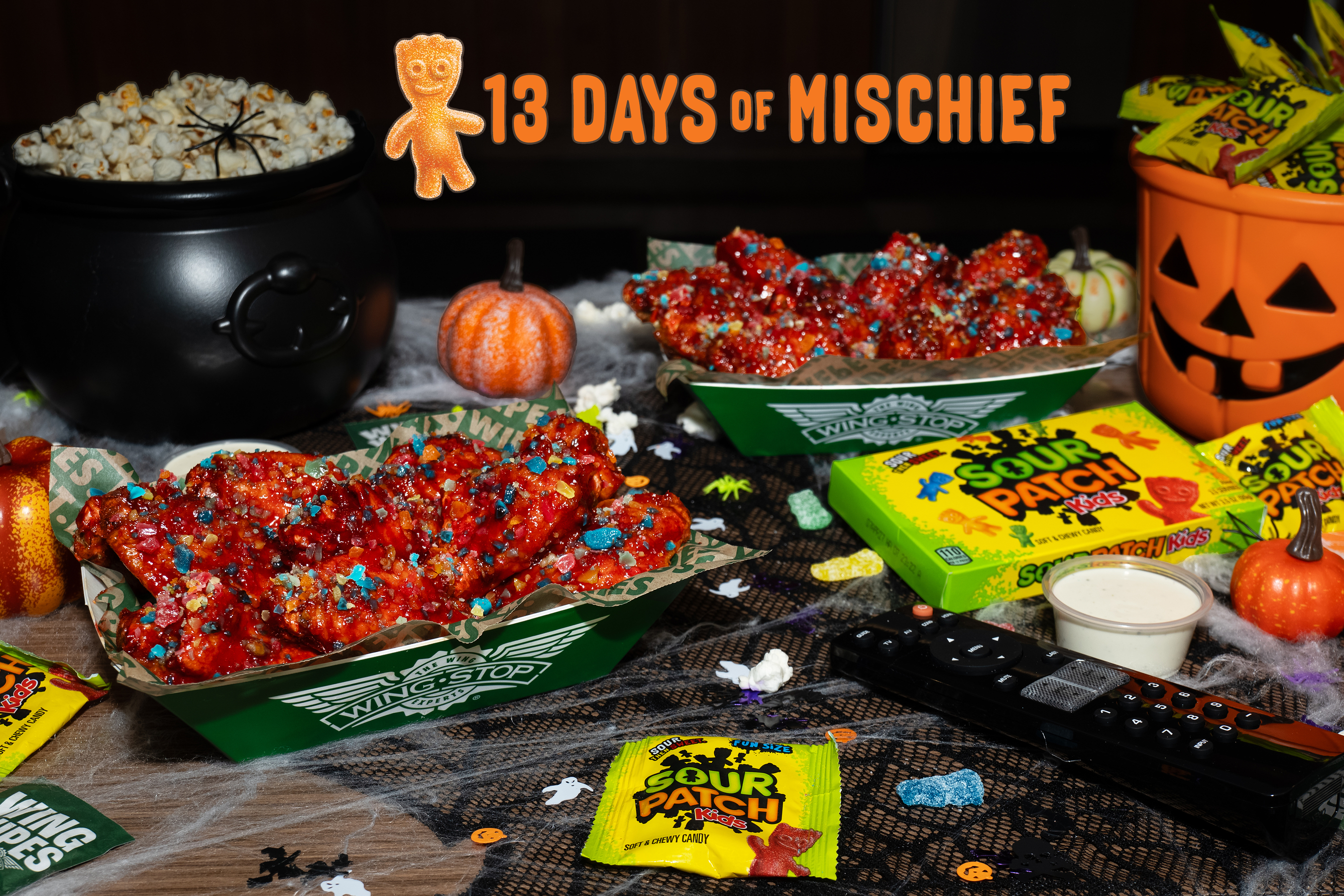
A SOUR PATCH KIDS and Wingstop collaboration launching October 27 puts a SOUR THEN SWEET REDBERRY-flavored wing glaze — topped with SOUR PATCH KIDS Bitz — on menus at participating Wingstop restaurants through November 5. The move is one of the cleaner examples of a CPG candy brand using a QSR partner's kitchen as a high-reach sampling channel ahead of a major retail season.
For foodservice operators and brand managers watching the LTO landscape, this is less about wings and more about how confectionery companies are engineering earned media through restaurant partnerships rather than paid placement alone.
The QSR-as-Sampling Channel
Wingstop's loyalty program, Club Wingstop, gets first access on October 23 — four days before general menu rollout — a sequencing that rewards existing guests while manufacturing an organic social moment around early access. The flavor was developed by Wingstop's in-house Flavor Experts and applies across all proteins, which expands the addressable order base beyond traditional wing customers.
Mondelēz International's candy division, operating behind $36.4 billion in 2024 net revenues, has the scale to negotiate co-branded LTOs at national QSR chains. But the strategic signal here is that even at that scale, the brand chose a limited 10-day menu window and a loyalty-first rollout — a playbook regional operators can adapt for local supplier partnerships or seasonal menu activations. The restraint creates urgency; broad, indefinite availability would dilute both the earned media value and the in-store retail halo the campaign is designed to generate.
Retail Readiness Behind the Buzz
The Wingstop partnership runs in parallel with a three-SKU Halloween retail launch: Monster Parts (Black Raspberry, Orange, Watermelon shapes), Tricksters (a mystery-flavor theater box at a $1.50 SRP), and Glow Ups Ghosts (turmeric-extract candies that fluoresce under blacklight). The multi-SKU approach at varied price points — from $1.50 theater boxes to $4.29 laydown bags — is textbook seasonal retail stacking, designed to hit impulse, planned-purchase, and bulk-bowl segments simultaneously.
For brand launch teams managing seasonal retail windows, the architecture is worth noting: anchor a CPG retail push with an experiential foodservice activation that drives social content, then use that content to amplify in-store velocity. The QSR menu slot becomes a media buy with production value attached. Buyers at grocery and convenience who track social velocity alongside sell-through data will see the lift.
Operators running their own seasonal LTO programs — whether at a bar, fast-casual concept, or hotel F&B outlet — can extract a practical framework here: identify a CPG partner with existing retail shelf presence and a consumer social following, create a short-window exclusive, and give loyalty members first access. The Wingstop model does not require Mondelēz budgets to replicate at a regional scale; it requires a clear co-marketing brief and a tight activation window.
For more on how seasonal brand activations translate to retail velocity, see our coverage of candy and snack category LTO strategy and QSR loyalty program design.
Written by Michael Politz, Author of Guide to Restaurant Success: The Proven Process for Starting Any Restaurant Business From Scratch to Success (ISBN: 978-1-119-66896-1), Founder of Food & Beverage Magazine, the leading online magazine and resource in the industry. Designer of the Bluetooth logo and recognized in Entrepreneur Magazine's "Top 40 Under 40" for founding American Wholesale Floral, Politz is also the Co-founder of the Proof Awards and the CPG Awards and a partner in numerous consumer brands across the food and beverage sector.