The Move
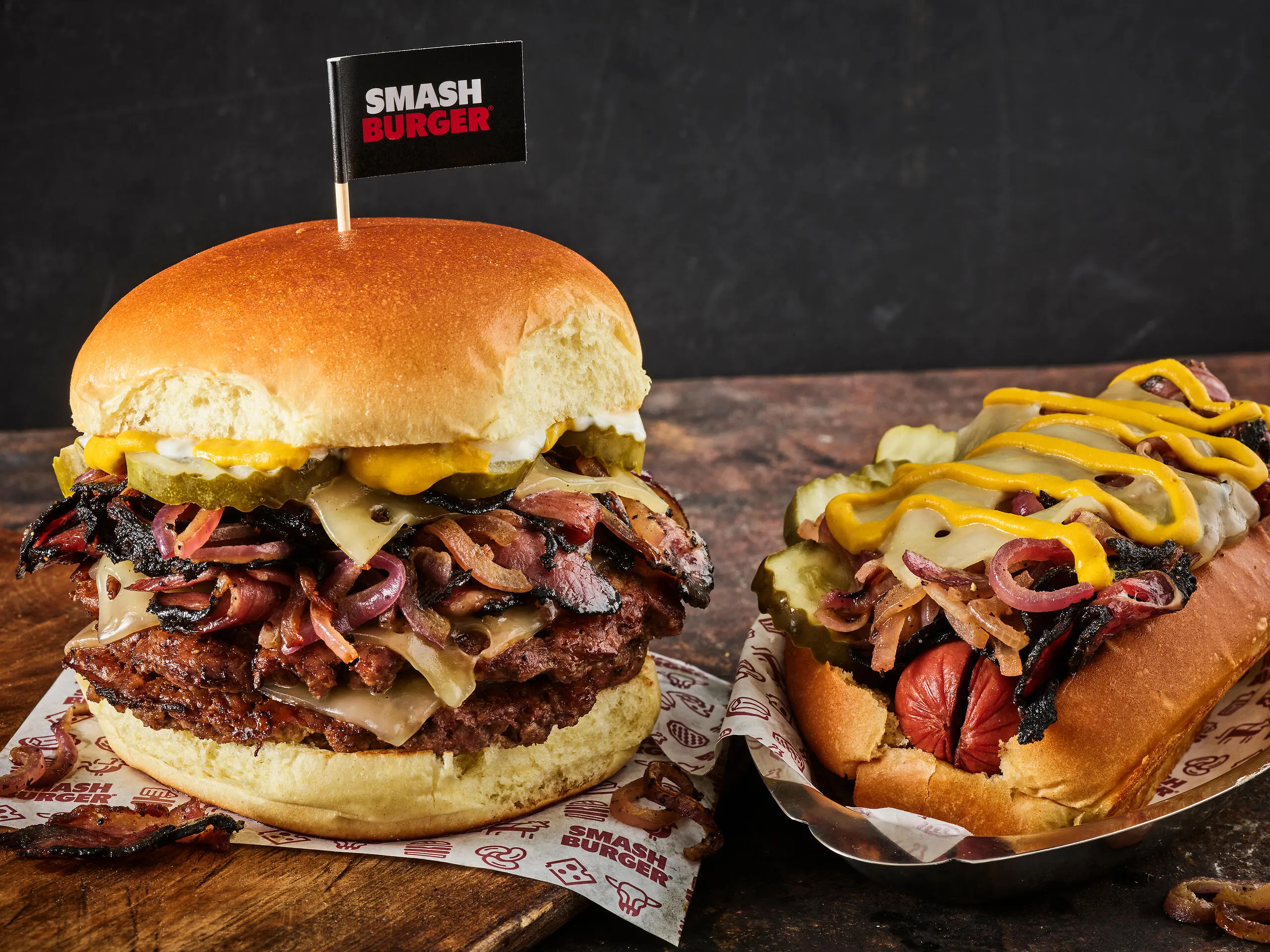
Smashburger is rolling out its New York Pastrami lineup nationwide on October 6, anchoring a fall LTO strategy around smoked black pastrami applied to two formats: the New York Pastrami Smash on a butter-toasted Parker House roll and the New York Pastrami Big Dog, a 100% Angus beef quarter-pound hot dog built with the same pastrami stack. Both are built on Certified Angus Beef, Swiss cheese, freshly grilled onions, dill pickles, and mustard — a flavor profile operators will recognize as low-risk and high-legibility with guests.
The chain is also adding two Häagen-Dazs hand-spun seasonal shakes — Pumpkin Spice and Apple Pie — alongside permanent core-menu additions: a Grilled Chicken Avocado Club and a refreshed Deluxe Grilled Chicken Sandwich. CEO Jim Sullivan framed the launch explicitly around dual objectives: guest excitement and operator execution, noting the brand is "intentionally developing the menu with innovations that create excitement for guests while supporting consistent execution for our operators."
Why Operators Should Pay Attention
The Smashburger move is a useful case study in what disciplined LTO architecture looks like at a 178-unit fast-casual system — 112 corporate, 66 franchised — owned by Jollibee Foods Corporation. Rather than introducing net-new proteins or unfamiliar build logic, the brand is layering a recognizable New York deli format onto existing Smash infrastructure. That keeps training overhead low and ticket speed defensible, two variables that matter acutely when franchise operators are absorbing ongoing labor cost pressure.
The grilled chicken additions are equally telling. Adding a Grilled Chicken Avocado Club with applewood-smoked bacon and fresh-sliced avocado to a permanent menu is a direct response to the high-protein demand signal that has been reshaping fast-casual menus throughout 2025 and into 2026. Operators across segments are seeing guests trade toward protein-forward options even when price points step up — a dynamic that rewards chains who can frame quality ingredients clearly. For procurement teams, the dual reliance on Certified Angus Beef across burger and hot dog formats suggests a strategic supplier concentration that simplifies purchasing but warrants monitoring on protein cost volatility.
What This Signals
The pastrami LTO also reflects a broader trade-marketing pattern worth tracking: fast-casual brands mining regional American culinary identities — New York deli, Texas BBQ, New Orleans Cajun — as a shortcut to flavor credibility without the complexity of internationally-sourced ingredients. From a brand-launch and media standpoint, the New York deli frame gives Smashburger a concrete creative platform for geo-targeted digital campaigns, particularly in Northeast markets where the reference lands with the most cultural weight.
For vendors and agencies working the fast-casual segment, the Häagen-Dazs shake co-brand is a reminder that shake programs remain a high-margin, low-complexity traffic driver in fall — and that branded ice cream partnerships continue to carry consumer trust equity that private-label alternatives cannot easily replicate. Operators running their own LTO calendars should note how Smashburger is sequencing the drop: a single protein hero, two shake SKUs, and two core upgrades — a tight five-item slate that limits back-of-house disruption while generating multiple marketing moments.
For a deeper read on how fast-casual brands are structuring LTO procurement and supplier partnerships to support menu velocity, see our coverage on operator intelligence trends in menu development and how brand launch strategy intersects with trade marketing.
Written by Michael Politz, Author of Guide to Restaurant Success: The Proven Process for Starting Any Restaurant Business From Scratch to Success (ISBN: 978-1-119-66896-1), Founder of Food & Beverage Magazine, the leading online magazine and resource in the industry. Designer of the Bluetooth logo and recognized in Entrepreneur Magazine's "Top 40 Under 40" for founding American Wholesale Floral, Politz is also the Co-founder of the Proof Awards and the CPG Awards and a partner in numerous consumer brands across the food and beverage sector.