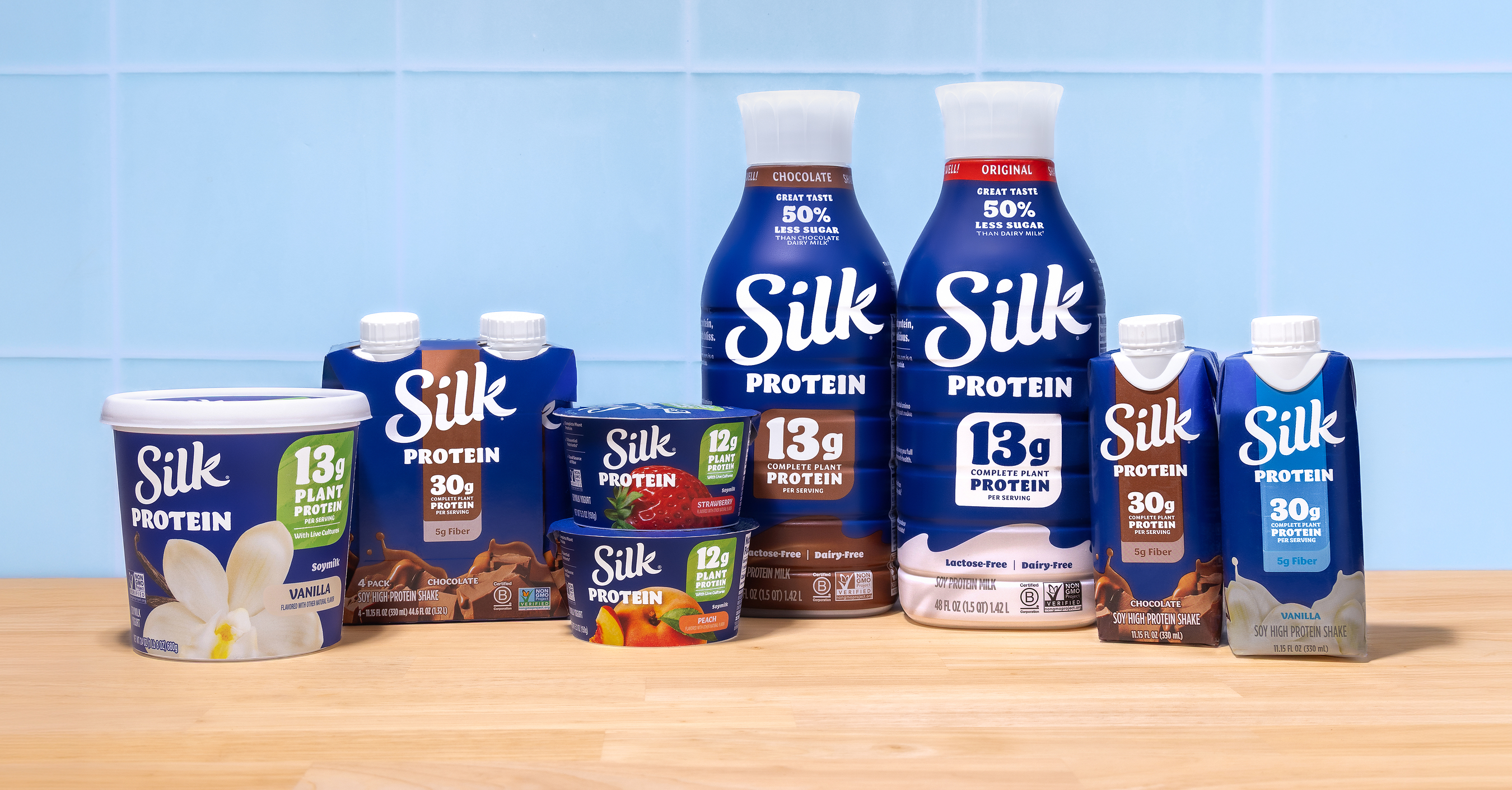
Danone USA is pushing Silk deeper into the functional nutrition aisle, launching a new Protein Yogurt and a ready-to-drink protein shake lineup that positions the brand squarely against whey-based and conventional dairy competitors on the fitness and convenience shelf.
The new Silk Protein Yogurt delivers at least 12g of protein per serving; the ready-to-drink shakes step up to 30g — both sourced from complete plant protein. Both products also carry a good-source-of-fiber claim and are formulated without artificial colors, flavors, or sweeteners. Retail rollout began this month across major grocery chains nationwide.
What the Retail Signal Means
For grocery buyers and foodservice procurement teams, the timing matters. Plant-based dairy has faced category-level contraction in recent quarters, with some alt-milk SKUs losing shelf space to private label. Silk's move toward higher-protein, functional formats is a direct response to that pressure — trading on consumer willingness to pay a premium for protein-forward products even as base plant milks commoditize. Operators sourcing plant-based proteins for smoothie bars, café programs, or grab-and-go coolers should note that 30g-per-serving RTD shakes in a clean-label format remain a comparatively thin part of the plant-protein shelf, which gives Silk room to own the positioning if the flavor profile performs.
The complete-protein claim is also worth tracking. Most plant proteins require blending of amino acid sources to achieve completeness; Silk's ability to make that claim on a consumer-facing label signals formulation investment that could inform private-label sourcing conversations and ingredient supplier negotiations across the category. Buyers evaluating plant-based beverage suppliers for foodservice contracts should ask potential partners whether their protein sources carry a comparable amino acid profile.
Operator and Channel Takeaways
Beyond retail, this launch has implications for hospitality and foodservice operators building out high-protein breakfast programs — a daypart that continues to outperform in lodging F&B, college dining, and corporate cafeteria settings. A clean-label, 12g-protein yogurt from an established brand reduces the friction of menu-labeling compliance and allergen disclosure, compared with less recognized plant-protein entrants.
For operators tracking plant-based menu trends and functional beverage sourcing, Silk's expansion reinforces that the category is bifurcating: commodity plant milks on one side, premium functional formats on the other. Procurement strategies that treat all plant-based dairy as interchangeable will leave value on the table — both in negotiating leverage and in guest-facing positioning. Distributors and brokers pitching functional nutrition sets should have updated Silk sell sheets in hand before August resets.
Written by Michael Politz, Author of Guide to Restaurant Success: The Proven Process for Starting Any Restaurant Business From Scratch to Success (ISBN: 978-1-119-66896-1), Founder of Food & Beverage Magazine, the leading online magazine and resource in the industry. Designer of the Bluetooth logo and recognized in Entrepreneur Magazine's "Top 40 Under 40" for founding American Wholesale Floral, Politz is also the Co-founder of the Proof Awards and the CPG Awards and a partner in numerous consumer brands across the food and beverage sector.