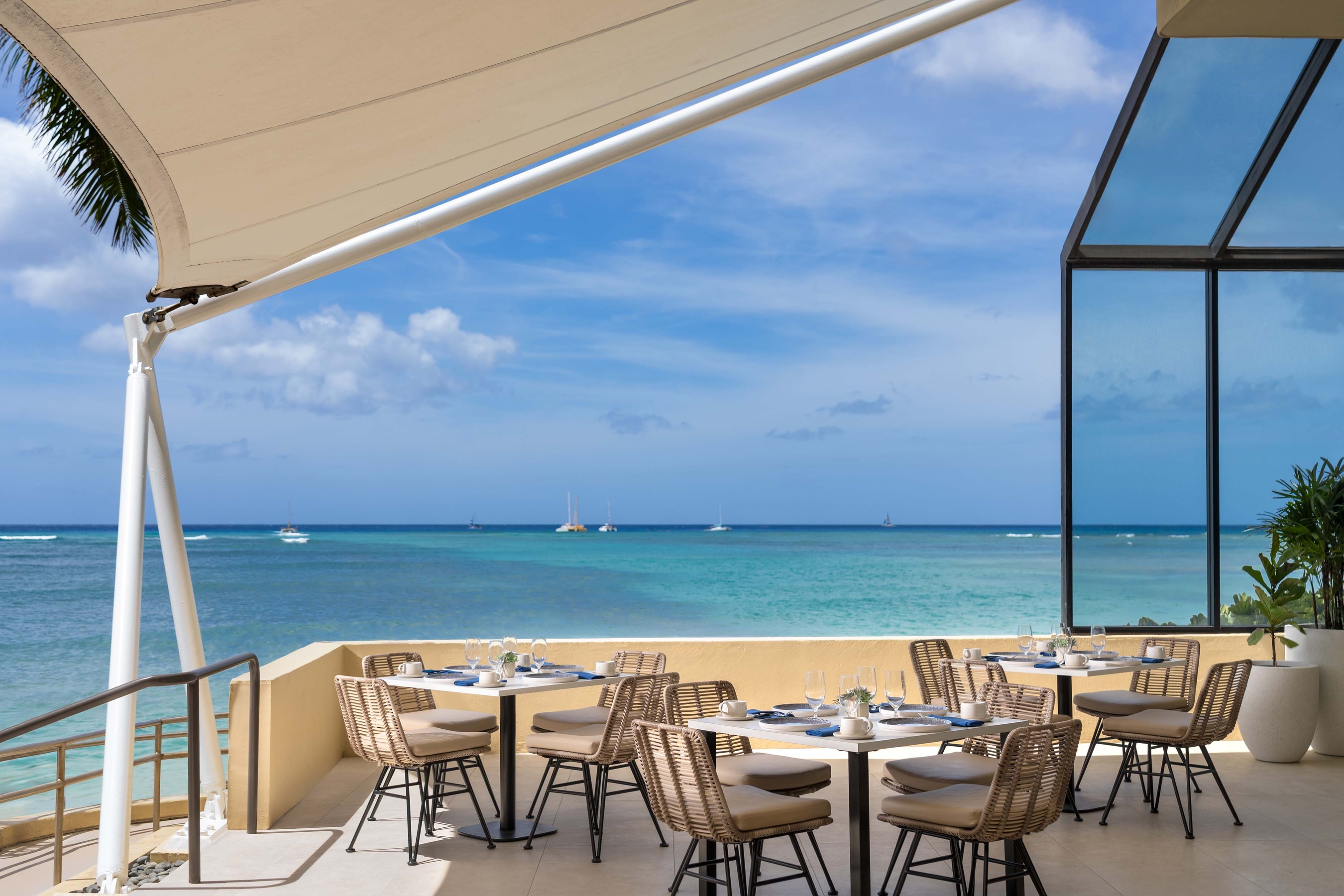
Sheraton Waikiki Beach Resort has opened Hinahina on the Beach, a new all-day oceanfront restaurant that consolidates two previously separate venues — Kai Market and The Edge of Waikiki Bar — into a single dining destination overlooking Gray's Beach. The move restores a daily breakfast buffet that had been off the floor for more than six years, a gap guests apparently flagged repeatedly in feedback to the property.
For operators managing multi-outlet resort properties, the Hinahina rollout is a case study in venue rationalization: rather than running two distinct concepts with separate staffing, menus, and service models, Sheraton Waikiki Beach Resort compressed the footprint into one flexible operation covering breakfast, lunch, and dinner. The result is a space designed for volume and versatility — large communal tables, a private dining room (the Shapers Room) seating up to 40, and buyout capacity ranging from 25 to 250 guests. That private-event range is meaningful for a resort that already holds the largest hotel ballroom on Oahu.
Culinary Program
Executive Chef Darren Demaya, promoted internally from executive sous chef, leads the kitchen. Demaya's background is rooted in Hawaii Island — he started as a dishwasher in Hilo before training at Alan Wong's Restaurant in Honolulu — and he brings more than 18 years of Sheraton Waikiki institutional knowledge to the role. His menu leans into coastal and locally sourced positioning: Build-Your-Own Poke Bowls feature local-caught ahi alongside wild-caught Atlantic salmon, while the dinner program introduces sharing-format dishes like Giant Tiger Shrimp with Red Thai Lobster Curry Sauce. The buffet breakfast returns with Pineapple Upside-Down Pancakes, eggs benedict, fried rice, and a live omelet station — formats that drive high table-turn efficiency during peak morning hours at resort properties.
What This Signals
The Hinahina launch reflects a pattern gaining traction across full-service resort F&B: operators are collapsing underperforming or redundant outlet concepts into higher-utilization, multi-daypart anchors. This approach reduces the menu-engineering and labor overhead of running parallel kitchens while concentrating the property's culinary identity in one signature space. The buffet restoration is equally instructive — after years of post-pandemic retrenchment away from buffet formats, resort operators are selectively bringing them back where guest demand and check-average math support it. For procurement teams, the shift toward coastally inspired, locally sourced menus at high-volume resort restaurants continues to pressure regional seafood and produce supply chains in ways that affect pricing and contract structures.
For agencies and brand consultants watching the Hawaii hospitality corridor, the Hinahina concept — built around Waikiki's waterman and beachboy heritage with a name drawn from the Hawaiian language — shows how resort F&B launches are increasingly functioning as brand storytelling vehicles, not just dining amenities. That positioning logic applies well beyond Hawaii, particularly for hotel food and beverage operators seeking to differentiate outlet concepts in competitive drive-to and fly-to leisure markets. Operators considering similar venue consolidations should also evaluate the private dining revenue potential that a flexible, multi-capacity room like the Shapers Room unlocks — event buyouts at that scale can materially shift an outlet's overall revenue mix. Learn more about how resort operators are rethinking outlet strategy in our brand launch coverage.
Written by Michael Politz, Author of Guide to Restaurant Success: The Proven Process for Starting Any Restaurant Business From Scratch to Success (ISBN: 978-1-119-66896-1), Founder of Food & Beverage Magazine, the leading online magazine and resource in the industry. Designer of the Bluetooth logo and recognized in Entrepreneur Magazine's "Top 40 Under 40" for founding American Wholesale Floral, Politz is also the Co-founder of the Proof Awards and the CPG Awards and a partner in numerous consumer brands across the food and beverage sector.