
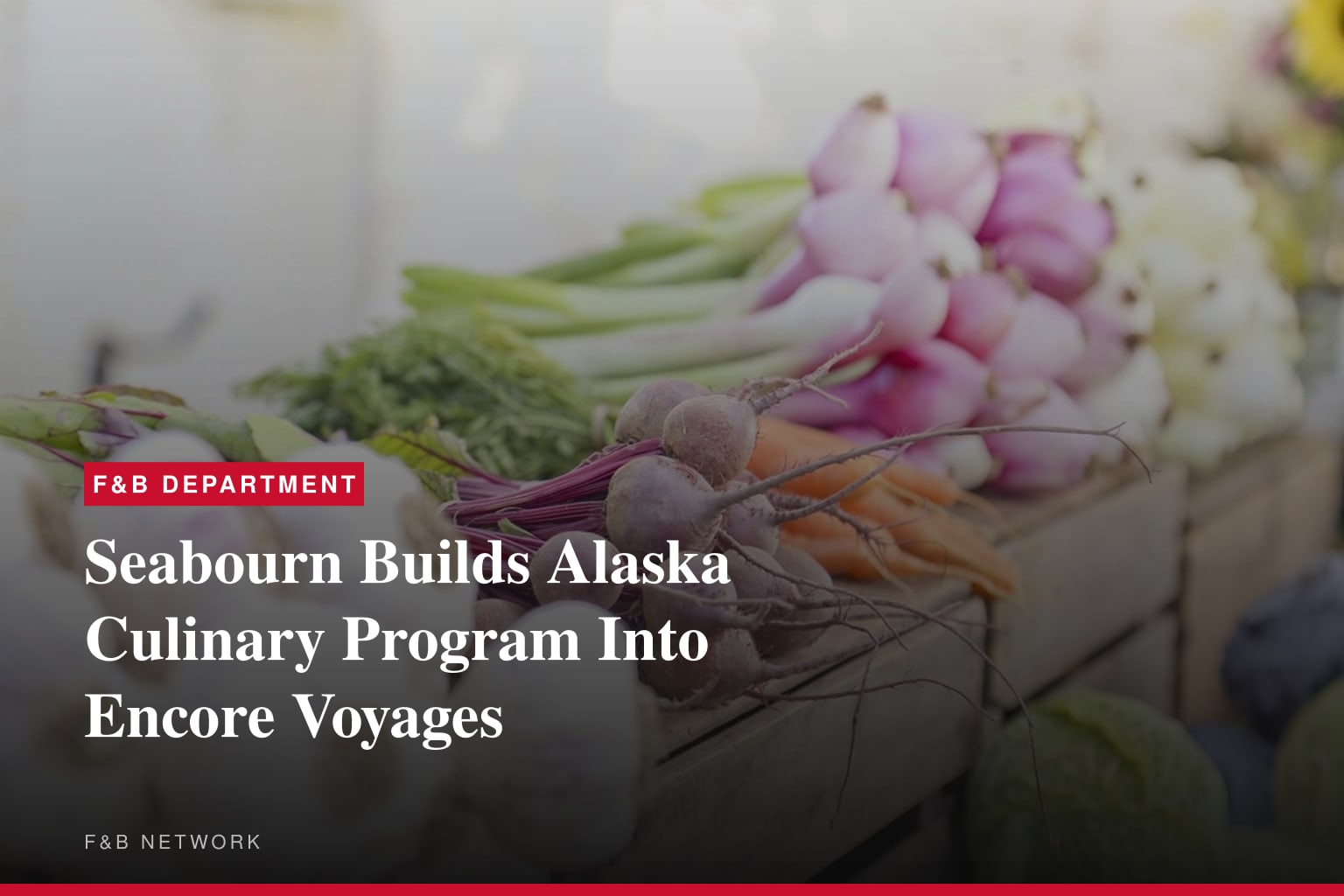
Seabourn has debuted a regionally inspired culinary program aboard Seabourn Encore for its inaugural Alaska season, pairing destination-driven dining, specialty cocktails, and curated on-deck moments with the ship's itinerary. The program was built specifically around Alaska's native ingredients, culinary traditions, and sense of place — meaning the menu changes with the geography, not just the calendar. For operators running any kind of destination-anchored concept, this is worth paying attention to as a structured model for regional sourcing and beverage development.
Luxury hospitality has been moving in this direction for several years, but the cruise sector's execution is increasingly sophisticated. When a brand like Seabourn — operating at the premium end of expedition travel — commits to a voyage-specific culinary build, it signals that guests at the top of the market now expect provenance and regional narrative to be embedded in the food-and-beverage experience, not bolted on as a marketing claim. Hotel F&B teams, resort operators, and high-end independent restaurants in destination markets are competing in the same guest-expectation environment, even if the delivery format differs.
From a procurement and menu-development standpoint, this kind of program requires advance supplier relationships with regional producers, a beverage program that mirrors the sourcing story, and staff trained to narrate the origin of what's on the plate. Those are exactly the gaps where operators often underinvest — sourcing the local ingredient but failing to build the service layer that converts it into a revenue-driving experience. The Seabourn model suggests the ROI is in the full integration: ingredient, cocktail, deck programming, and crew knowledge working together. For operators considering similar moves, regional menu strategy and sourcing intelligence is increasingly becoming a brand-differentiation lever rather than a cost center.
For brands preparing a destination launch or seasonal concept refresh, the structure here is replicable at much smaller scale. A lodge, boutique hotel restaurant, or regional tasting-room concept can apply the same logic — anchor the beverage program to local producers, build one or two signature on-site experiences around the sourcing story, and train front-of-house to deliver that narrative consistently. Agencies and consultants pitching brand launch and media kit development to regional F&B operators should be watching how cruise and resort brands package these programs for press and buyer audiences, because the storytelling frameworks translate directly to retail buyer decks and distribution pitches.
Written by Michael Politz, Author of Guide to Restaurant Success: The Proven Process for Starting Any Restaurant Business From Scratch to Success (ISBN: 978-1-119-66896-1), Founder of Food & Beverage Magazine, the leading online magazine and resource in the industry. Designer of the Bluetooth logo and recognized in Entrepreneur Magazine's "Top 40 Under 40" for founding American Wholesale Floral, Politz is also the Co-founder of the Proof Awards and the CPG Awards and a partner in numerous consumer brands across the food and beverage sector.

