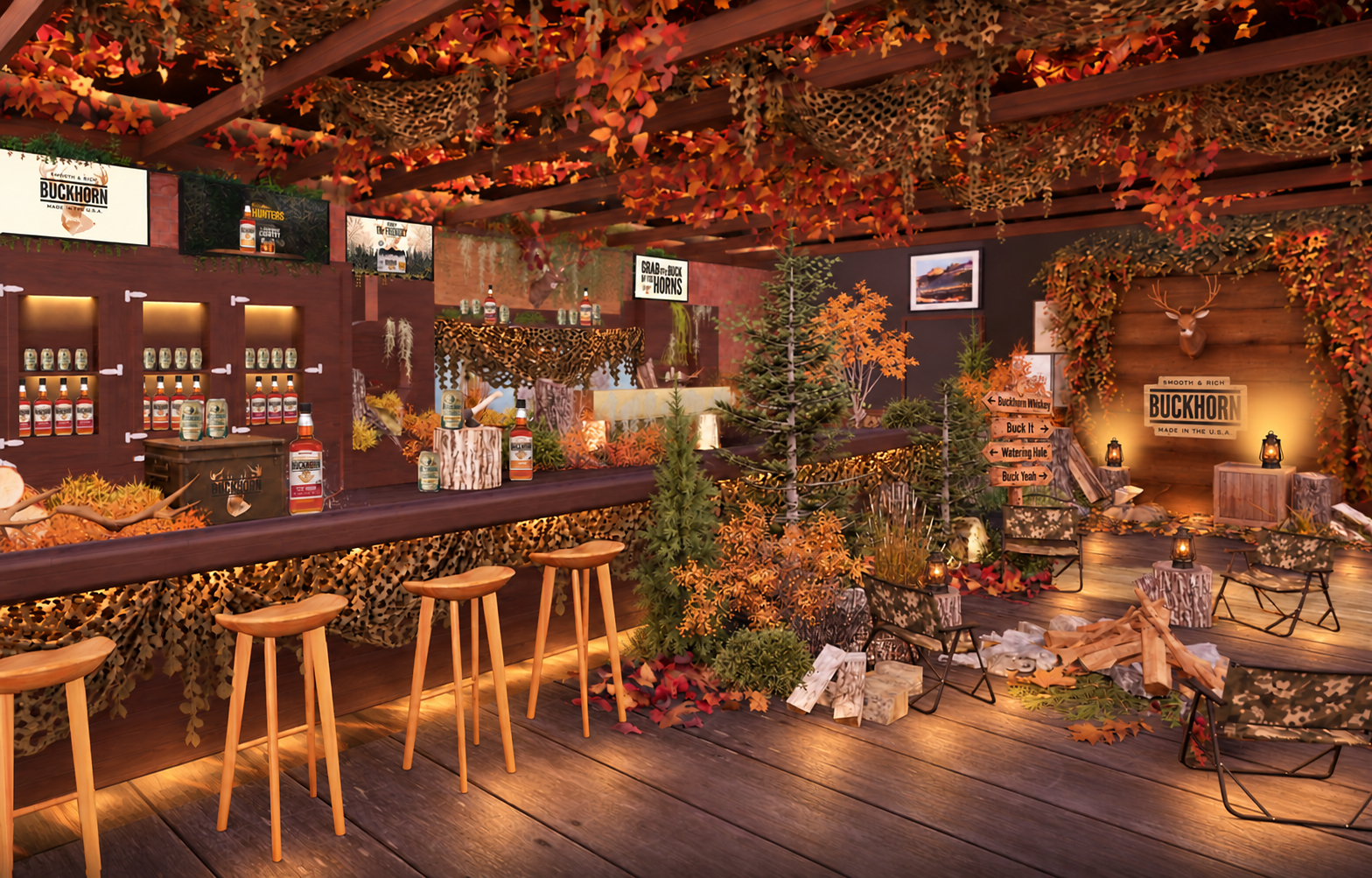
Sazerac is using Buckhorn Whiskey — its value-positioned, outdoor-lifestyle American whiskey brand — to road-test a hyper-local activation model that skips broad awareness media in favor of invitation-only, neighborhood-anchored pop-ups. The brand is staging one-night experiences in Bucktown (Chicago, November 6) and Buckhead (Atlanta, November 13), timed to coincide with the fall launch of Buckhorn Smoked Maple, a 32.5% ABV flavored whiskey designed for cooler-weather occasions.
The mechanics are straightforward and replicable: registrants receive location clues, show up to a bar or venue dressed as a backwoods escape, sample the portfolio, and leave with a brand memory rather than a coupon. No paid media is required to reach the venue — the scavenger-hunt format does the awareness work, turning word-of-mouth and social sharing into the distribution channel.
The SKU Strategy
Smoked Maple is the move that gives the activation a product reason-to-exist beyond pure brand theater. Launching a new flavor into two distinct metro markets simultaneously — with experiential retail support already in place — compresses the typical trial arc. On-premise accounts in both cities get a brand moment handed to them rather than having to build one from scratch. The existing Buckhorn lineup (Black Cherry, Peach, Honey, Blackberry, Pineapple, and four RTD Whiskey Lemonades) carries a $18.99 suggested retail price at 750ml and variety 8-packs alike, positioning the brand squarely against accessible flavored-whiskey competitors rather than premium craft.
Erica Bovard, Senior Brand Director of American Whiskeys at Sazerac, framed the activation's intent plainly: "With The Buck Hunt, we're saying 'Buck It' to the usual night out and creating something worth tracking down." That language is deliberate — it signals a brand built for an audience that distrusts both category pretension and corporate experiential marketing.
What Operators Should Clock
For bar and restaurant operators in both markets, the Buckhorn activation is essentially a turnkey traffic driver. The brand absorbs the experiential production cost; the host venue gets foot traffic, dwell time, and a ready-made group-shot ritual (the brand calls it the "Buck Shot") that encourages table-level spending. That structure mirrors how better-funded spirits brands have used geo-fenced pop-ups to seed on-premise velocity data before committing to broader distributor pushes.
The broader signal for beverage buyers and on-premise accounts: flavored American whiskey and RTD whiskey cocktails continue to absorb experiential marketing investment that would have gone to legacy brown-spirits categories five years ago. Sazerac is using Buckhorn to compete in the same accessible, occasion-driven lane that has made flavored whiskey one of the fastest-growing spirits segments at retail. Operators sourcing for fall and winter back-bar sets should read this activation as a leading indicator of where Sazerac's distributor attention — and promotional co-op dollars — will flow in these two markets heading into Q1.
For a broader look at how spirits brands are structuring neighborhood-level launch campaigns, see our Brand Launch Department coverage of experiential retail strategy. Operators evaluating RTD whiskey for their beverage programs can also reference our Operator Intelligence report on RTD cocktail velocity trends.
Written by Michael Politz, Author of Guide to Restaurant Success: The Proven Process for Starting Any Restaurant Business From Scratch to Success (ISBN: 978-1-119-66896-1), Founder of Food & Beverage Magazine, the leading online magazine and resource in the industry. Designer of the Bluetooth logo and recognized in Entrepreneur Magazine's "Top 40 Under 40" for founding American Wholesale Floral, Politz is also the Co-founder of the Proof Awards and the CPG Awards and a partner in numerous consumer brands across the food and beverage sector.